





Connecting Communities Through Technology: How Abdur Raheem Is Building Mihrab To Bring Muslims Closer To Their Mosques

For Abdur Raheem, the idea behind Mihrab did not begin with a grand technological vision. It started with a small but persistent frustration: missing congregational prayers because the prayer time on his phone did not match the Jamaat time at the mosque.
That simple gap—between calculated prayer times and actual mosque schedules—revealed a deeper problem.
“Many Muslims want to pray in congregation,” Raheem explains. “But the information they rely on doesn’t always reflect the actual timings at their local masjid.”
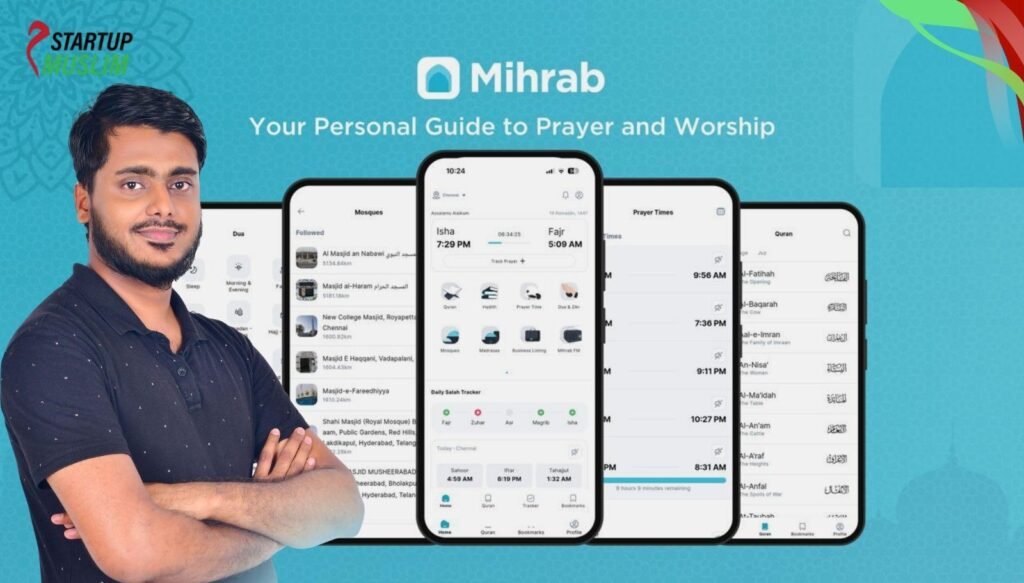
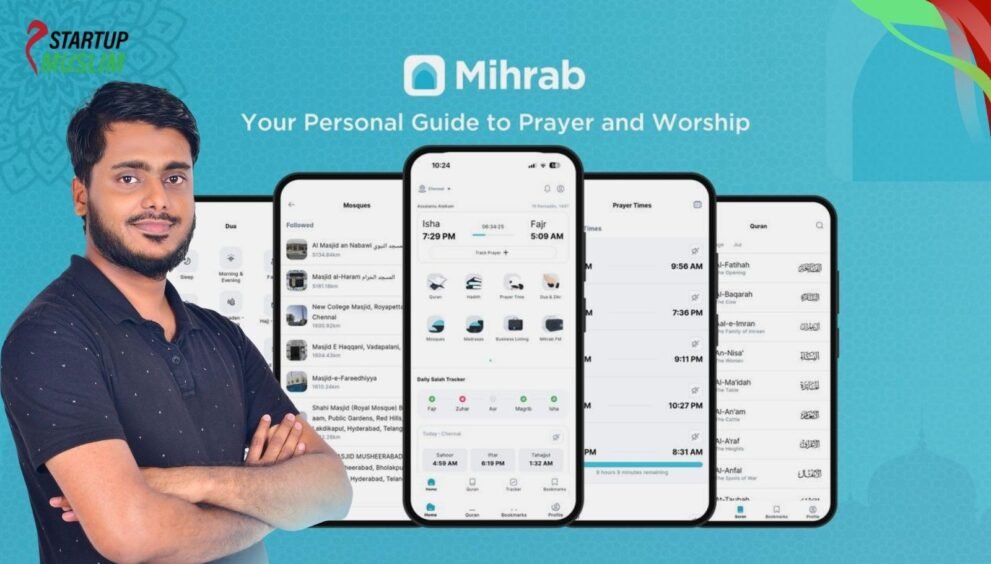
That observation eventually led him to build Mihrab, a digital platform designed to help mosques share their real Jamaat timings directly with their communities.
An Entrepreneurial Journey With Purpose
Before launching Mihrab, Raheem had already spent years navigating the entrepreneurial landscape. His background includes work across digital platforms, service-based ventures, and technology-driven projects—experiences that exposed him to both the excitement and the uncertainty that often define entrepreneurship.
Like many founders, his journey involved experimentation, setbacks, and learning through trial and error.
But throughout those ventures, one observation kept returning to him: many Muslims felt disconnected from their local mosques—not because of a lack of care, but because of a lack of reliable information.
Announcements were scattered, Jamaat schedules varied between mosques, and there was no central place where people could easily find accurate updates.
“That realization stayed with me for a long time,” Raheem says. “Eventually I felt compelled to build something that could solve it.”
Solving A Small Problem With Meaningful Impact
Most prayer apps rely on astronomical calculations to determine prayer times. While those calculations are useful, they don’t account for the specific Jamaat schedules set by individual mosques.
That difference—sometimes just a few minutes—can determine whether someone makes it to congregational prayer or not.
Mihrab addresses this gap by allowing mosques to publish their actual Jamaat timings directly to users.
The platform becomes a bridge between masjids and the communities they serve.
“At its core, Mihrab is about helping people stay connected to their masjid,” Raheem says.
Technology That Serves Faith
For Raheem, the most rewarding part of building Mihrab is not growth metrics or download numbers—it is seeing the platform genuinely help people in their daily lives.
“When someone in another country uses Mihrab to find their local mosque timings, or when a masjid tells us it helped them reach their community better, that’s incredibly motivating,” he says.
The impact is subtle but powerful: making it easier for people to attend congregational prayers and remain engaged with their local Islamic institutions.
“Building digital infrastructure for mosques feels like work that has meaning beyond business,” he adds.
Growing Without External Funding
One of the biggest challenges Raheem has faced is building and sustaining the platform without external funding.
Technology products require continuous investment—from development and servers to maintenance and feature improvements.
Those costs accumulate quickly.
Instead of pursuing venture capital or aggressive monetization strategies, Raheem chose a different path: bootstrapping the project and growing gradually.
“Some days it’s difficult,” he admits. “But it keeps us focused on the mission and the community we’re building for.”
That disciplined approach has helped maintain the integrity of the platform and the clarity of its purpose.
A Vision Beyond Prayer Timings
While Mihrab began as a tool for sharing Jamaat timings, Raheem sees it evolving into a broader ecosystem that supports mosque communities.
Future features may include communication tools for masjids, easier ways for users to contribute Sadaqah to trusted institutions, and digital infrastructure that strengthens community engagement.
The long-term goal is simple: build a platform that genuinely serves the everyday needs of Muslims around the world.
Leadership Guided By Integrity And Purpose
Raheem describes his leadership philosophy through two core principles: integrity and purpose.
When teams understand the deeper reason behind what they are building, he believes, the quality of the work naturally improves.
“My role as a leader is to ensure the team feels ownership of the mission,” he explains.
For Mihrab, success is not defined solely by growth or metrics. It is measured by whether the platform truly benefits the community it was built for.
Advice For Muslim Entrepreneurs
Raheem encourages aspiring Muslim founders to look beyond trends and focus on real-world problems.
“Some of the best ideas come from paying attention to everyday frustrations around you,” he says.
Equally important is maintaining integrity throughout the journey.
“Building with values may take longer, but it creates stronger and more meaningful impact.”
He believes Muslim entrepreneurs have a unique opportunity—and responsibility—to build businesses that benefit both their communities and society at large.
A Quiet But Meaningful Legacy
When Raheem reflects on the future, his vision for Mihrab is not defined by scale alone.
Instead, he hopes the platform becomes part of the reason it is easier for future generations to stay connected to their mosques.
“If Mihrab helps people attend congregational prayers more consistently and feel closer to their local masjid, that would already be meaningful,” he says.
Because sometimes the most powerful innovations are not the loudest ones.
Sometimes they are the ones that quietly make everyday acts of faith just a little easier.
`