
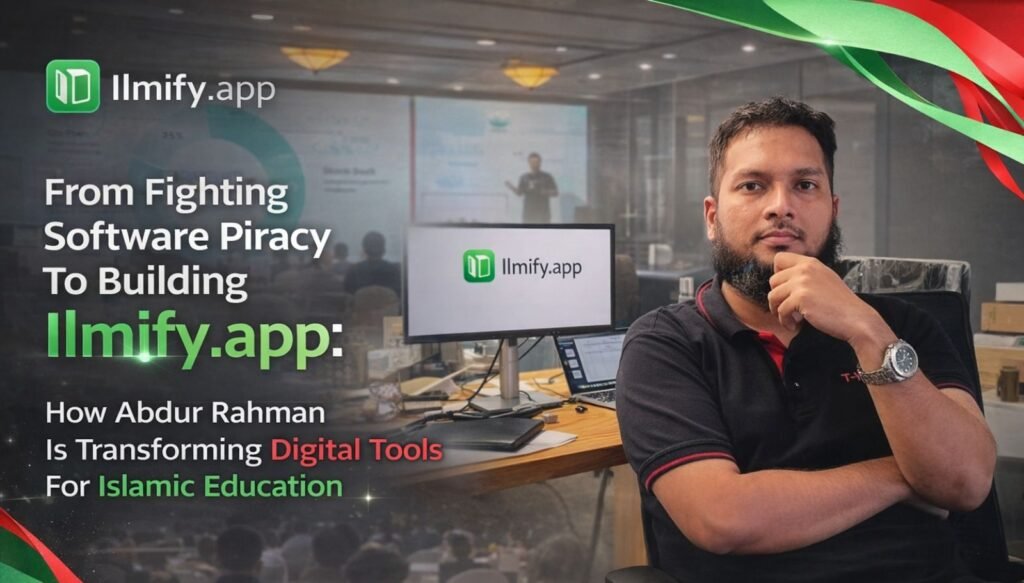



From Fighting Software Piracy To Building Ilmify.app: How Abdur Rahman Is Transforming Digital Tools For Islamic Education

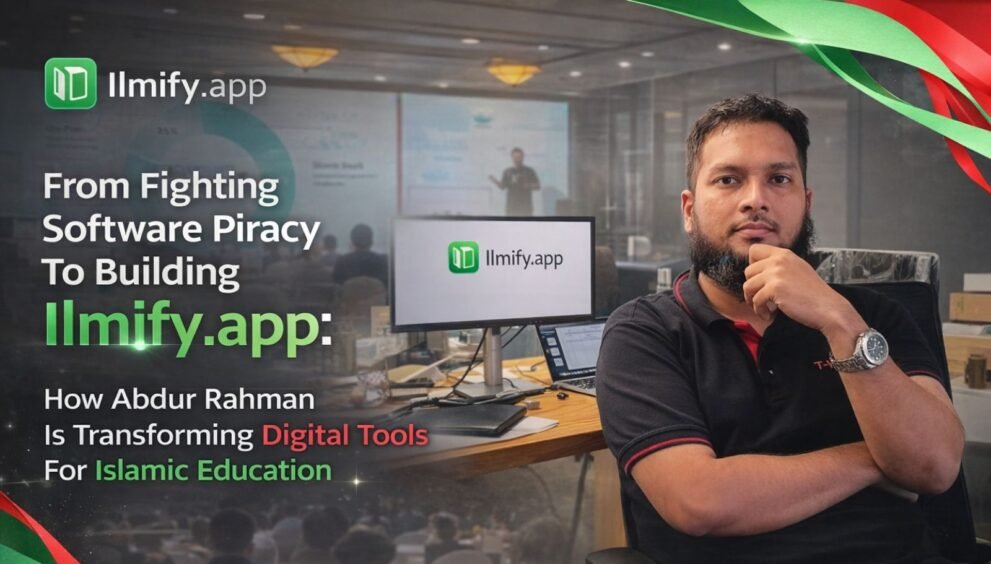
For Abdur Rahman, entrepreneurship did not begin with the pursuit of profit. It began with a moral question within the Muslim community: why was software piracy so casually accepted?
Long before founding Ilmify.app, Rahman noticed that many individuals and institutions within the community believed using pirated software was harmless—or even permissible. The problem, he realized, was not malicious intent but a lack of awareness about intellectual property rights and ethical technology use.
“Many people assumed pirated software was acceptable because they didn’t fully understand software ownership and licensing,” Rahman explains.
From Awareness To Accessibility
Rahman initially began by raising awareness about the ethical and Islamic implications of using pirated software. However, he soon discovered that awareness alone could not solve the issue.
Accessibility was the real barrier.
Most legitimate software solutions were too expensive for individuals, mosques, and community institutions. That realization pushed Rahman to go beyond advocacy and start building alternatives.
“We started offering open-source consulting and affordable technology solutions so people could choose ethical software without financial burden,” he says.
What began as a community initiative gradually evolved into a full-fledged technology company built around a simple mission: making ethical, lawful, and accessible technology available to everyone.
A Journey Through Multiple Tech Ventures
The company’s evolution was far from linear.
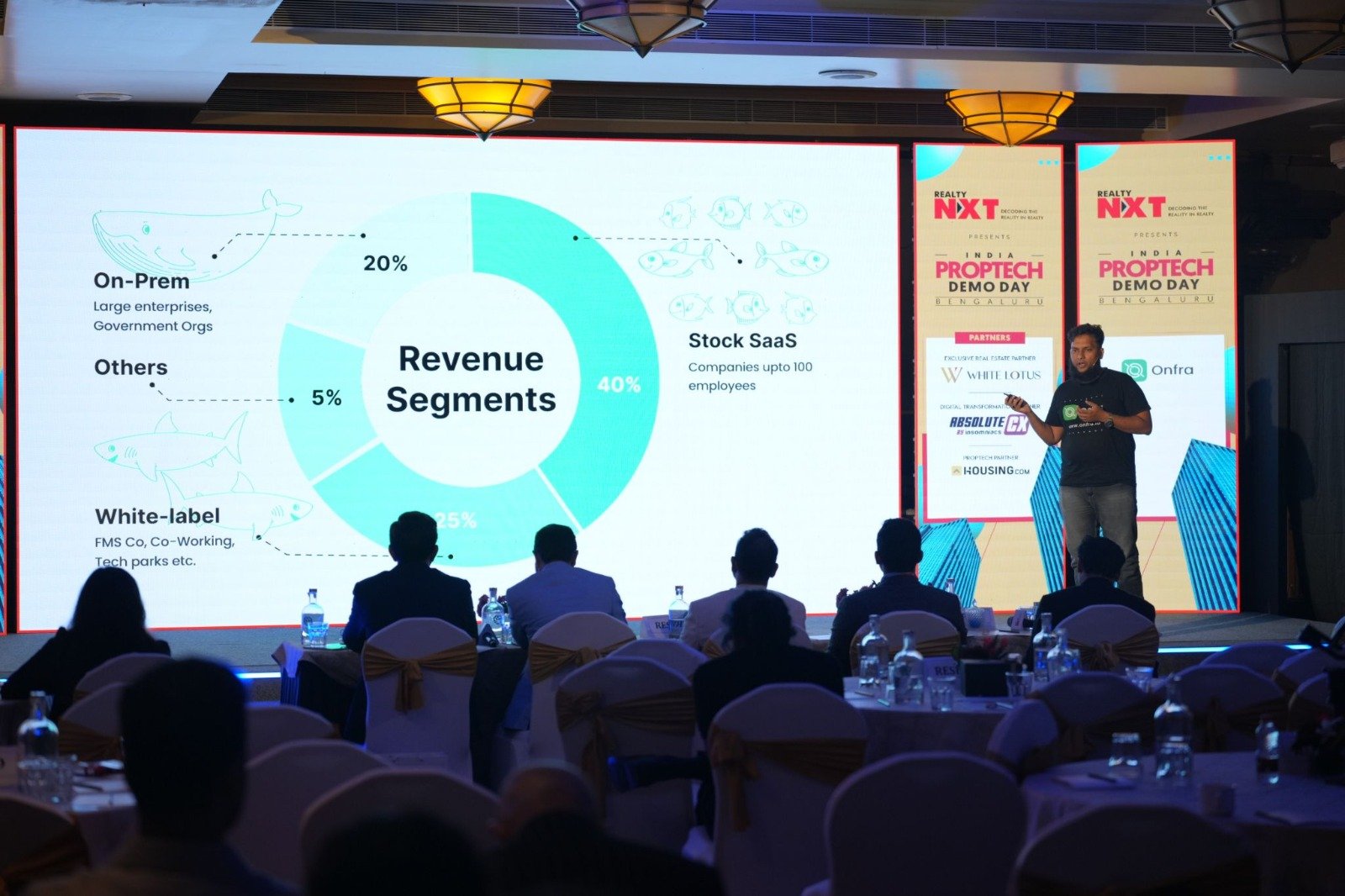
Rahman and his team initially operated as a software development agency, building digital products for clients across industries. Over the years, they experimented with several SaaS platforms in areas such as facility technology and jewelry technology.
While these ventures were commercially viable, Rahman felt something was missing.
“Those solutions addressed worldly needs,” he reflects. “But we wanted to build something rooted in deen, not just duniya.”
That reflection led to the birth of Ilmify.app.
Building Technology For Islamic Institutions
Ilmify.app was created to address a critical gap: the lack of modern, ethical, and purpose-driven digital tools for Islamic educational institutions.
Many madrasas and Islamic schools still rely on manual systems or outdated tools that limit efficiency and transparency.
Ilmify.app provides a modern platform that helps institutions manage operations, communication, and learning processes—while remaining aligned with Islamic values.
Today, nearly 500 institutions rely on the platform to run their daily operations.
For Rahman, that milestone represents more than product adoption—it validates the mission.
“It’s incredibly fulfilling to see educators teach more effectively, parents stay informed, and institutions operate with integrity and accountability,” he says.
Choosing Integrity Over Shortcuts
Like many founders, Rahman has faced difficult decisions in a competitive market.
One of the biggest challenges was resisting unethical marketing practices—such as aggressively poaching competitors’ customers or using misleading lead-generation tactics.
Instead of taking shortcuts, the company chose to focus on long-term trust.
“We made a conscious decision to prioritize principles over quick wins,” Rahman explains.
While that approach required patience, it helped the company build a reputation grounded in credibility and ethical conduct.
A Vision For Sustainable Growth
Rahman’s expansion strategy focuses on thoughtful, purpose-driven growth.
The company plans to scale into new regions while continuously improving the platform based on user feedback.
Beyond growth, Rahman envisions building a broader ecosystem that integrates learning, operations, and community engagement—helping Islamic institutions modernize without compromising their identity.
Leadership Built On Integrity And Trust
At Ilmify.app, company culture is rooted in two key principles: integrity and accountability.
Rahman believes leadership is not about controlling every decision but about empowering experts.
“We believe in hiring people who are more skilled than us in their respective domains,” he says. “Our role as leaders is to set the vision and trust them to execute with excellence.”
This philosophy has created a culture where ownership and responsibility thrive.
Advice To Young Muslim Entrepreneurs
Rahman encourages aspiring founders to aim high—but remain grounded in values.
“Dream big, start small, and scale fast—but never at the cost of your principles,” he advises.
He also believes the Muslim world must think beyond building niche apps and instead focus on global innovation.
“We don’t just need Muslim-branded technology. We need Muslim-led, world-class technology companies—the next AWS, OpenAI, or Vercel.”

A Legacy Rooted In Knowledge
Looking ahead, Rahman hopes Ilmify.app becomes one of the world’s largest hubs for authentic Islamic education.
His vision is to combine structured knowledge, educational content, and intelligent technology into one platform capable of scaling Islamic learning globally.
Artificial intelligence will play a role in guiding students, correcting learning pathways, and personalizing education—especially in regions where qualified teachers are limited.
“If our platform helps make quality Islamic education more accessible and impactful for future generations,” Rahman says, “that would be a legacy worth striving for.”
For Abdur Rahman, Ilmify.app represents more than a technology startup. It represents the possibility that innovation, ethics, and faith can work together to build solutions that benefit both this world—and the next.