





Top Muslim Startups Changing the Business World

Over the last ten years, the world has watched a new wave of businesses rise , companies built by Muslim founders who use technology, ethics, and culture to solve real problems. These Muslim Startups are growing fast, raising serious investment, and entering global markets with confidence.
From halal fintech and ethical crowdfunding to travel tools, delivery apps, and lifestyle platforms, these founders are proving that you can build modern businesses without losing your values. In this blog, we’ll look at the ecosystem behind this rise, profile some of the most successful Muslim startups, and explore what makes this movement so powerful.
Why This Moment Matters: The Rise of the Islamic Startup Ecosystem
A look at the global picture
The global Islamic economy has become a multi-trillion–dollar space. It covers halal food, modest fashion, travel, media, and Islamic finance , industries that continue to grow every year. Reports like the State of the Global Islamic Economy show that this growth is driven mainly by young, tech-savvy Muslims with rising spending power.
This momentum has opened the door for Muslim tech startups that build products aligned with Muslim values and lifestyle needs.
From small niche apps to a real ecosystem
What began as simple apps , like prayer-time reminders and halal food finders , has turned into a full ecosystem of Muslim startup companies. Today we have:
- Sharia-compliant robo-advisors
- Islamic BNPL services
- Halal travel platforms
- Ethical crowdfunding sites
- Modest fashion ecommerce brands
Even governments, accelerators, and major investors are supporting these ventures. What was once “niche” has now become a serious business opportunity.
Who’s Leading the Charge: Notable Muslim Startups
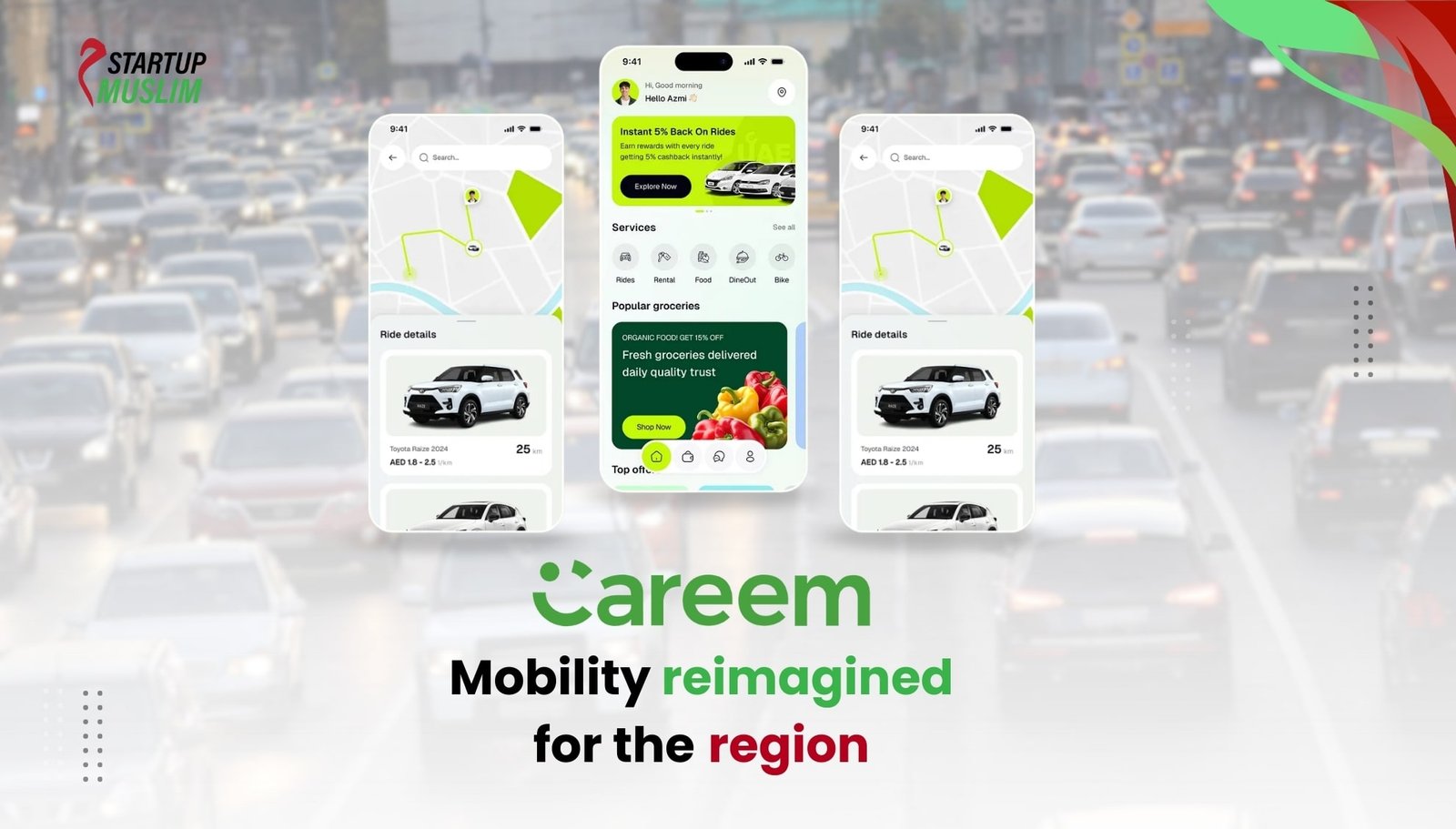
Careem ; mobility reimagined for the region
Careem started with one simple idea: make transportation in the Middle East safer and more reliable. It grew fast, expanded into deliveries, groceries, and payments, and eventually became a full “super app.”
In 2019, Uber acquired Careem for around $3.1 billion, marking one of the biggest exits in the region. It proved that Muslim entrepreneurs can build companies that attract global attention and set new standards for innovation.
Wahed ; global halal investing, made easy
Wahed made it possible for Muslims around the world to invest without worrying about interest or non-halal industries. It built one of the first Sharia-compliant robo-advisors and secured licenses in multiple countries.
Wahed’s growth shows how successful Muslim startups can combine technology, regulation, and religious principles , and still scale across continents.

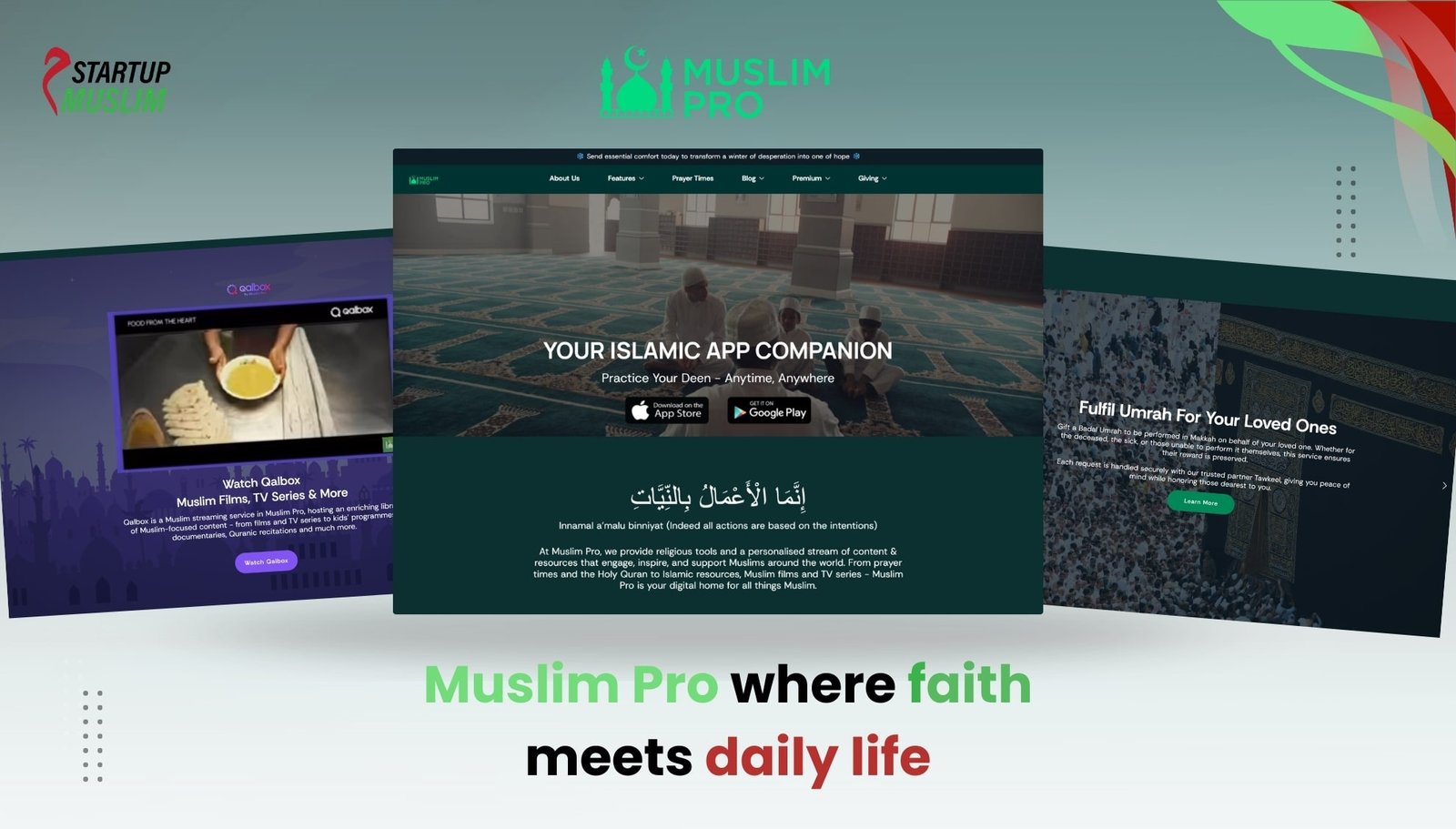
Muslim Pro ; where faith meets daily life
Muslim Pro began with a simple function: accurate prayer times. But it grew into a full lifestyle app with Quran translations, Qibla direction, and community features.
Today, it has tens of millions of downloads and becomes especially popular during Ramadan. It’s a great example of Muslim business innovation that blends content, utility, and daily habits.
Ethis ; ethical finance for real communities
Ethis took the idea of crowdfunding and shaped it around Islamic finance rules. Instead of high-risk projects, it focused on real estate, community housing, and impact-driven investments.
People who invest through this not only earn returns but also support social development , showing how rising Muslim founders can combine profit with purpose.
Other names to watch
Industry lists like Salaam Gateway’s Top 30 Digital Islamic Economy Startups show dozens of emerging businesses in fintech, travel, fashion, media, and halal food tech. Together, they make the Islamic startup ecosystem one of the most exciting spaces to watch.
What Makes Muslim Startups Different ; And Why They Win
1. Their values match their users’ values
These companies don’t just “target Muslims.” They build products that respect religious needs , whether that’s avoiding interest, ensuring halal supply chains, or designing privacy-friendly apps.
This value alignment builds trust, and trust builds loyal customer bases.
2. They solve real, underserved needs
Halal food transparency, modest fashion, ethical finance, reliable Hajj/Umrah services , these are real needs for millions of people.
Global Muslim businesses that address these gaps grow quickly because demand already exists.
3. They understand compliance deeply
Mastering Sharia rules, halal certification, and financial regulations isn’t easy. But startups that invest early in compliance build strong barriers to entry. Firms like Wahed show how regulation can actually be a competitive edge.
4. Many combine profit with social impact
From affordable housing to ethical supply chains, many of these companies support community well-being while still generating returns. This balance attracts both users and impact investors.
Sectors to Watch Within the Islamic Startup Ecosystem
Fintech & Islamic finance
This is the hottest area. We’re seeing:
- Islamic neobanks
- Halal robo-advisors
- Sukuk investment platforms
- Ethical BNPL options
These tools help underserved Muslims access financial services without compromising their beliefs.
Lifestyle tech & media
Apps like Muslim Pro, streaming platforms, and creator-focused media startups are reshaping how Muslims learn, worship, and consume content.
Crowdfunding & impact platforms
Platforms like this show how crowdfunding can support real-world projects while staying within Sharia guidelines.
Modest fashion & halal consumer goods
This sector is booming , from modest clothing brands to halal beauty and organic food. Startups are improving supply-chain transparency and building strong online brands.
Travel, pilgrimage & hospitality
Tech platforms are simplifying Hajj and Umrah planning, halal travel bookings, and family-friendly tourism experiences.
Lessons From Successful Muslim Startups: A Simple Playbook for Founders
1. Start with authenticity, but grow using data
The strongest Muslim-led startups begin with something real , a founder who genuinely understands Sharia principles, halal supply chains, cultural behavior, or the daily challenges of their community. That authenticity gives the idea its soul.
But the founders who actually scale don’t rely on passion alone. They watch the numbers closely: what people are using, what they’re ignoring, what keeps them coming back, and what they’re willing to pay for. They stay true to their values, but they let data guide their decisions. That balance is what turns a meaningful idea into a real, growing business.
2. Partner with trusted institutions
No startup grows in isolation. The ones that move fastest build relationships early — with regulators, halal certification bodies, banks, compliance experts, and even local community organizations. These partnerships do more than add a stamp of approval. They help you avoid mistakes, unlock opportunities you couldn’t reach alone, and build confidence among customers who might be trying your product for the first time.
When respected institutions trust you, people follow.
3. Win one market well, then expand
Many successful Muslim startups started by focusing on a single city, a specific community, or a narrow user group. By serving that first group exceptionally well, they refine their product, understand their users at a deeper level, and create a strong base of loyal supporters.
Once that foundation is solid, expansion becomes far easier , because they’re no longer guessing. They already know what works, who they serve, and how to deliver value in a way that feels authentic.
4. Build trust through transparency
In faith-aligned businesses, trust is everything. Users want to know where their money goes, how products are sourced, whether the process is truly halal, and how their data is being handled.
Startups that communicate openly , showing how the supply chain works, being honest about limitations, prioritizing privacy, and practicing ethical decision-making , earn loyalty that lasts for years. Trust can’t be bought, but it can absolutely be built through consistent transparency.
Challenges the Ecosystem Still Faces
Talent & funding gaps
While the sector is growing, many regions still need more engineering talent, product leaders, and growth specialists. Funding is improving, but investors often want proof of strong regulation and market depth.
Regulatory complexity
Islamic finance rules differ across countries. Startups must invest early in compliance to avoid delays later.
Over-generalizing the “Muslim market”
Muslims are not one uniform group. Cultural and economic differences mean startups must adapt strategies for each region.
The Future: Where Muslim Startups Can Lead the World
Ethical tech and value-driven design
The focus on transparency, privacy, and ethical finance isn’t only for Muslim customers. These values appeal globally. Muslim Startups may end up influencing mainstream business standards.
Cross-sector convergence
Expect more collaboration across fintech, travel, retail, and media , creating smoother, integrated experiences for users.
More founders and stronger ecosystems
As more success stories emerge, more talent and investors will join the ecosystem, creating a cycle of growth and mentorship.
Practical Takeaways for Founders, Investors & Customers
For founders
- Build what you know well, especially in areas like Sharia finance, halal supply chains, or pilgrimage services.
- Treat compliance as a priority , not a checkbox.
- Focus on winning one market before expanding.
For investors
- Don’t judge only by classic KPIs. Look at trust, community reputation, and governance.
- Fintech, lifestyle tech, and halal supply-chain tools are producing the strongest long-term players.
For customers
- Support startups that stay true to their values.
- Your usage, feedback, and word-of-mouth help the entire ecosystem grow.
Closing Thoughts
The rise of Muslim Startups shows that business and values don’t have to be separate. Companies like Careem, Wahed, Muslim Pro, and Ethis are proving that you can build meaningful, culturally grounded products , and still achieve global success.
This movement is still in its early days. As more investors join, more founders innovate, and more markets open up, Muslim startups won’t just serve Muslim communities. They will export ideas, design principles, and ethical practices that reshape global industries.
The companies mentioned here , and many more highlighted in platforms like Salaam Gateway , represent the beginning of a new chapter. One where business can be modern, profitable, and deeply principled at the same time.
👉🏻Run a Muslim-owned business?
Get featured on Startup Muslim, reach a global audience, and grow your brand visibility. Apply now!
Frequently Asked Questions (FAQs)
1. What is Startup Muslim and what does it do?
Startup Muslim highlights and supports Muslim-owned businesses worldwide, sharing insights, success stories, and resources to help entrepreneurs grow and connect.
2. Why focus specifically on Muslim-owned startups?
Muslim founders create innovative, faith-aligned businesses for a growing global market. Startup Muslim showcases their success and provides support to help them thrive.
3. Are the startups featured only from Muslim-majority countries?
We feature Muslim-led businesses from around the world, highlighting global Muslim entrepreneurship beyond any single region.
4. Can my startup be featured on Startup Muslim?
Muslim founders or leaders of any business; tech, retail, finance, or creative; can apply to be featured, regardless of size or stage.
5. Why are Muslim startups gaining so much global attention?
Muslim startups grow rapidly by combining strong business fundamentals with ethical values, serving a global digital market. Startup Muslim helps amplify their impact.