


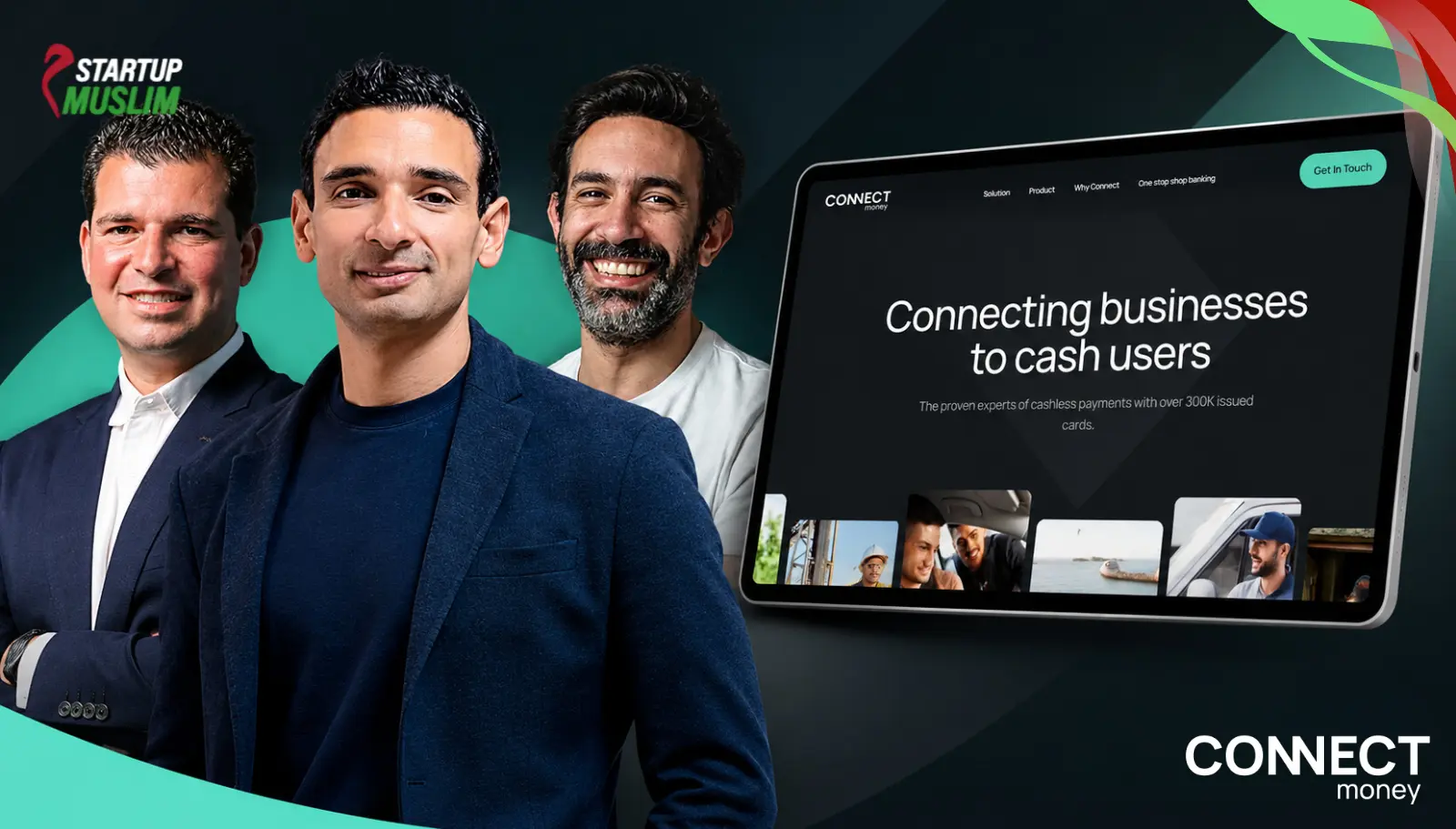
Egyptian fintech startup Connect Money has raised $3.5 million in a pre-Series A funding round as it prepares to expand into Saudi Arabia and Morocco. The investment brings the company’s reported total funding to $11.5 million and marks another step in its ambition to build financial infrastructure for businesses across the Middle East and North Africa.
The round was led by existing investors Mohamed Farouk, Algebra Ventures and DisrupTech Ventures. However, the transaction includes more than new investment. It combines fresh capital with secondary share sales, allowing some early investors to sell part of their holdings. Connect Money has not disclosed how much of the $3.5 million will go directly to the company through the primary investment.
Founded in 2024 by Ayman Essawy, Marwan Kenawy and Momtaz Moussa, Connect Money provides embedded finance infrastructure that allows businesses to offer financial products under their own brands without building the technology and banking arrangements themselves.
Building Financial Services Behind the Scenes
Connect Money operates in the embedded finance sector, a part of fintech that allows non-financial businesses to offer financial services through their existing products and customer platforms.
For example, a retailer may want to provide customers with a branded prepaid card. An agricultural company might want to offer payment services to farmers, while an education provider could introduce a digital payment solution for students and their families. Traditionally, developing these services requires technology, banking partnerships, regulatory processes and ongoing operational support.
Connect Money aims to bring these requirements together through a single platform. Its infrastructure allows businesses to introduce branded card programmes and integrate financial services without building their own banking systems.
The company works with partner banks, payment processors and card networks to manage card issuance, regulatory compliance, programme management and daily operations. This gives businesses an opportunity to offer financial products while focusing on their main operations.
Its services cover areas including cashless payments, card programmes, lending and rewards. The company also provides supporting technology and operational services, including customer onboarding and programme management.
From an $8 Million Seed Round to Regional Expansion
The latest investment follows Connect Money’s $8 million seed funding round announced in June 2024. That round was led by DisrupTech Ventures and Algebra Ventures, with participation from Lorax Capital Partners, One Stop Capital and MDP.
The seed investment was intended to support product development, growth in existing markets and the launch of additional business verticals across North Africa.
The company’s latest pre-Series A round brings its reported cumulative financing to $11.5 million. The participation of existing investors also signals continued backing from firms that supported the business at an earlier stage.
One notable participant is entrepreneur and investor Mohamed Farouk, who has also appeared as an investor on Shark Tank Egypt. Alongside Farouk, Algebra Ventures and DisrupTech Ventures are returning to support the company’s next stage.
The structure of the latest transaction is also worth noting. Secondary share sales provide liquidity to early investors by allowing them to sell existing shares, while primary investment provides new capital to the company. Since Connect Money has not revealed the breakdown, the full $3.5 million should not be interpreted as fresh operating capital.
More Than 300,000 Cards Issued Across Six Sectors
Connect Money says it has issued more than 300,000 cards across six sectors, including retail, fintech, agritech, education, oil and gas, and platforms serving small and medium-sized enterprises.
This reach illustrates the range of businesses that can use embedded finance infrastructure. Rather than limiting its services to one industry, Connect Money is positioning its platform as a shared system that can support different types of companies and their customers.
Its model also reflects a broader change in how financial services are delivered. Customers increasingly expect payment options and other financial tools to be available within the platforms they already use. Businesses, meanwhile, are looking for ways to improve customer engagement and create additional services without taking on the cost of developing financial infrastructure from the ground up.
For Connect Money, the opportunity lies in providing the technology and operational support that makes these services possible.
The company’s website also highlights its ability to bring card programmes live within 60 days. This is a company-reported service target rather than an independently verified timeline, but it reflects the emphasis Connect Money places on reducing the time and resources businesses need to introduce financial products.
Why Saudi Arabia and Morocco?
The latest funding will support Connect Money’s planned expansion into Saudi Arabia and Morocco, two markets that offer different opportunities for its business model.
In Saudi Arabia, the company is pursuing a licence from the Saudi Central Bank, commonly known as SAMA. Securing the necessary regulatory approval will be an important step before it can operate its services in the market.
Saudi Arabia has been investing in the development of its financial technology sector as part of its wider digital transformation agenda. For a company offering card infrastructure and embedded financial services, the market provides an opportunity to work with businesses seeking new payment and financial products.
However, entering the market will require more than establishing commercial partnerships. Connect Money will need to meet local regulatory requirements and develop the operational and technology infrastructure needed to serve businesses in the Kingdom.
Morocco is the company’s second planned expansion market. Connect Money is building local operational and technology infrastructure ahead of a targeted commercial launch in the first half of 2027.
The two-market strategy would extend the company’s presence beyond Egypt and give it access to a wider regional customer base. It also places regulatory licensing and local execution at the centre of its expansion plans.
The Challenge of Scaling Embedded Finance
While the funding provides support for expansion, entering new financial markets comes with significant challenges. Companies operating in embedded finance must build relationships with banks, payment processors and card networks while meeting the regulatory requirements of each country.
These arrangements can vary considerably from one market to another. A platform operating successfully in Egypt cannot necessarily transfer its entire operating model to Saudi Arabia or Morocco without adjustments to its technology, partnerships and compliance processes.
For Connect Money, obtaining a SAMA licence will be one of the most important milestones in its Saudi expansion. In Morocco, the company will need to complete its local infrastructure and establish the partnerships required to launch commercially.
Its existing card issuance activity provides a foundation, but the next stage will test whether the company can replicate its model across different regulatory environments and business markets.
A Regional Ambition Starting in Egypt
Connect Money’s latest funding reflects a wider ambition among Egyptian fintech companies to build products that can serve businesses across the region. Rather than developing financial services for individual consumers alone, the company is focusing on the infrastructure that allows other businesses to offer those services.
With more than 300,000 cards issued, an $11.5 million reported funding total and expansion plans covering Saudi Arabia and Morocco, Connect Money is moving into its next stage of growth.
The immediate priorities are clear: secure regulatory approval in Saudi Arabia, prepare for its planned Moroccan launch and continue building its network of business and financial partners.
The bigger question is whether Connect Money can turn its Egyptian operating experience into a scalable regional platform. Its next phase will depend not only on the capital it has secured, but also on how successfully it navigates the regulatory and operational demands of each new market.
