


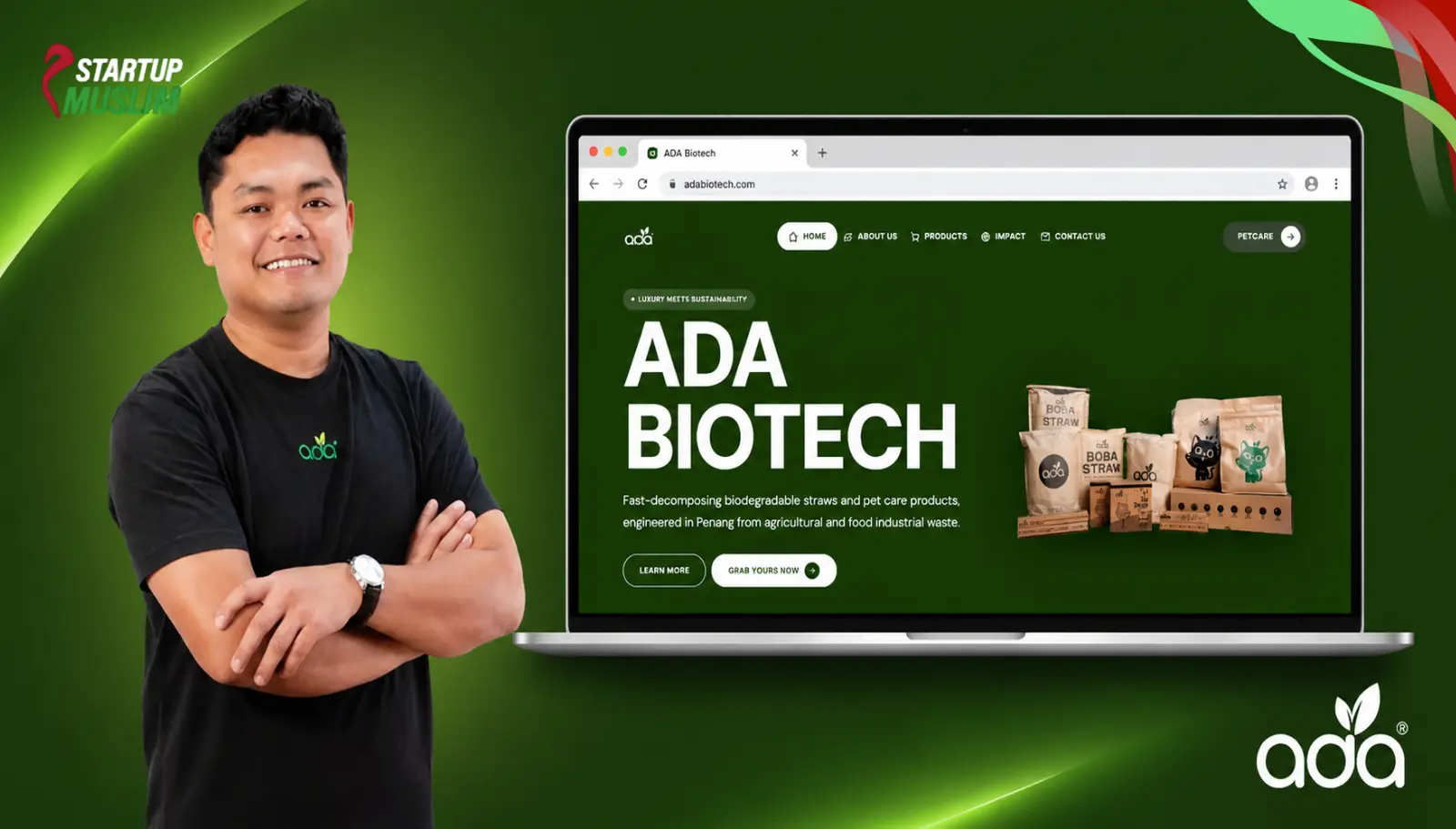
From an engineering career in plastic recycling to building a sustainable manufacturing company, the ADA Biotech co-founder is showing how agricultural resources can become commercially valuable products.
When Akmal Amir began his career as a toolmaker, entrepreneurship was probably not part of his immediate plans. He was trained as an engineer, enjoyed working with machines and understood the satisfaction of solving technical problems. His professional journey took him through manufacturing and plastic recycling, where he spent years learning how materials move through industrial processes. But working in the recycling industry changed how he looked at waste.
What many people considered something to be discarded, Akmal began to see as a resource that could be put to better use. That shift in thinking eventually led him to co-found ADA Biotech, a Malaysian sustainable materials company developing alternatives to conventional single-use plastics using agricultural and plant-based materials. Established in 2019, ADA Biotech has grown from an early-stage manufacturing venture into a business with commercial products, international customers and production capacity running into millions of units. Its journey has not been without financial and technical challenges, but it offers an interesting example of how engineering experience can become the foundation for an entrepreneurial venture.
An Engineer Finds an Opportunity in Waste
Akmal’s professional journey began at Molex, where he worked as a toolmaker after completing a Diploma in Tool and Die Design. He later pursued a Bachelor’s Degree in Machine Tool Manufacturing Engineering at Universiti Kuala Lumpur. His early career was firmly rooted in engineering, manufacturing processes and understanding how machines could be made to work better.
A later move into the plastic recycling industry exposed him to a different set of challenges. He worked as an engineer under the person who would eventually become his business partner at ADA Biotech. Their work involved recycled materials, manufacturing processes and interactions with government departments and agencies responsible for environmental regulation and waste management.
One development caught their attention. In October 2018, Malaysia introduced its Roadmap Towards Zero Single-Use Plastics 2018–2030. For Akmal and his future co-founder, the roadmap presented an opportunity to look beyond recycling and consider alternatives that could reduce the need for certain single-use plastics in the first place. Instead of focusing only on what happened after plastic became waste, they began exploring how alternative materials could be turned into everyday products. In 2019, they established ADA Biotech Sdn Bhd. The former employer and employee became business partners, and Akmal eventually took on the role of CEO.
Why a Drinking Straw Became the First Product
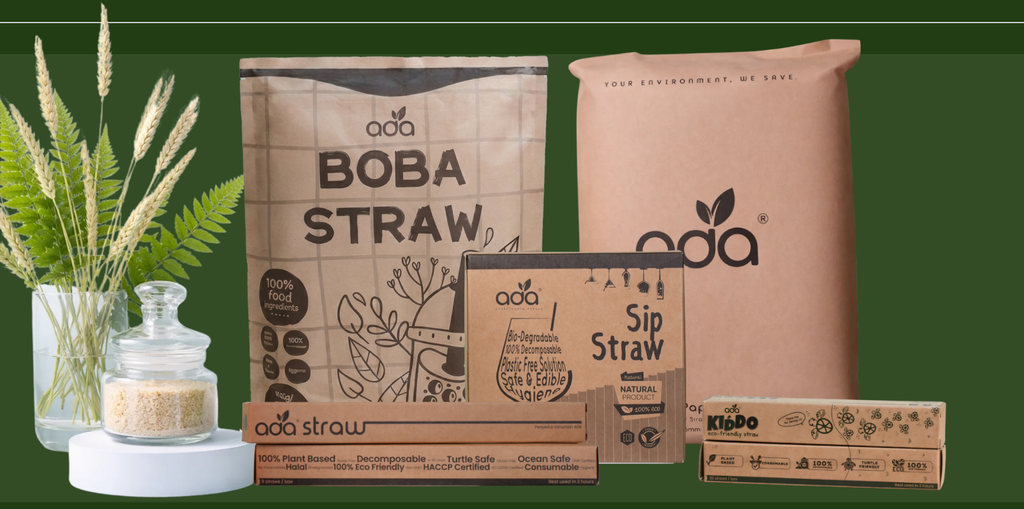
Developing an alternative to plastic was easier to imagine than to manufacture. ADA Biotech began exploring how agricultural starches and other alternative materials could be processed into biodegradable products. The company chose drinking straws as its first major product, launching ADA Straw as a way to demonstrate that everyday plastic items could be replaced with more sustainable alternatives.
The choice was practical. Drinking straws are familiar products used across restaurants, cafés, hotels and food and beverage chains. But making a suitable alternative required much more than finding a material that could be shaped into a straw. It had to remain usable in a drink, offer a good drinking experience, avoid affecting taste and be consistent enough for commercial production.
The company experimented with different formulations involving rice, tapioca and corn-based starches. After repeated testing and improvements, its current formulation uses rejected or off-specification corn starch as its main raw material. This allows ADA Biotech to make use of material that might otherwise have limited commercial value. The development process involved solving one problem after another. Improving durability could expose issues with production efficiency, while changes to the formulation could affect consistency. For Akmal, the experience was a familiar engineering challenge, but with a much bigger commercial responsibility.
He learned that sustainability alone would not persuade customers to change their purchasing habits. The alternative had to be convenient, reliable and commercially viable.

Building More Than a Straw Company
Akmal is clear that ADA Biotech is not intended to remain a drinking straw manufacturer. The company’s broader ambition is to build expertise in sustainable materials, resource utilisation and manufacturing technology. Today, its two main products are ADA Straw and ADA Tofu Cat Litter.
The straw business targets food and beverage chains, cafés, restaurants, hotels and distributors. Its cat litter product is being developed around plant-based and other alternative materials, with a focus on clumping performance, odour control and affordability. Although the products serve different markets, both rely on the company’s knowledge of material processing and manufacturing.
ADA Biotech is now focused on improving production efficiency, strengthening its commercial performance and increasing market penetration. It has established commercial relationships in Malaysia and the Philippines, while developing opportunities in Europe, the Middle East, Australia and the United States.
The company is also exploring the use of other agricultural by-products, including rice husk, sugarcane bagasse and coffee grounds. These materials represent a wider opportunity to create value from resources that are often underused. For Akmal, the long-term goal is to build a business that can develop multiple sustainable products rather than depend on a single category.
From RM60,000 to RM3.88 Million in Revenue
ADA Biotech’s financial journey illustrates the progress of a young manufacturing business. In its first full year of operation in 2020, the company generated approximately RM60,000 in revenue. That figure grew to RM309,000 in 2021, RM1.08 million in 2022, RM2.12 million in 2023 and RM3.88 million in 2024. By 2024, revenue had increased more than 60 times compared with its first full year. In 2025, the company recorded approximately RM3.2 million in revenue, with exports accounting for a significant share. Its manufacturing capabilities have also expanded. The straw production line has an estimated capacity of six to ten million pieces per month, depending on product specifications. The cat litter facilities have an installed capacity of approximately 54,000 packs per month, depending on packaging configuration.
The company has supplied products to established customers, including ZUS Coffee and international hospitality operators. However, Akmal is careful not to equate revenue growth with financial strength. Manufacturing requires ongoing investment in machinery, employees, raw materials, utilities, maintenance, certifications and inventory. A company can have strong customer demand and still face working capital pressure when supplier payments fall due before customer invoices are collected. This is one of the realities Akmal has experienced while growing ADA Biotech. His focus is now shifting towards building a financially sustainable business that can support its employees, suppliers and future expansion.
Recognition, Industry Support and the Work Behind the Awards
Since 2021, ADA Biotech has received recognition through national and international innovation, sustainability and entrepreneurship programmes. Its early achievements included winning the Swiss Innovation Challenge ASEAN in the Open Category in 2021, followed by recognition through the JCI Malaysia Sustainable Development Awards in 2022 and first prize at Ecothon Malaysia in 2023. The year 2024 brought further recognition. The company won the Techsauce Innovation Award, received Best Overall Pitch at NTIS Pitch Perfect and finished as Runner-Up at the
Enter the Tiger’s Lair competition. It also received a Gold Medal at the Universiti Malaysia Perlis Innovation Expo and recognition through the Universiti Malaysia Kelantan Entrepreneurship Awards.
In 2025, ADA Biotech won the MIHAS Innovation and Sustainability Award and received recognition at the Malaysia Smart Manufacturing Awards. It was also Runner-Up in the Commercialisation Category of the Malaysia Commercialisation Year Awards and selected as Judges’ Favourite at the Cyberview Living Lab Accelerator Cohort 20 Demo Day.
Recognition continued in 2026, when the company received the Ten Outstanding Penang Awards in the Sustainability and ESG Leaders category and the Universiti Malaysia Perlis Industry Eminence Awards. It was also recognised among Malaysia’s Top 100 Startups and advanced to the ESG Accelerator Grand Finale of the Alliance Bank BizSmart Challenge. In addition, it was shortlisted for interviews with Danone and AB InBev through the 100+ Accelerator programme. Akmal credits the wider ecosystem, including initiatives involving InvestPenang, Cradle, MIDA, NTIS and SME Corp, for supporting the company’s development. He also values the mentoring, investor exposure and corporate connections that come through these programmes. Yet he sees awards as recognition of potential, not proof that the business has already succeeded.
Engineering the Next Generation of Sustainable Manufacturing
For ADA Biotech, the next phase is not limited to developing new products. Akmal wants to make manufacturing smarter, more efficient and easier to scale. The company is exploring automation, Industry 4.0 and artificial intelligence, including automated inspection, machine vision and data-driven production monitoring. For example, AI-enabled inspection could help identify defective products more consistently and reduce repetitive manual checks. Better monitoring could also help the team understand material consumption, machine performance and areas where energy and resources are being wasted. Akmal is clear, however, that technology must solve a real problem and deliver measurable commercial value.
His ambition is to build a Malaysian sustainable materials and manufacturing technology company with an international presence. Beyond exporting finished products, he wants to explore licensing, joint ventures and strategic partnerships that could allow manufacturing technology developed in Malaysia to be replicated in other countries. The idea is to help markets with abundant agricultural by-products turn those resources into useful products locally, creating employment and supporting local industries. Reaching that stage will require stronger intellectual property, consistent product quality, proven manufacturing economics and the right partners.
For Akmal, the journey is also personal. He wants ADA Biotech to be a place where young engineers can develop their skills, employees can build meaningful careers and products can make a positive contribution. His advice to Muslim entrepreneurs reflects the lessons of his own experience: have faith, put in the work, act responsibly and remain willing to learn. He began as an engineer working for someone who would later become his co-founder. Today, he is building a company that aims to turn underused materials into new opportunities. The ambition is bigger than making a better straw. It is about proving that Malaysian technology can create products and manufacturing solutions that the world wants to use.
