





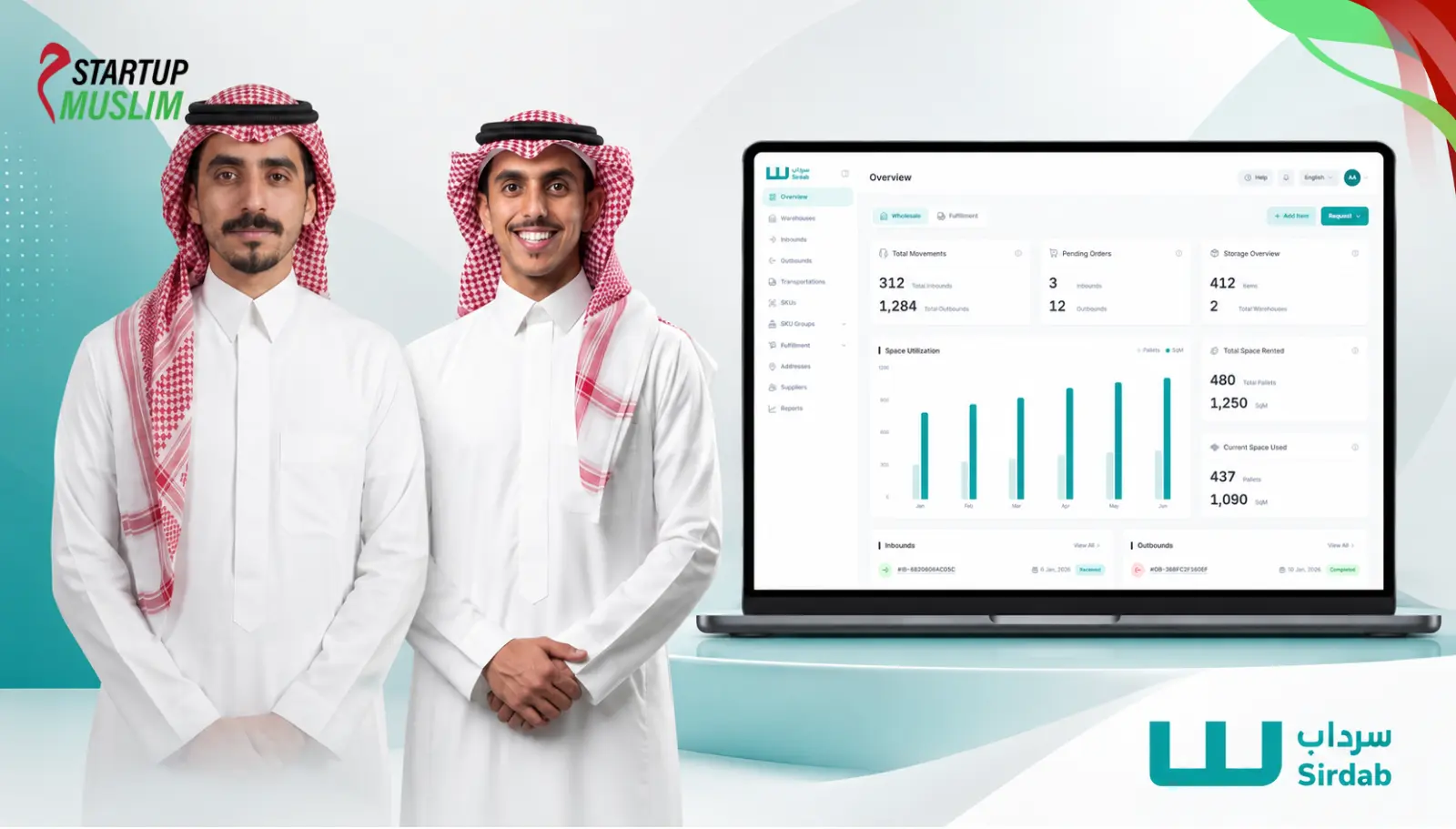
Saudi Arabia-based logistics technology startup Sirdab has raised $10 million (SAR 37.5 million) in Series A funding as it looks to build a more connected and flexible logistics infrastructure for businesses across the Kingdom and the wider GCC.
The round was co-led by Elm, the PIF-backed digital solutions company, and existing investor BECO Capital, with participation from Y Combinator, COTU Ventures and D Global Ventures. The new capital will support Sirdab’s geographic expansion, the growth of its logistics network and further development of its technology platform, including AI-powered tools.
Founded in 2022 by Naif Alzahri and Abdulrahman Alnamlah, Sirdab is tackling a fundamental challenge in a rapidly expanding Saudi economy: giving businesses access to reliable warehousing and transportation capacity without forcing them to build and manage logistics infrastructure themselves.
Turning Fragmented Logistics Into One Platform
For many businesses, logistics becomes increasingly complicated as they expand into new cities, add products and operate across multiple locations. Warehousing, transportation, inventory, orders, billing and compliance are often handled through different providers and systems, creating operational complexity that can slow growth.
Sirdab is positioning its platform as an infrastructure layer connecting these moving parts. Businesses can use the platform to secure verified warehousing and transportation, manage inventory and orders across locations, and monitor service levels from a single system.
On the supply side, Sirdab provides logistics providers with software to standardise operations, share available capacity and manage billing and compliance. The result is an asset-light network designed to make existing logistics capacity more accessible and easier to coordinate.
“Saudi Arabia is building one of the most dynamic logistics markets in the world, and businesses here have enormous room to grow,” said Naif Alzahri, co-founder and CEO of Sirdab. “Sirdab gives them the infrastructure to grow on.”
From Y Combinator To 20x Revenue Growth
Sirdab’s trajectory since its founding has been marked by rapid commercial expansion. The company graduated from Y Combinator’s Winter 2023 batch and says it has grown revenue 20x since then while reaching profitability.
More than 850 businesses now use the platform, including government entities, publicly listed companies and large enterprises across multiple sectors. Its logistics network has expanded to more than 120 warehouses and 60 transportation providers, covering dry, ambient, chilled and frozen logistics.
That scale gives Sirdab an opportunity to address logistics as a network rather than simply as a software problem. Instead of requiring every business to establish its own warehouse relationships and transportation operations, the platform can connect demand with distributed capacity across different locations.
An Asset-Light Approach To Physical Infrastructure
While logistics is inherently physical, Sirdab is not pursuing a conventional strategy of owning large fleets and warehouse portfolios. The company operates an asset-light network supplemented by strategically located company-operated facilities in key logistics hubs.
Its proprietary software is intended to make this distributed infrastructure function as one connected system. Businesses gain visibility and flexibility as they expand, while logistics providers gain access to additional demand and standardised operational workflows.
That model could become particularly relevant as Saudi businesses expand beyond Riyadh and other major commercial centres. Rather than treating every new city as a separate logistics challenge, Sirdab aims to give companies access to a broader network through the same technology layer.
AI Moves Into The Logistics Network
The Series A will also fund deeper investment in artificial intelligence. Sirdab plans to develop AI capabilities that can match businesses with appropriate logistics capacity and automate day-to-day coordination between shippers, warehouses and carriers.
The opportunity extends beyond simply recommending a warehouse or transportation provider. As more transactions and operational data move through the platform, software can potentially help determine which capacity is best suited to a particular requirement, coordinate multiple parties and reduce the manual work involved in managing logistics.
For businesses, that could translate into faster access to capacity and greater operational visibility. For providers, it could mean higher utilisation of existing infrastructure without requiring significant additional capital investment.
Scaling Across Saudi Arabia And The GCC
The new funding comes as Saudi Arabia continues to invest heavily in becoming a major logistics and trade hub. Infrastructure development, e-commerce growth, industrial expansion and the diversification of the economy are all creating new requirements for companies moving goods across the Kingdom.
Sirdab sees an opportunity to become part of that underlying infrastructure. Its immediate focus is expanding across Saudi Arabia while preparing to take its network and technology into the wider GCC.
“This funding allows us to bring that to many more businesses across the Kingdom and the GCC,” Alzahri said, referring to Sirdab’s ambition to make quality logistics capacity accessible as companies expand.
The Series A therefore represents more than a capital injection for geographic growth. It gives Sirdab additional resources to expand both sides of its marketplace, deepen its technology and build the operational density required for a logistics network to become increasingly valuable.
Building The Infrastructure Businesses Grow On
Sirdab’s investors are betting that the next generation of Saudi businesses will need logistics infrastructure that is more flexible than traditional provider-by-provider models.
With more than 850 businesses already on the platform, 120-plus warehouses and 60-plus transportation providers, Sirdab has built an early foundation for that vision. The next stage will be determining whether its combination of software, physical capacity and AI can scale from a Saudi logistics platform into a broader GCC infrastructure layer.
For Sirdab, the ambition is straightforward: make logistics capacity easier to access, easier to manage and increasingly intelligent—so businesses can focus on growth rather than the complexity of moving what they sell.


