


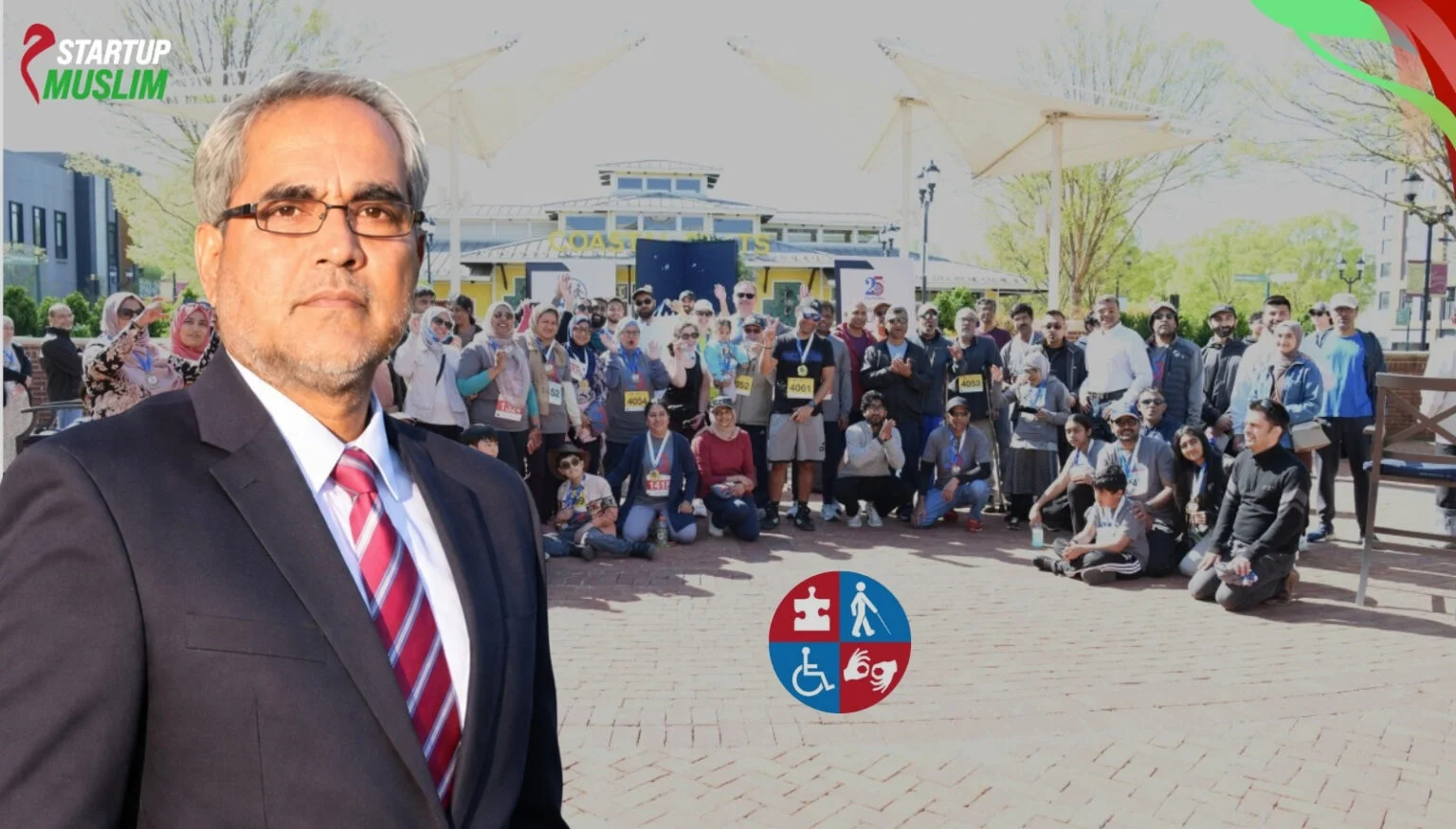
For Mohammed Yousuf, disability inclusion is not an abstract mission. It is personal. Born in India, Yousuf became a polio survivor at a very young age. Growing up with a disability in an environment where accessibility was extremely limited shaped nearly every part of his early life.
Education, mobility, opportunity, and dignity were not always easily accessible—not because of a lack of ability, but because the systems around him were not designed to include people like him. Those experiences could have become barriers. Instead, they became the foundation for his life’s work.
Today, as the founder of EquallyAble Foundation, Mohammed Yousuf is helping build a global movement focused on disability inclusion, accessibility, entrepreneurship, and economic empowerment. His work is rooted in a simple but powerful belief: disability should never limit human potential.
Building From Lived Experience
The idea for EquallyAble came from a realization that millions of people with disabilities around the world were facing the same barriers he had experienced growing up—limited access to education, employment, technology, and dignity.
After working across engineering, policy, accessibility, and innovation, Yousuf saw a gap between intention and action. Many institutions spoke about inclusion, but far fewer were building systems where people with disabilities could fully participate, lead, and thrive.
With encouragement from his supervisor, his wife, and a group of friends, he launched EquallyAble to shift the conversation away from charity and toward opportunity. For Yousuf, inclusion is not just a social issue. It is an economic and human rights imperative. That philosophy continues to shape the organization’s work today.
Empowerment Over Dependency
EquallyAble’s programs are designed around one core principle: people with disabilities should not be treated as passive recipients of help. They should be seen as innovators, entrepreneurs, leaders, and contributors.
The organization’s work spans inclusive employment, assistive devices, digital accessibility, entrepreneurship initiatives, and community-centered programs across multiple countries. But what makes its approach distinct is that the voices of people with disabilities are placed at the center of the work.
For Yousuf, this is essential. His own journey taught him that disability is not the weakness. The real challenge is often inaccessible systems, limited opportunity, and social assumptions that underestimate human potential. EquallyAble works to remove those barriers.
Where Policy Meets Innovation
Beyond his nonprofit work, Yousuf has also built a career at the intersection of engineering, accessibility, technology, and public policy.
He has led national transportation innovation initiatives at the Federal Highway Administration and later served as Director at the Federal Transit Administration. He also contributed to federal reports focused on aging, autism transition to adulthood, intellectual disabilities, inclusive technology, and accessibility.
One of his major contributions was architecting a National Accessible Transportation Research Initiative identifying significant social impact opportunities through policy and institutional interventions to support independent mobility for disabled and aging populations.
For him, accessibility must be built into innovation from the beginning—not added later as an afterthought. As technologies such as AI, smart mobility, automation, and digital infrastructure reshape society, he believes inclusion must be embedded at the design stage. Otherwise, new systems risk recreating old barriers.
The Human Impact
Among the many moments that have stayed with him, one stands out. A young person with a disability once told him, “For the first time, I feel seen and capable.” That sentence captured the heart of EquallyAble’s mission.
Sometimes impact is measured in jobs created, programs launched, or technologies deployed. But sometimes the most meaningful transformation is internal: dignity restored, confidence renewed, and a person beginning to see their own potential again.
Through EquallyAble, Yousuf has seen individuals who were once excluded from education or employment become entrepreneurs, advocates, and leaders in their communities. To him, that transformation proves what becomes possible when society removes barriers.
Faith, Resilience, And Service
As a Muslim leader, Yousuf says faith has been one of the greatest sources of strength in his life. Islamic values of compassion, justice, patience, gratitude, and service have shaped both his resilience and his leadership. His faith reminds him that every human being has inherent dignity and value, regardless of ability, background, or status.
In many ways, EquallyAble is an extension of those values. It is a platform built to uplift marginalized communities, expand access, and create systems rooted in equity and compassion.
Advice For Young Muslim Entrepreneurs
For young Muslim entrepreneurs—especially those facing barriers—his advice is clear: do not underestimate the power of your story. Your struggles can become your strength. Your challenges can become the foundation of innovation and leadership.
He encourages founders not to wait for perfect conditions. Start where you are. Use what you have. Stay consistent. Surround yourself with people who believe in your vision. Keep learning.
Most importantly, lead with purpose. For Yousuf, success is not measured only by profit. It is measured by impact, service, and the ability to create opportunities for others.
A Legacy Of Inclusion
The legacy he hopes to leave behind is a world where disability inclusion is no longer treated as optional, exceptional, or merely inspirational.
He wants inclusion to become a natural part of society. Through EquallyAble, his goal is to help create systems where people with disabilities are recognized not for their limitations, but for their leadership, creativity, innovation, and contribution.
His journey—from a young polio survivor in India to a global advocate for accessibility and economic empowerment—is a reminder that lived experience can become a blueprint for change. And through EquallyAble, Mohammed Yousuf is building that change one barrier, one opportunity, and one life at a time.
