


From Managing NHS Teams at 18 to Building an AI Hiring Platform
Ahmed Ghelle’s path into entrepreneurship began unusually early. During the pandemic, at just 18 years old, he was promoted to Team Manager at Sitel as part of the NHS Test & Trace programme in the UK. The role placed him in charge of teams ranging from 20 to 40 people, handling performance, attendance, and operational compliance during one of the most demanding periods for public health systems.
That experience exposed him to something that would later shape the foundation of his startup. Hiring decisions were not abstract corporate processes. They directly impacted people’s livelihoods, opportunities, and futures.
Before founding Merra, Ghelle operated a talent marketplace focused on connecting Southeast Asian software engineers with global companies. The platform attracted more than 800 engineer sign-ups, but the deeper issue soon became clear. The challenge was not simply sourcing talent. It was screening candidates fairly, efficiently, and at scale.
That realization led to the creation of an internal AI interviewer, a tool initially built to solve the company’s own operational bottleneck. Over time, the team recognized that the screening layer itself was fundamentally broken across the hiring industry.
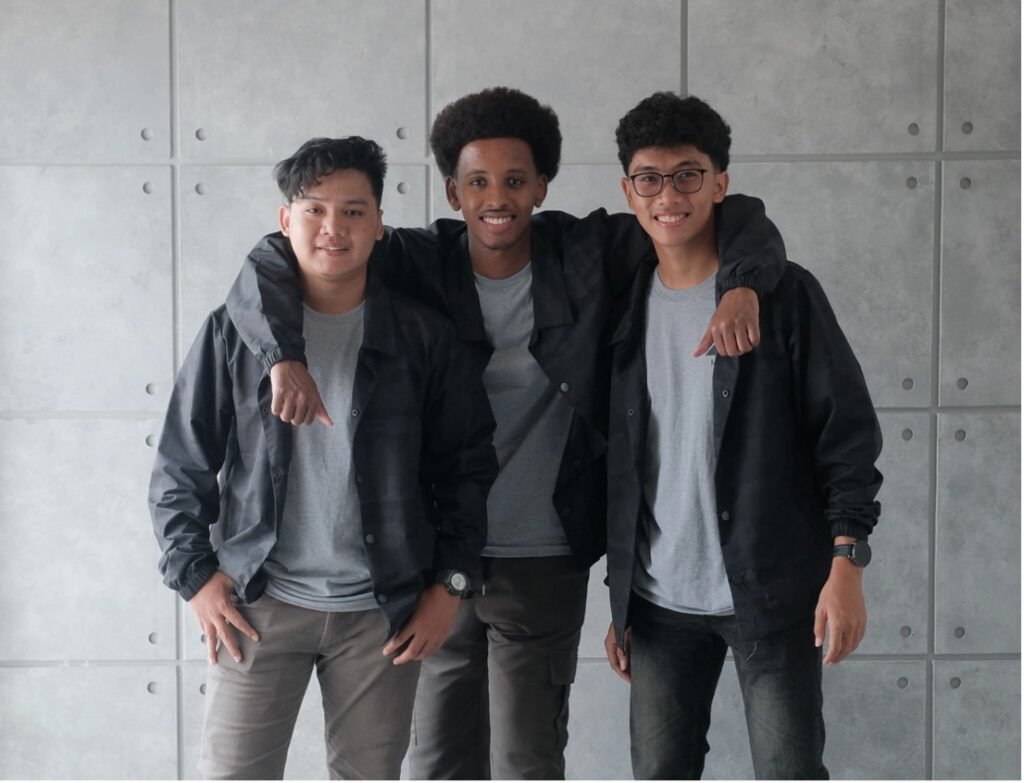
Today, Ghelle leads Merra from London alongside his technical co-founders Mazka and Samuel in Indonesia. The startup is also part of the Warwick Enterprise Start-up Programme and operates through Warwick Business School at The Shard.
Solving the Screening Problem in Hiring
The inspiration behind Merra came from experiencing hiring failures from both sides of the process. As candidates, the founders experienced the frustration of applications disappearing into what felt like a black hole. Applicants could spend hours preparing CVs and applying for roles, only to be filtered out within seconds or pushed into one-way interviews with no human interaction.
On the employer side, the problem looked different but equally severe. Recruiters were overwhelmed by application volume and lacked the time to properly evaluate every candidate. This often resulted in strong applicants being overlooked while hiring decisions became increasingly dependent on polished CVs and keyword optimization.
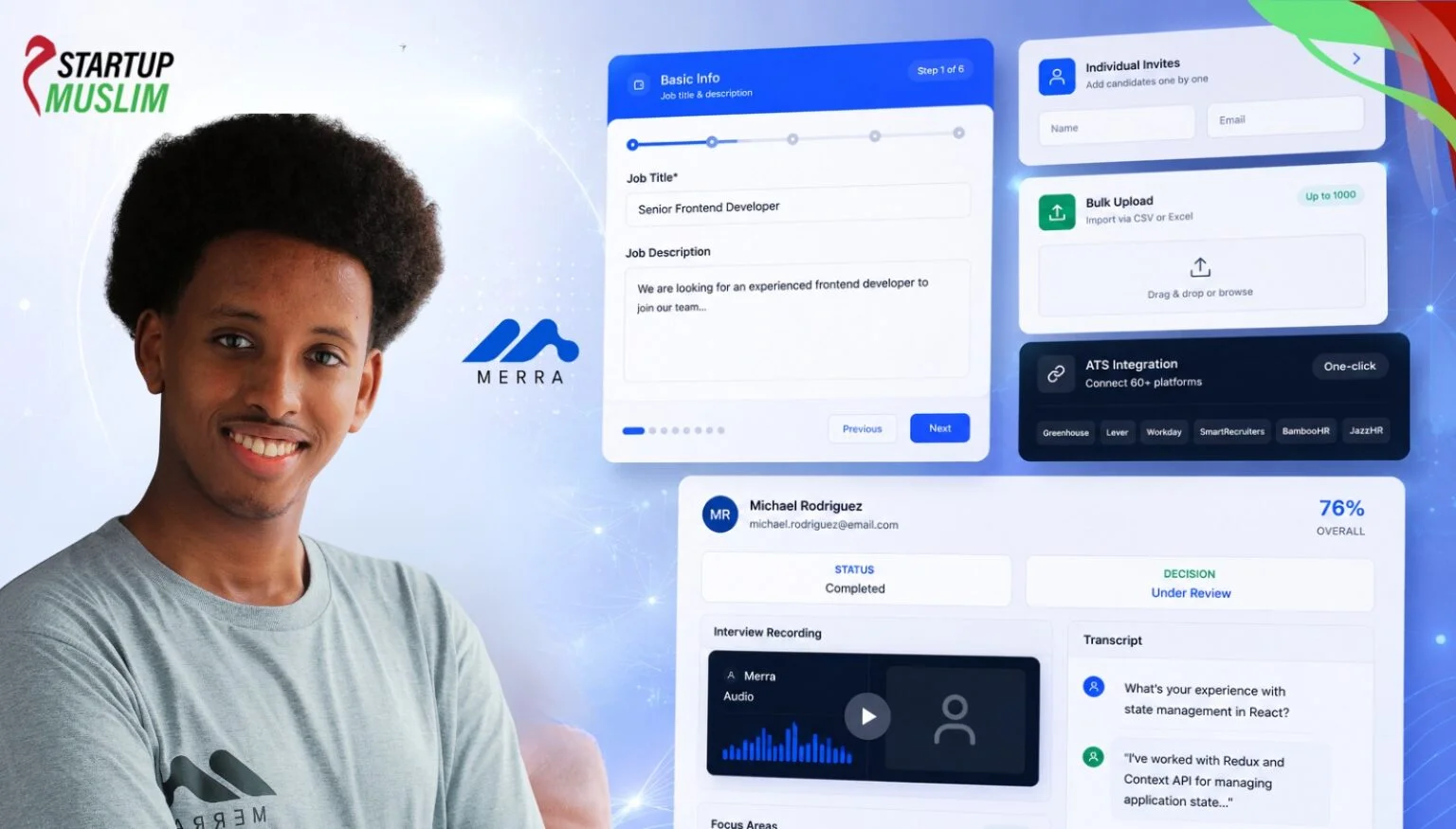
Merra was built to address this gap. The platform conducts structured AI video interviews that allow candidates to engage in a two-way conversation rather than simply submitting static information. Employers receive interview recordings, transcripts, scored evaluations, and ranked shortlists that provide more structured evidence before human hiring decisions are made.
“We’re not trying to remove humans from hiring,” Ghelle explains. “We’re trying to give humans better evidence.” Alongside the employer-facing product, the company also launched Merra Practice, a platform that allows students and jobseekers to practice realistic AI-powered interviews and receive feedback before facing real employers.
Building an AI Platform Focused on Both Sides of Hiring
One of the defining aspects of Merra’s approach is that it treats both companies and candidates as users of the platform. Many HR technology products focus almost entirely on employer workflows, reducing applicants to rows inside applicant tracking systems. Merra is attempting to create a system that improves hiring efficiency while also giving candidates a more structured and transparent experience.
For Ghelle, this dual focus is what makes the company meaningful. “Hiring is one of the biggest opportunity gateways in someone’s life,” he says. “A single interview can change someone’s income, confidence, family situation, and future.” That philosophy has shaped how the company develops its product and measures impact.
Early Traction Through Organic Growth
Although still at an early stage, Merra has already begun showing signs of traction. According to the company, Merra Practice has generated 331 sign-ups year-to-date, with 228 practice interviews started and 105 completed entirely through organic distribution. Weekly sign-ups reportedly increased from around 5 to 10 per week earlier in the year to between 35 and 89 per week during April and May, without paid acquisition.
On the enterprise side, the company launched its first pilot with a global media intelligence company that hires approximately 600 employees annually. The opportunity emerged through founder-led cold outreach, a strategy that has become central to Merra’s go-to-market approach.
The company has also contacted more than 460 senior talent acquisition leaders across over 420 organizations while building awareness through content distribution. Ghelle notes that his LinkedIn presence generates more than one million monthly impressions, helping drive visibility and user growth for the platform.
Merra remains pre-seed and has not yet raised venture funding, though it has received support through programs including Warwick Enterprise and NVIDIA Inception.
Pivoting Toward the Real Problem
One of the biggest challenges Merra faced was identifying the correct market wedge. The company initially focused on the talent marketplace model, believing that candidate supply was the primary problem. However, despite attracting hundreds of engineers, the founders realized that employers were not struggling to find candidates. They were struggling to evaluate them effectively.
That insight forced a strategic pivot. Rather than remaining attached to the original business model, the team focused on the deeper pain point: trust and screening.
This transition also exposed another challenge. HR technology is a crowded market, and talent leaders are constantly approached by AI startups promising automation. Merra responded by abandoning generic sales messaging and instead focusing on highly specific hiring pain points within organizations.
According to Ghelle, staying close to users and conducting founder-led sales has been critical in refining both the product and positioning.
Building Toward an Evidence-Based Hiring System
In the short term, Merra is focused on converting enterprise pilots into paying customers while continuing to grow Merra Practice among students and early-career jobseekers.
The company sees a particularly large opportunity in high-volume hiring environments where recruiters cannot manually screen every applicant effectively. Long term, the vision extends beyond operational efficiency.
Ghelle believes hiring systems will eventually rely less on polished CVs and more on structured evidence generated through interviews and interactions. If enough candidates interview and practice through platforms like Merra, hiring could become more merit-based and less dependent on traditional filtering mechanisms.
Leadership Rooted in Fairness and Responsibility
The values guiding Merra revolve around fairness, ownership, and usefulness. Fairness matters because hiring decisions shape lives. Ownership matters because startups require every team member to take responsibility beyond narrow job descriptions. Usefulness matters because, in Ghelle’s view, technology should solve real problems rather than simply sound impressive.
As a Muslim founder, he also speaks about the concept of amanah, the idea of trust and responsibility. Building a company, he says, is not only about growth metrics. It is about being trusted with people’s time, careers, opportunities, and personal data.
Building a More Human Hiring Process
Despite building with AI, Ghelle’s long-term vision for Merra is fundamentally human. He does not see artificial intelligence as a replacement for judgment, but as a tool for removing broken parts of the hiring process such as rushed screening, inconsistent evaluations, and candidate neglect.
If the platform succeeds, he hopes it will create a world where more people receive genuine opportunities based on how they think, communicate, and perform rather than how well they optimize a CV. “The legacy I’d like,” he says, “is that Merra helped people access opportunities they might otherwise have missed.”
