





Egypt produces tens of thousands of tonnes of municipal waste every day, yet much of the country’s recycling activity happens outside formal systems. Collectors move recyclable material, households sell what they can, and factories depend on a fragmented supply chain, but much of the activity remains difficult to track, verify or document.
Cairo-based startup Bekia is attempting to change that. The company has raised $765,000 in a seed round led by Madica, the Africa-focused investment programme affiliated with Flourish Ventures, with participation from returning investor Catalyst Fund and Dakar-based Jambaar Capital.
The funding comes as Egypt seeks to increase its municipal recycling rate to 60% by 2027. Bekia plans to use the capital to expand its engineering team, launch its first B2B software product, Bekia Next, and begin testing its model in another African market.
Egypt’s Recycling Economy Already Exists. It Just Isn’t Visible
Bekia’s starting point is not the creation of a recycling market. That market already exists.
Egypt produces approximately 60,000 tonnes of municipal waste every day, according to the company’s announcement, with much of it ending up in open dumps rather than recycling facilities. At the same time, almost all collection that takes place today operates through an informal trade network without the contracts, licences and records that would make the movement of material easier to track.
For Bekia founder and CEO Alaa Afifi, that fragmentation represents the real opportunity.
“Egypt’s recycling sector has always worked — it just worked invisibly, on cash and trust, with no record of any of it,” Afifi said. The company’s objective is to create that missing layer of records, connecting households, collectors and recycling factories through a technology-enabled system.
The result is intended to make recyclable material more traceable from the moment it leaves a household to the point where it enters the industrial supply chain.
Starting With a Pickup App
Afifi founded Bekia in 2019 after graduating in computer science from Cairo University.
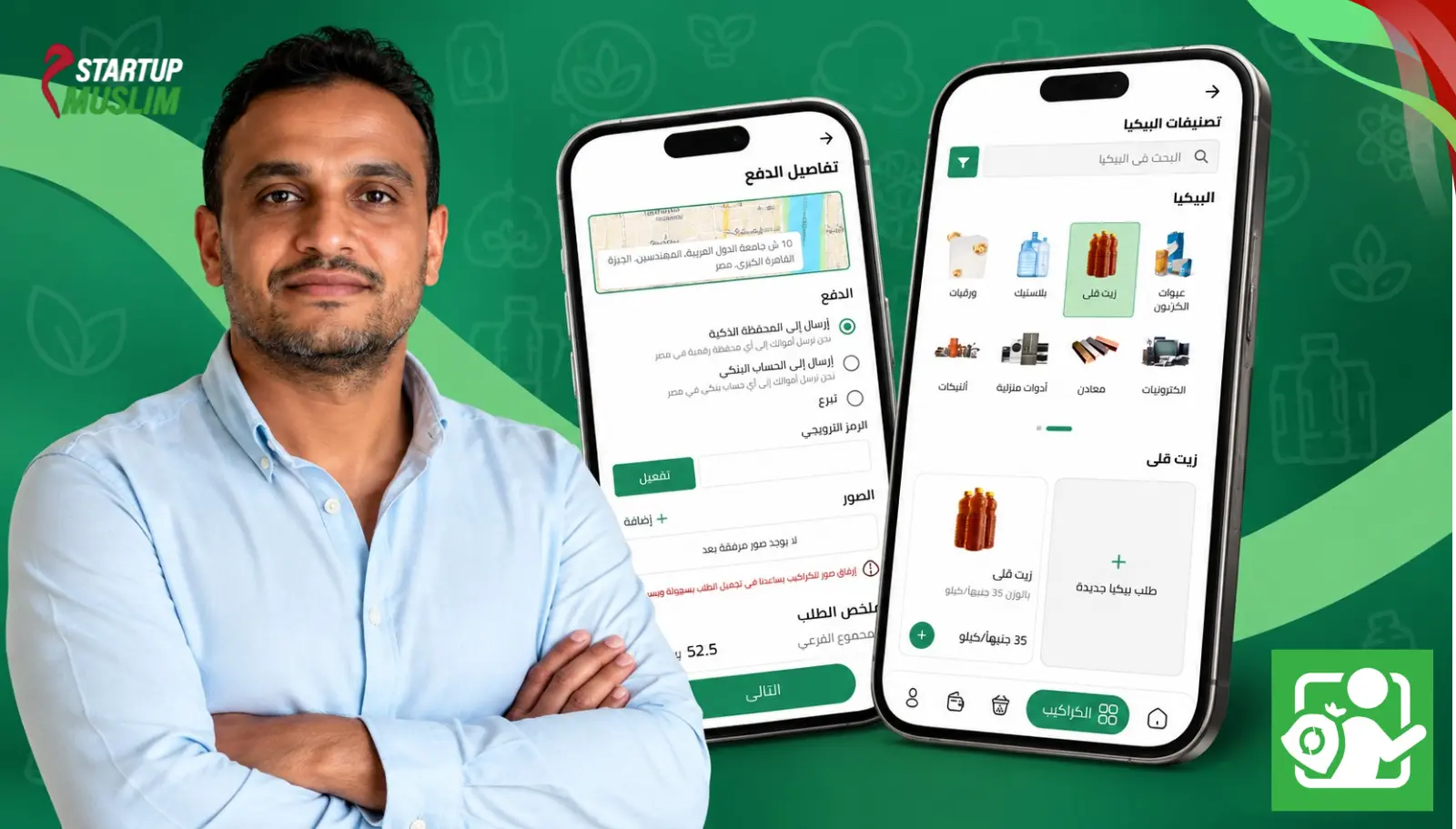
The company initially approached the problem from the consumer side. Through Bekia’s app, a household can book a collection, a collector arrives at a scheduled time, recyclable material is weighed on the spot at a published rate, and payment is transferred to a bank account or digital wallet.
The model addresses a simple but significant gap. Households possess recyclable material, while factories need that material as an industrial input, but there has historically been little technology connecting the two sides in a structured way.
Bekia’s platform records each transaction, including the supplier, weight, grade and payment. That information gives the company something more valuable than a series of individual collections: a growing dataset describing the movement of recyclable material through the ecosystem.
The company says it has now diverted more than 25,000 tonnes of waste from landfill and served over 100,000 customers, with women accounting for 97% of its customer base. More than 2,400 people earn through Bekia’s network.
Turning Waste Data Into a B2B Product
The next stage of Bekia’s evolution moves beyond collection.
At the end of October, the company plans to launch Bekia Next, its first subscription-based product. The platform will use Bekia’s collection data to generate verified CO₂-avoidance certificates for corporate clients, using established international carbon accounting methodology.
That changes what Bekia is selling.
Its original consumer product facilitated the movement of recyclable materials. Bekia Next turns the information generated through those transactions into a product for businesses that need greater visibility into their environmental impact and waste flows.
This could become increasingly relevant as reporting requirements tighten for multinational companies operating in Egypt. For businesses, removing waste is one thing; being able to demonstrate what happened to that waste is another.
Afifi believes that distinction will increasingly affect how companies evaluate waste-management partners.


Building a Formal Layer for an Informal Market
Bekia operates between several parts of Egypt’s existing waste economy.
Traditional contractors can move material but may not provide the detailed digital records required by increasingly data-driven businesses. Informal collectors already handle a significant share of recyclable material, but their activities are often not captured in formal systems.
Bekia’s proposition is therefore less about replacing those participants than connecting them through technology.
The company says enterprise retention is now above 95%, while the business has grown more than sevenfold since 2023. Revenue comes from enterprise contracts, household collections and refurbished electronics, with the latter beginning to generate revenue in June 2026.
That diversification is significant because it gives Bekia several commercial pathways while keeping the company’s core activity tied to the same underlying ecosystem: collecting, processing, tracking and creating value from material that would otherwise be discarded.
The company’s investors see that connection between commercial activity and environmental impact as one of its defining characteristics.
Investors See Climate Infrastructure in Recycling
Madica led Bekia’s latest round, while Catalyst Fund, which first invested in the company in 2023, returned for the seed financing. Jambaar Capital also participated.
Emmanuel Adegboye, Head of Madica, said the company stood out for its firsthand understanding of waste collection in Egypt and its attempt to create a more interconnected technology-driven ecosystem serving households, small businesses and industrial waste producers.
For Catalyst Fund, the decision to reinvest followed Bekia’s growth since its initial investment. Partner Maxime Bayen highlighted the company’s more than sevenfold growth and its development into a stronger B2B-led platform.
Jambaar Capital Managing Partner July Andraous similarly described Bekia as an example where commercial growth and impact creation are closely connected. The investor pointed to the company’s ability to give collectors access to formal routes to market, provide households with an incentive to recycle and offer companies greater traceability.
The common thread in all three perspectives is infrastructure. Bekia is not simply positioning itself as another recycling company. It is attempting to build the technology layer that makes a fragmented recycling economy more measurable and connected.
From Egyptian Recycling to African Infrastructure
The immediate priorities are straightforward: grow the engineering team, launch Bekia Next and test the model in a second African market.
But the larger opportunity lies in whether the infrastructure Bekia has developed for Egypt can travel to other markets where waste collection similarly operates through fragmented networks.
The company’s progress suggests that the value of recycling may increasingly extend beyond the physical material itself. A kilogram of plastic, metal or electronics has a commodity value, but the data documenting where it came from, how it was collected and where it ultimately went can carry a different kind of value for businesses and regulators.
That is the layer Bekia is attempting to own.
As Egypt’s recycling ambitions become increasingly connected to corporate reporting, climate commitments and formalization of the waste sector, the companies capable of creating reliable records around the movement of waste could become increasingly important.
For Bekia, the next phase is therefore not simply about collecting more waste. It is about turning an informal, largely invisible system into a measurable digital economy.


