





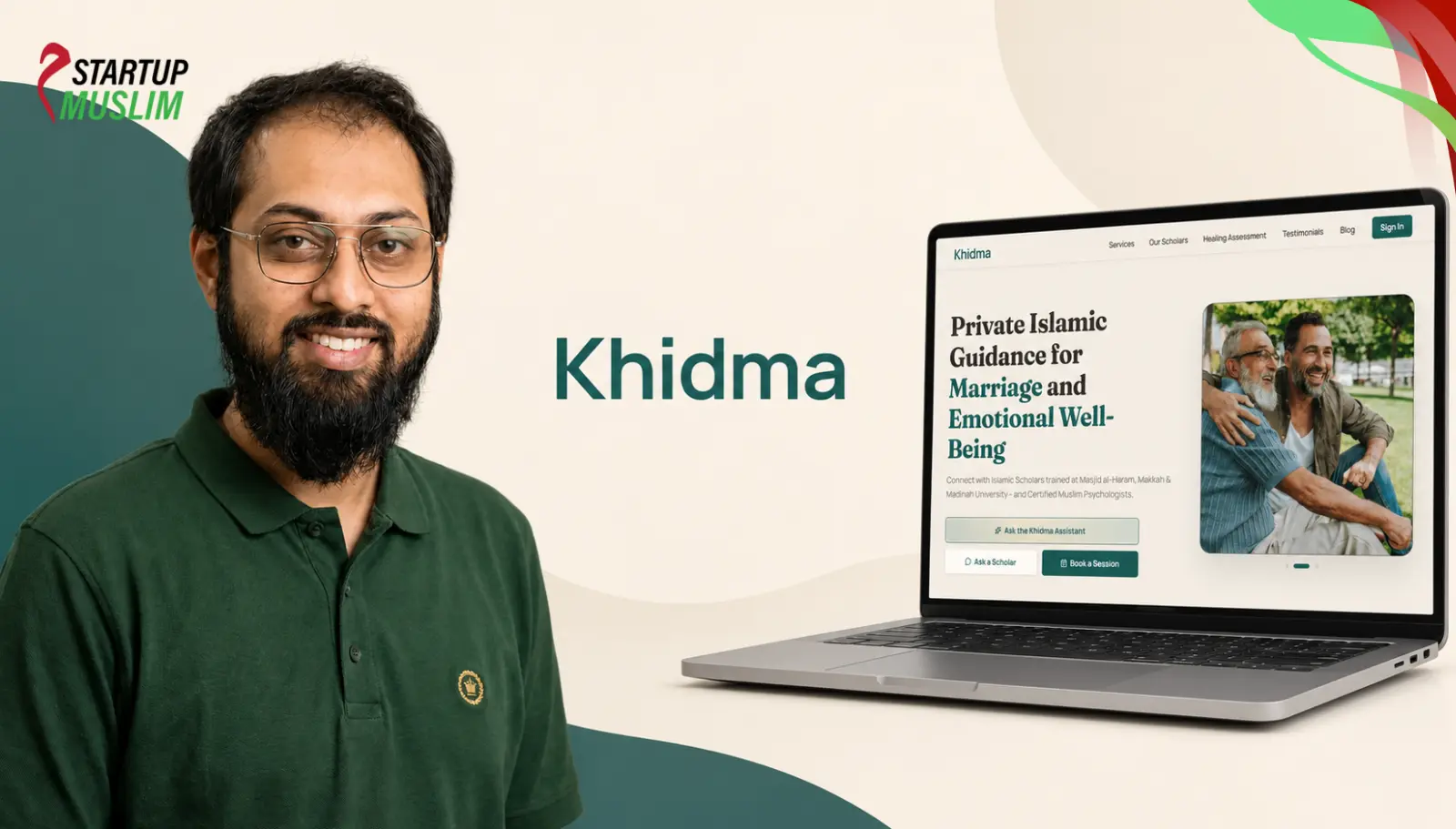
For centuries, seeking Islamic guidance was never supposed to be complicated. A Muslim facing a difficult marriage, struggling with anxiety, or seeking clarity on a religious matter could simply sit with a trusted scholar, ask questions privately, and leave with both knowledge and reassurance.
Somewhere along the way, that relationship quietly disappeared.
Today, millions of Muslims—particularly those living outside traditional Muslim societies—find themselves navigating life’s biggest decisions through search engines, anonymous online forums, social media influencers, or increasingly, artificial intelligence. The information available has never been greater, yet trusted guidance has arguably never been harder to access.
It was this growing disconnect that inspired Adeeb Sayeed to build Khidma, a platform designed to reconnect Muslims with qualified scholars and faith-based mental health professionals through technology.
The idea did not begin with a business opportunity. It began with something deeply personal.
When Access Becomes the Real Problem
Growing up in a Muslim household, Adeeb noticed something that many families simply accepted as normal. The women in his own family—including his mother and sister—had little direct access to qualified Islamic scholars. If they had questions about their faith, their rights, or deeply personal matters, they often relied on someone else to ask on their behalf. Sometimes they simply chose not to ask at all.
The silence surrounding mental health was even greater. Ironically, Adeeb believes this silence contradicts Islam’s own intellectual tradition. Long before psychology became a modern discipline, scholars such as Imam Al-Ghazali and Ibn al-Qayyim wrote extensively about emotional wellbeing, spiritual diseases, self-reflection, and the human soul. Islam never lacked a sophisticated understanding of the human psyche.
“The knowledge was always ours,” Adeeb says. “We simply stopped reaching for it.”
That realization remained in the background until life presented an even clearer example. His future co-founder went through a painful divorce. Like many Muslims facing major life events, he wasn’t looking only for emotional support. He also needed to understand what Islam actually said about his situation. Because he personally knew qualified scholars, he could call them directly and receive trusted guidance. Most Muslims cannot. That experience became the foundation of Khidma.
“The knowledge exists. The scholars exist. The access doesn’t.”
A Crisis Hidden in Plain Sight
As the founders began researching the problem, they discovered that the issue extended far beyond their own experiences. Through conversations with more than 1,000 users, the same themes emerged repeatedly. People wanted guidance. They simply didn’t know where to find it.
The local imam was often unavailable, oversubscribed, or closely connected to the same community, making sensitive conversations uncomfortable. Family members were not always the safest people to confide in. Traditional therapy frequently struggled to understand a worldview where faith is inseparable from identity, family, and daily life.
Online fatwa websites solved another problem while creating a new one. Although answers were readily available, they were often generic, public, and difficult to verify. At the same time, social media had created a generation of religious influencers whose popularity frequently exceeded their qualifications.
“The internet gave everyone a mimbar,” Adeeb observes. In an era where anyone can publish religious opinions online, trust has become one of the rarest commodities. Perhaps the most revealing statistic came from Khidma’s own users. 65% had never spoken to any professional about their struggles before discovering the platform. That number surprised even the founders.
“We’re not their first choice,” Adeeb explains. “We’re their last remaining one.”
Faith and Mental Wellbeing Are Not Separate Conversations
One insight became impossible to ignore. For many Muslims, religious questions and emotional struggles arrive together. Someone navigating divorce wants to know both the Islamic ruling and how to cope emotionally. A person experiencing waswasa seeks theological reassurance alongside psychological support. Someone trying to become closer to Allah often wrestles simultaneously with anxiety, guilt, or uncertainty. Khidma’s own research reflects this reality.
75% of users say they need both Islamic guidance and emotional support—not one or the other.
That finding challenged a long-standing assumption that religious counseling and mental healthcare should exist separately. Instead, Adeeb believes Muslims deserve support that understands the whole person. Faith is not merely one aspect of identity. It shapes how many Muslims understand family, purpose, morality, suffering, and healing itself. Any solution that ignores that dimension, he argues, is only addressing half the problem.
That realization would ultimately shape not only Khidma’s product, but its entire philosophy—a platform where qualified scholars, Muslim psychologists, and carefully designed technology work together to restore something that previous generations often took for granted: trusted access to guidance.
Building Trust in an Age of Algorithms
The rise of artificial intelligence has transformed how people search for information. Today, millions of Muslims ask ChatGPT, search Google, or watch short videos on social media when they have questions about their faith. Information has become instant, abundant, and accessible. Trust, however, has become much harder to find.
For Adeeb Sayeed, this is the defining challenge of the digital age. The internet has democratized access to religious content, but it has also blurred the line between qualified scholarship and personal opinion. Social media rewards confidence over credentials, while AI systems can generate convincing answers without understanding the religious weight behind them.
“The internet gave everyone a mimbar,” Adeeb says. “People are making life-changing decisions based on advice from influencers or AI that may have no scholarly foundation.”
Khidma was built as a response to that problem—not by replacing technology, but by redefining its role.
Technology Should Expand Access, Not Replace Scholars
Unlike many AI startups, Khidma does not see artificial intelligence as a substitute for human expertise. Instead, the platform is designed around a simple principle: technology should improve access to qualified scholars, not replace them.
The platform connects Muslims with verified scholars—graduates of institutions such as Masjid al-Haram in Makkah, Madinah University, and the Fatwa Centre in Makkah—alongside certified Muslim psychologists who understand both clinical practice and the realities of faith-centered living.
Users can enter the platform in several ways. They can submit a question and receive a private audio response from a real scholar, book one-on-one sessions with scholars or Muslim psychologists, or complete a personalized Nafs Assessment that helps match them with the right expert based on their circumstances. For routine questions and references, Khidma AI provides immediate assistance, but every significant religious or personal matter ultimately returns to qualified human experts.
“AI shapes the path,” Adeeb explains. “The scholar and psychologist decide the direction.”
That distinction is central to Khidma’s philosophy. Technology makes expertise more accessible. It does not replace the expertise itself.

Where Faith and Mental Wellbeing Meet
One of the most significant insights to emerge from Khidma’s research is that Muslims rarely experience religious and emotional struggles separately. A person navigating divorce wants to understand both the Islamic ruling and how to process the emotional pain that follows. Someone battling waswasa needs theological clarity alongside psychological support. Even Muslims striving to strengthen their worship often wrestle with anxiety, guilt, or self-doubt at the same time.
According to Khidma’s user research, 75% of users say they need both Islamic guidance and emotional support—not one or the other. That finding challenged the traditional separation between religious counseling and mental healthcare.
For Adeeb, faith is not merely one aspect of identity. It shapes how Muslims understand family, purpose, suffering, forgiveness, and hope. Any form of counseling that ignores faith risks overlooking a significant part of the individual. Likewise, religious guidance without addressing emotional wellbeing often leaves deeper wounds unresolved.
Khidma was designed to bridge that divide by allowing scholars and Muslim psychologists to complement one another, helping users make decisions with both spiritual confidence and emotional clarity.
Privacy Is Not a Feature—It’s the Foundation
For many users, the greatest barrier to seeking help is not finding the right expert. It is feeling safe enough to ask the question. Sensitive conversations about marriage, divorce, family conflict, addiction, or mental health often remain unspoken because people fear being recognized or judged within their own communities.Rather than treating privacy as an optional setting, Khidma built it into the architecture of the platform.
Consultations are conducted through encrypted, audio-only sessions, allowing users to speak openly without worrying about video, screenshots, or conversations becoming visible in shared households. Questions submitted to scholars remain private, and responses are delivered personally in the scholar’s own voice.
For users carrying burdens they have never shared with anyone before, that sense of confidentiality is often the difference between seeking help and continuing to suffer in silence.
Growing Through Listening, Not Guessing
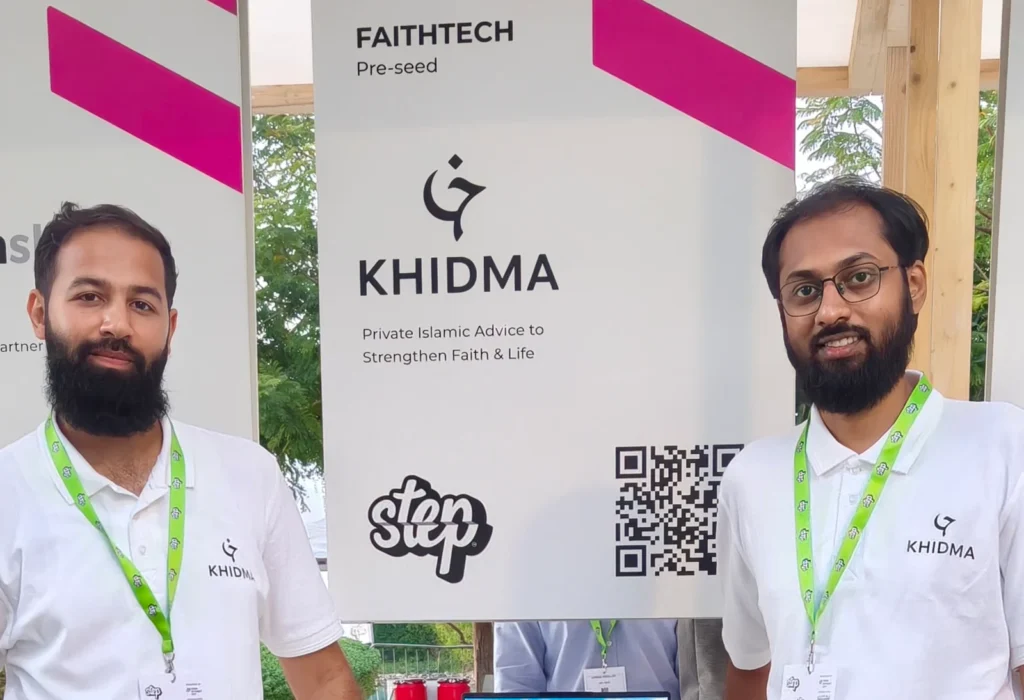
Perhaps one of the most remarkable aspects of Khidma is that it has reached this point without external funding. The company remains bootstrapped, generating approximately $2,500 in monthly recurring revenue while delivering more than 200 paid counseling sessions, answering over 3,000 questions, maintaining an 8 out of 10 average user rating, and achieving a 31.8% repeat usage rate.
Adeeb attributes much of that progress to a philosophy that has shaped the company from the beginning. Build nothing until someone asks for it. Khidma did not begin as a sophisticated application powered by artificial intelligence. It began with a simple WhatsApp number.
Scholars manually answered users’ questions one message at a time. Counseling sessions were organized manually. Every feature that exists today—including private Q&A, expert sessions, assessments, and AI assistance—was first validated manually before the team invested in building software. Bootstrapping forced discipline.
Without unlimited capital, there was no room for assumptions or unnecessary features. Every product decision had to emerge directly from user behavior rather than internal brainstorming sessions.
For Adeeb, that constraint became one of the company’s greatest advantages. Instead of building technology first and searching for problems later, Khidma allowed real users to shape the platform from the very beginning.
Building the Future of Faith-Centered Wellbeing
For Adeeb Sayeed, Khidma is not simply another startup operating at the intersection of technology and healthcare. Nor is it just an online platform connecting users with scholars. He believes it is part of solving a much larger challenge facing Muslim communities around the world: the growing gap between authentic Islamic knowledge and the people who need it most.
“The issue isn’t a failure of faith,” he says. “It’s a failure of access.”
That distinction is important. Across the world, awareness of mental health has grown dramatically over the past two decades. Governments, schools, and workplaces have invested heavily in making psychological support more accessible. Within many Muslim communities, however, progress has been slower—not because Islam lacks an understanding of emotional wellbeing, but because faith-based mental health support remains remarkably limited. As a result, many practicing Muslims seeking professional help often find themselves explaining their religion before they can explain their problem.
Faith, Adeeb argues, is not simply another aspect of identity. It shapes how Muslims understand family, purpose, suffering, forgiveness, and hope. Any support system that ignores those realities risks treating only part of the person. At the same time, the traditional relationship between ordinary Muslims and qualified scholars has quietly changed. Previous generations could often sit with a scholar in person, ask questions privately, and receive guidance rooted in both knowledge and context. For many Muslims today—particularly those living in the diaspora—that relationship has largely disappeared. Technology, in Adeeb’s view, offers an opportunity not to replace that tradition, but to restore it.
Building Evidence, Not Just Technology
The next phase of Khidma’s journey is focused less on adding features and more on deepening impact. Over the next two years, the company plans to launch its full mobile application with expert-led guidance journeys tailored to each user’s circumstances. Instead of isolated conversations, users will follow structured pathways designed jointly by scholars and Muslim psychologists, providing ongoing support between sessions and helping them translate guidance into lasting personal change.
The company also wants to measure outcomes more rigorously. While Adeeb is confident in the platform’s approach, he is careful not to make claims the data cannot yet support.
“We’re confident in our mechanism,” he says, “but we don’t claim clinical outcomes—we haven’t earned that claim yet.”
That mindset reflects the company’s broader philosophy: credibility is built through evidence, not marketing. Rather than relying on ambitious promises, Khidma wants to demonstrate measurable improvements in users’ wellbeing over time.
An App People Quietly Rely On
Ask Adeeb where he hopes Khidma will be ten years from now, and his answer is surprisingly understated. He does not speak about becoming the world’s largest Islamic app or building a billion-dollar company. Instead, he describes something much simpler. He wants Khidma to become an app every Muslim quietly relies on to strengthen both their faith and their mind.
“Not an app people talk about,” he says. “A thing people quietly rely on.”
It is a vision built around trust rather than attention. In an age where algorithms reward controversy, outrage, and constant engagement, Khidma is pursuing the opposite goal: becoming an invisible layer of support that people turn to during life’s most difficult moments.
Changing More Than Individual Lives
Adeeb believes that making qualified scholars and Muslim psychologists instantly accessible would transform far more than individual users. It would reshape communities.
Marriages could receive guidance before reaching breaking point. People struggling with waswasa could understand that intrusive thoughts are a recognized condition rather than a sign of weak faith. Families could distinguish authentic Islamic teachings from cultural practices that have gradually been mistaken for religion. Young Muslims would grow up knowing that asking questions is not a sign of weakness, but part of strengthening their faith.
“The most damaging things in our communities grow in silence,” he says. Technology alone cannot solve those problems. But it can remove one of the greatest barriers that has allowed them to persist: access. In many ways, Khidma is not trying to reinvent Islamic scholarship. It is trying to restore one of its oldest traditions—the ability for ordinary Muslims to seek trusted guidance when they need it most. The knowledge, Adeeb reminds us, was never missing. The access was.


