





Luxury brands have always sold more than products. A Hermès bag is not merely leather. A Rolex is not simply a watch. Ferrari does not compete on horsepower alone. The world’s most successful luxury brands sell identity, aspiration, history, and belonging long before they sell craftsmanship.
Yet despite a global Muslim population exceeding two billion people and an Islamic economy worth trillions of dollars, there are remarkably few internationally recognized luxury brands that genuinely reflect Muslim identity.
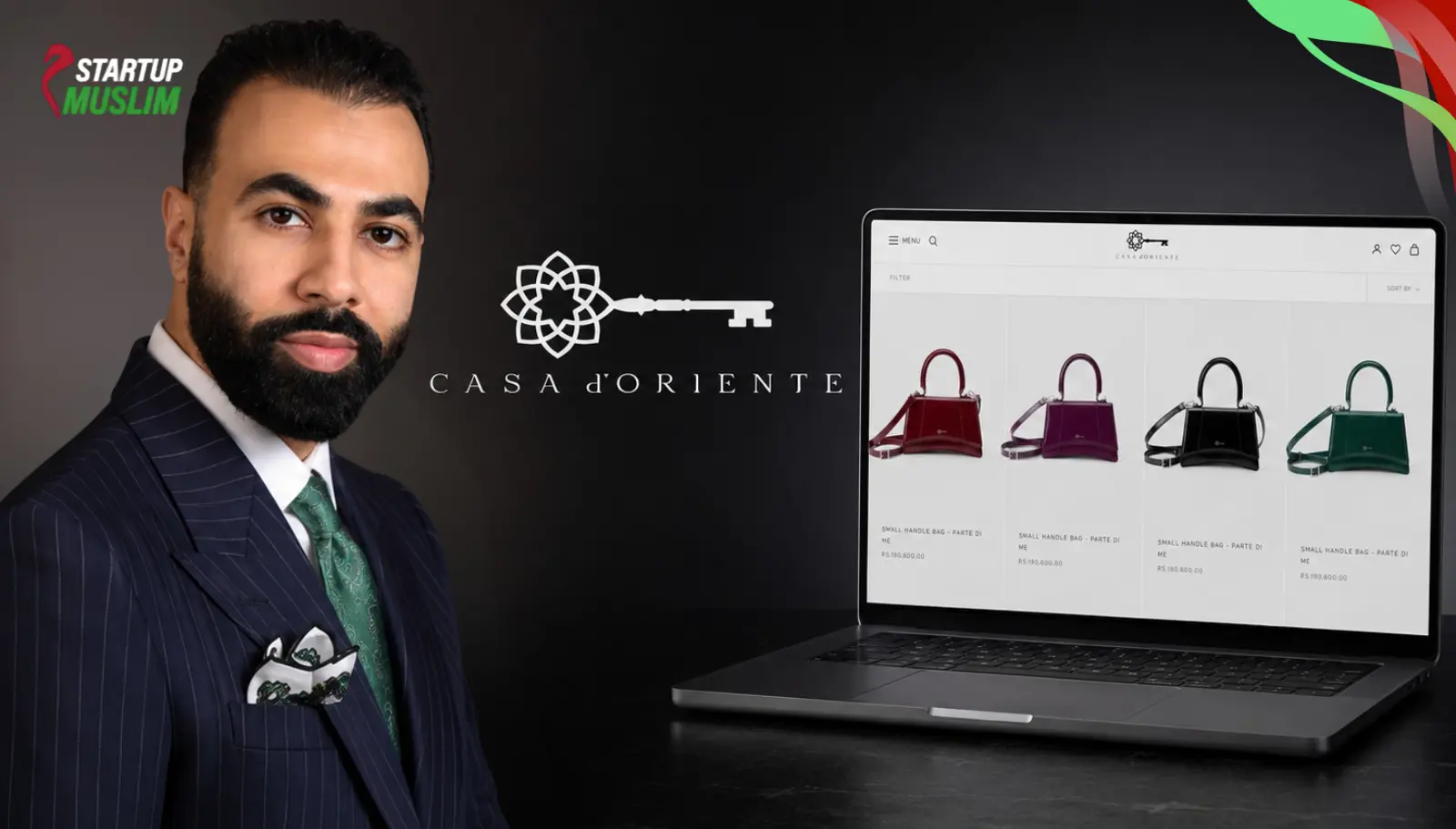
For Mohamed Mohamed, Founder and CEO of CASA d’ORIENTE, that gap represents one of the greatest untapped opportunities within the global Islamic economy. His vision is not to create another halal brand. It is to build a luxury house that allows Muslims to express who they are—confidently, unapologetically, and beautifully.
Looking Beyond Halal
Mohamed’s journey into entrepreneurship began in an industry that was itself still taking shape. He spent more than a decade in Islamic finance, joining one of the pioneers of Shariah-compliant financial services in the German-speaking world. Rising from Financial Advisor to Country Manager and shareholder, he watched the Islamic economy gradually mature across Europe. Those years provided him with a unique perspective on Muslim consumers—what they valued, how they made purchasing decisions, and, perhaps most importantly, what was still missing.
Growing up as a Muslim in Vienna, Mohamed understood those gaps personally. Access to halal food, Islamic finance, modest clothing, and other Muslim-centric services was limited. For first-generation Muslims in Europe, simply finding products that complied with Islamic principles represented meaningful progress.
But as Muslim communities became more established, something changed. The second and third generations were no longer looking merely for products that met religious requirements. They wanted brands that reflected who they were.
“As Muslims, our identities are multifaceted,” Mohamed explains. Shared faith connects people across cultures, languages, and continents. Whether it is the Arabic language, Islamic architecture, the stories of Salahuddin, Al-Khwarizmi, Fatima al-Fihri, or the beauty of Andalusia, Muslims inherit a rich civilizational legacy that extends far beyond religious practice.
Yet he struggled to find brands that celebrated that heritage. Instead, Muslim consumers often found themselves purchasing luxury products that represented histories, values, and identities entirely disconnected from their own. That realization became the inspiration for CASA d’ORIENTE.
Luxury as an Expression of Identity
Mohamed believes one of the biggest misconceptions surrounding the Islamic economy is that it revolves entirely around halal products. Halal certification satisfies a functional need. Brands satisfy an emotional one. The world’s strongest brands succeed because consumers identify with what they represent. Fashion, perhaps more than any other industry, allows people to communicate identity without speaking a single word.
“Brands embody stories,” Mohamed says. “They embody exceptional personalities, brilliant ideas, inspiring art, and ultimately an identity.”
His ambition was therefore never to produce leather goods because Muslims needed “halal handbags.” Leather bags are already permissible. Instead, he wanted to create products that allow Muslims to proudly express their identity through thoughtful design, craftsmanship, and storytelling.
CASA d’ORIENTE became the first accessible luxury leather goods brand dedicated exclusively to Muslim consumers. Its inaugural collection, Parte di Me, celebrates one of the few things shared by every Muslim regardless of nationality: the Arabic language. Through personalized Arabic calligraphy, handbags, wallets, phone cases, and accessories become deeply personal objects that reflect faith, culture, and identity simultaneously. For Mohamed, the product is simply the beginning. The brand itself is the real creation.
Why Muslim Brands Struggle Globally Although the global Muslim consumer economy represents one of the fastest-growing markets in the world, Mohamed believes relatively few Muslim-owned brands have become internationally recognized household names for a simple reason.
Many try to appeal to everyone. Brands, he argues, become powerful when they are remarkably clear about who they exist for. Luxury companies such as Louis Vuitton, Hermès, or Loro Piana have spent decades refining precise brand identities. They know exactly who their ideal customer is and rarely dilute that positioning to chase broader audiences.
Many Muslim brands, by contrast, attempt to simultaneously attract Muslim and non-Muslim consumers, softening their identity in the process. The result is often a brand that fails to resonate with either audience deeply. Mohamed believes the opportunity lies not in creating “inclusive” Muslim brands but in building brands with enough confidence to embrace Muslim identity unapologetically. Only then, he argues, can they achieve global recognition.
Building More Than Products
Today, CASA d’ORIENTE has already built a solid foundation. The company has launched six handcrafted leather products available across 72 individual SKUs, all crafted from genuine smooth calfskin leather. It has established logistics capable of serving the United States with delivery times as short as two days and secured acceptance onto Wolf & Badger, one of the world’s leading marketplaces for independent luxury brands.
Yet perhaps Mohamed’s most innovative contribution lies outside fashion altogether. Drawing upon his background in Islamic finance, he introduced CASA d’ORIENTE Circle, a community investment model that allows supporters to participate in the company’s future.
Unlike traditional loyalty programs that reward customers with discounts or early product access, CASA d’ORIENTE Circle enables members investing from €3,000 to participate through annual profit-sharing, while also receiving participation rights in future funding rounds and potential equity conversion opportunities.
The philosophy reflects Mohamed’s broader belief that communities should not merely consume successful brands—they should help own and build them.
Selling a Vision, Not a Handbag
One of Mohamed’s greatest early challenges had little to do with manufacturing or logistics. It was convincing designers, suppliers, and creative partners that a Muslim luxury brand should exist at all. Many questioned why Muslims needed a leather goods company when handbags were already halal. Mohamed realized that explaining brand strategy alone would never answer the question. Instead, he began painting a picture.
Imagine, he says, a young Muslim woman born and raised in London. She is a successful lawyer. Her clothing reflects her Islamic values while remaining elegant and contemporary. Every visible aspect of her appearance expresses her identity—except her luxury handbag, which still represents another brand’s story.
Now imagine that same woman carrying a CASA d’ORIENTE bag adorned with subtle Islamic geometric design and personalized Arabic calligraphy. Without saying a word, every part of her appearance now reflects who she is. That vision helped partners understand they were not designing accessories. They were helping build cultural representation.
The Future of Islamic Branding
Mohamed often describes himself not simply as an entrepreneur, but as an Islamic Branding Specialist. For him, Islamic branding extends far beyond halal certification or Islamic marketing campaigns. It is the art of telling the stories of Islamic civilization—its history, architecture, scholarship, and artistic traditions—in ways that reconnect Muslims with their own identity while integrating those stories naturally into modern products and services.
He believes Muslim consumers are becoming increasingly values-driven. As geopolitical awareness grows and younger generations become more intentional about where they spend their money, they will increasingly seek brands that genuinely align with their beliefs rather than merely accommodating them.
The next decade, he predicts, will see Muslim-owned brands emerge across industries where religious compliance is not the primary selling point—luxury goods, jewelry, fragrances, hospitality, lifestyle products, and experiences. Consumers will increasingly choose brands that represent them, not simply brands that tolerate them.
Over the next two years, CASA d’ORIENTE plans to prove that thesis by expanding first into the United States before entering the United Kingdom, France, and Germany. New logistics partnerships, additional luxury product categories, and a growing leadership team are all part of the roadmap toward becoming a full luxury house rather than simply a leather goods company.
Beyond Luxury Ultimately, Mohamed’s ambition reaches far beyond fashion. He hopes CASA d’ORIENTE becomes the globally recognized household name for accessible luxury within the Muslim world. But even that is only part of the mission. His larger goal is to demonstrate that the Islamic economy has matured beyond products designed solely to satisfy religious requirements. It is ready for brands that fulfill symbolic needs as well.
Brands that tell Muslim stories. Brands that celebrate Muslim identity. Brands that inspire confidence rather than compromise. For decades, Muslims have successfully built halal banks, halal food companies, and modest fashion businesses. Mohamed believes the next chapter of the Islamic economy will not be defined by compliance alone. It will be defined by culture, aspiration, and identity. And if CASA d’ORIENTE succeeds, it may prove that the world’s next great luxury brand doesn’t simply sell products. It tells the story of a civilization.


