


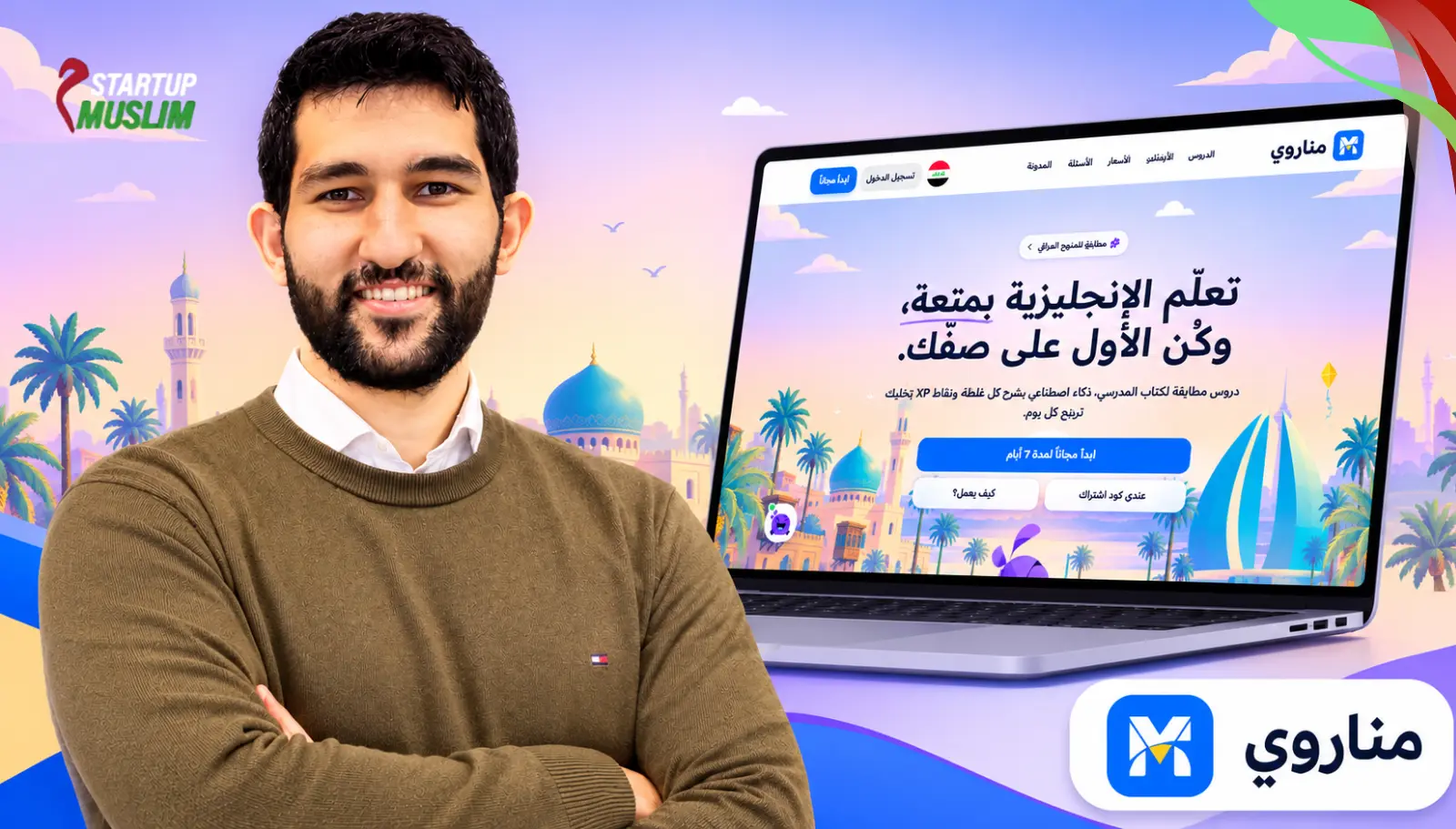
When Riadh Al Zubaidi left Iraq as a teenager, he did not imagine that one day he would return to the country through a technology company. His journey took him from starting school again in France without knowing the language to becoming a space systems engineer at Airbus, working on satellite electronics and later building international business partnerships. Years later, he decided to use that experience for a different purpose: improving how children learn in Iraq and across the Middle East.
The result is Manarway, an education technology platform that combines AI tutoring, interactive lessons and virtual science laboratories with official school curricula. Its ambition is to help students move beyond memorising information for exams and begin understanding what they are learning. For Al Zubaidi, the idea is also personal. He wants children in the region to have access to the kind of practical, interactive education that helped shape his own future.
From Iraq to the European Aerospace Industry
Al Zubaidi grew up in an Iraqi family where education was central to everyday life. Both of his parents were university professors, and he describes his childhood as one shaped by a strong respect for learning. Leaving Iraq was not something he wanted, but the war forced his family to move abroad while he was still a teenager.
Settling in France meant starting again. He had to return to school without knowing the language, an experience that made the early years difficult. With his family’s support and what he describes as Allah’s help, he eventually earned a master’s degree in programmable electronics and joined Airbus as an intern. He later became a space systems engineer, working mainly on satellite electronics.
After five years at Airbus, Al Zubaidi moved from engineering into the business side of technology. He wanted to understand how products reached people and how technology could be brought to larger markets. He joined Gen Digital Inc., the Fortune 500 company behind brands including Norton and Avast, where he worked on telecommunications partnerships across Europe, the Middle East and North Africa. He also completed an Executive MBA at EDHEC Business School.
Each stage gave him something he would later bring to Manarway. His engineering career taught him the importance of quality and reliability, while his business experience showed him how to build partnerships and take products to wider audiences. But the experience of rebuilding his life through education remained the most personal influence.
The Education Challenge That Inspired Manarway’s Creation
The idea for Manarway began with a conversation in London. Al Zubaidi met a fellow Iraqi and asked how he could contribute to his home country. The answer was education, with AI. It connected two interests that had stayed with him throughout his career: technology and the future of young people in Iraq.
As he looked more closely at the education system, he saw problems that went beyond access to textbooks. Many public schools in Iraq have no laboratories, and classrooms can have more than 50 students. Under those conditions, teachers have limited opportunities to demonstrate science experiments or give every student enough time to practise a language such as English.
Students often end up learning theories by heart, passing examinations and then forgetting much of what they studied. Families who can afford it turn to private tutors, while others have fewer options. Al Zubaidi believes this is a wider regional challenge, not one limited to Iraq, and that improving education is essential to the future prosperity of these countries.
He began developing Manarway independently, using his own money. Iraq was the natural starting point because he understood its education system, but he designed the platform from the beginning with the wider Arab region in mind. As the project developed, he brought in Ramez Chedly as co-founder and chief technology officer. Chedly had experience scaling more than twelve education businesses and building products used by over 300,000 people, and now leads product and AI development while Al Zubaidi focuses on vision, curriculum and partnerships.
Turning the School Textbook Into an Interactive Experience
Manarway is built around a straightforward idea: students should be able to learn their official school curriculum in a more active way. Rather than asking them to follow a separate programme, the platform takes lessons from the school syllabus and turns them into interactive digital learning experiences. This matters in a system where examinations play a major role in determining a student’s academic future.
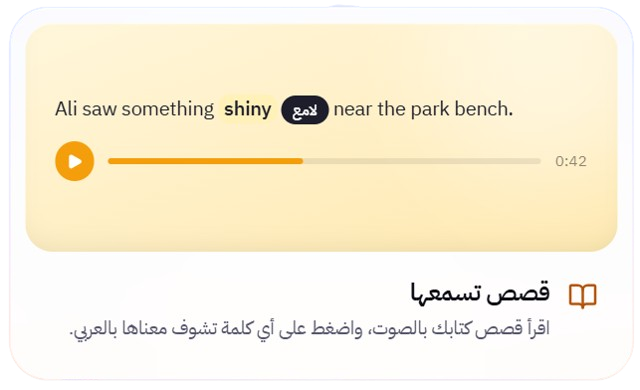
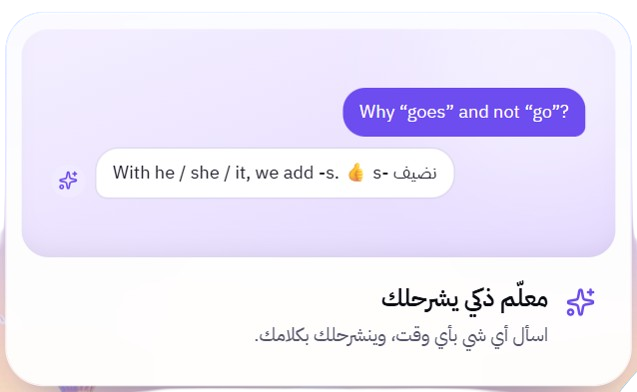
A student opens a lesson on their phone through an Arabic-language interface. Every word has audio, allowing students to listen while they read, and questions are built into the lesson so they can practise as they progress. If they do not understand something, they can ask the AI tutor in Arabic or English at any time. The platform also includes an AI speaking coach for English practice, an exam corrector, practice exams, daily learning streaks and certificates for completed units.
The company recommends around 30 minutes of study per subject each day, ideally before the lesson is taught in school. This approach is intended to make classroom learning easier to follow, rather than compete with it. The student arrives with some familiarity with the topic and can use classroom time to strengthen their understanding.
Adapting the curriculum has been one of the most demanding parts of building the platform. Instead of simply uploading textbooks and connecting them to a general AI chatbot, Manarway’s teachers rewrote the official Iraqi curriculum chapter by chapter for digital learning. The process took a full year for Iraq, beginning with English, the first subject released on the platform. The same method is now being applied to science and mathematics.
Why Teachers Remain at the Centre of Its AI
For Al Zubaidi, the accuracy of an AI tutor is one of the most important parts of the product. A student preparing for an examination needs explanations that match the material they are expected to learn. A general chatbot may provide information that is correct in another context but unsuitable for a particular grade, curriculum or examination.
Manarway’s AI tutor is therefore grounded in the curriculum prepared by its teachers. The teaching team produces and reviews the lesson content, while the AI helps students understand the material and answer questions within that framework. Feedback from students, teachers and the company’s education partner in Iraq is also used to improve the lessons.
The same focus on practical learning is behind the company’s planned 3D lessons and virtual laboratories. Al Zubaidi draws on his own engineering education, where models, simulations and experiments helped him understand how complex systems worked. He believes students should have similar opportunities when studying subjects such as biology, physics, chemistry and mathematics.
On Manarway, a student can explore a plant cell in 3D, select parts such as the nucleus or chloroplasts and ask the AI tutor about their functions. In an optics lesson, they can move a candle and a lens and watch how an image forms. These virtual laboratories are being rolled out, with the aim of giving students practical ways to explore science even when their schools lack physical laboratory facilities.
Building a Bootstrapped Company Across Several Countries
Manarway officially launched in early October 2026. In less than two months, the fully bootstrapped company had reached almost 2,000 sign-ups, according to Al Zubaidi. He says the early response from students, teachers and the company’s education partner in Iraq has been encouraging, although he sees the current numbers as only a starting point.
The company has been built largely through his personal resources. Al Zubaidi invested his savings and sold both of his cars to finance the project. He has not raised external funding, despite the considerable time and resources required to adapt a national curriculum and build an AI-powered learning platform.
Keeping the operation lean has meant assembling a team across different countries. Teachers and sales staff are based in Iraq, part of the team works from France, and the technical team is spread across North Africa and Thailand. The company has also gained access to programmes and industry opportunities, including NVIDIA Inception and an innovation startup booth at LEAP in Saudi Arabia.
The biggest challenge now, Al Zubaidi says, is speed. He wants to bring Manarway to more students across the Middle East, including children in countries affected by war and students in wealthier markets who still rely heavily on memorisation. Reaching those markets quickly requires funding beyond what he can currently provide himself.
An Iraqi Starting Point With a Regional Ambition
Al Zubaidi sees a large opportunity in Iraq, which he estimates has around 12 million students. The country also has a young population and families already spending money on private tutoring in search of better educational outcomes. However, he says the local business environment can be difficult for startups, with slow administrative procedures and requirements that can favour larger companies over smaller technology businesses.
Despite those barriers, he sees signs of opportunity. A major telecommunications operator has shown strong interest in a potential partnership, although the necessary administrative approvals are still being worked through. He also points to the Iraqi and Arab diaspora as a source of skills and experience that can support new businesses in the region.
For expansion, Manarway plans to follow a model that keeps the technology consistent while adapting the educational content to each market. Every country will have its own official curriculum rewritten by local teachers, rather than simply receiving the Iraqi version with a different interface. Al Zubaidi estimates that adapting the platform to a new country’s curriculum can take around two months once local teachers are brought on board. Syria, Lebanon and Palestine are among the markets he is considering after Iraq.
His longer-term ambition also includes a non-profit arm that could bring Manarway to refugee camps, where children often face serious barriers to education. In five years, he wants the platform to become a familiar way for students across the Middle East to study, regardless of their country or family income.
For Al Zubaidi, success will not be measured only by registrations or expansion into new markets. It will be measured by a student in a crowded classroom, using nothing more than a phone, who finally understands a difficult lesson, passes an examination and earns a place at a good university. After leaving Iraq as a teenager and building a career abroad, he sees Manarway as a way to bring what he learned back to the region and help the next generation build a different future.
