


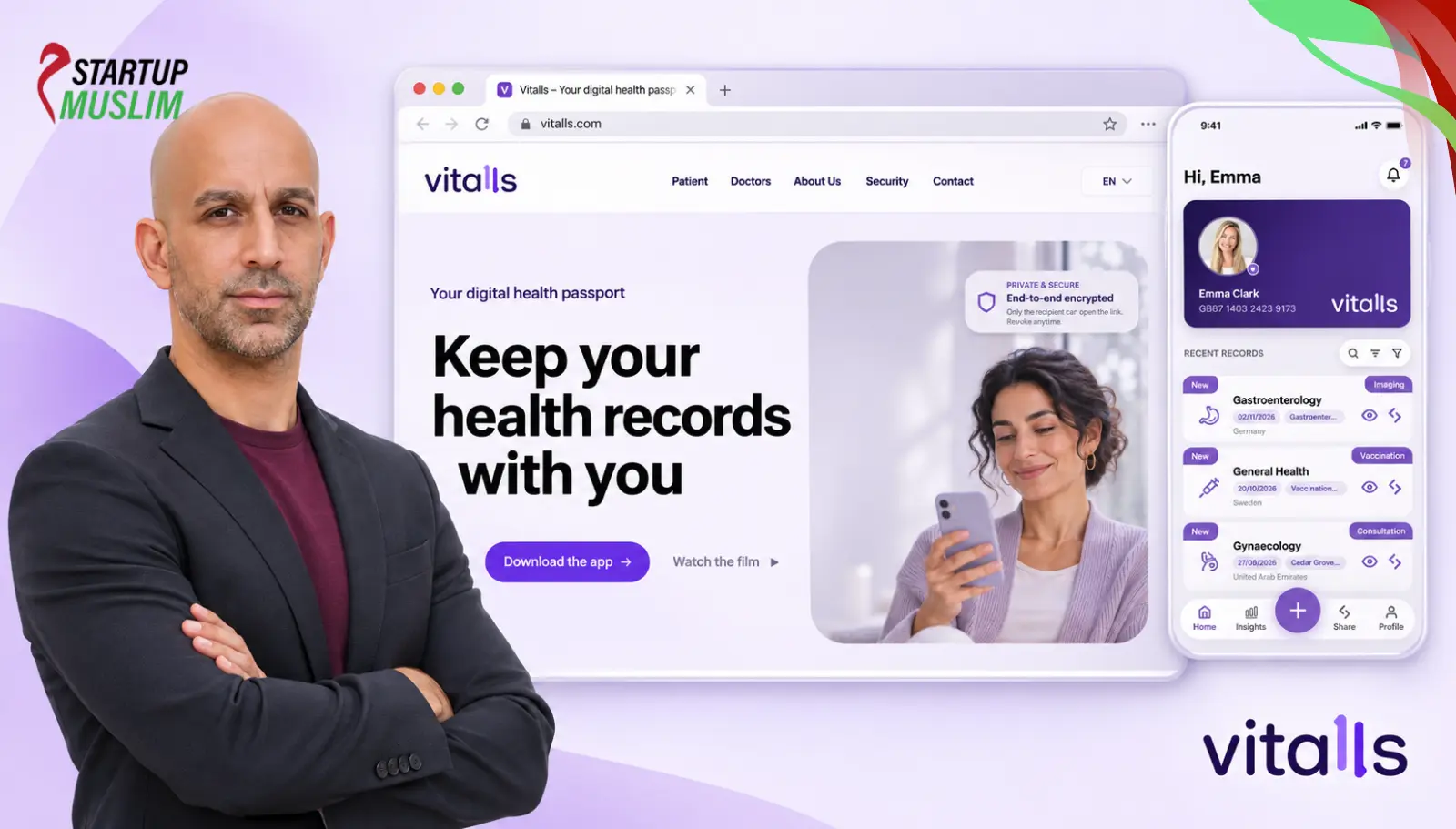
For most people, a banking app makes it easy to check transactions, track spending and access financial information within seconds. Finding an old blood test, vaccination record or medical report can be a very different experience. Documents are often scattered across hospitals, email accounts, folders and different healthcare systems, leaving patients to piece together their own medical history whenever they visit a new doctor.
For Mehdi Bouchenak, this is more than an inconvenience. It is a problem that can affect the quality and continuity of healthcare, particularly for people living with long-term conditions or moving between countries. Through Vitalls, the UAE-based health-tech company he founded, Bouchenak is working to give individuals greater control over their medical information and make it easier to carry their health history wherever life takes them.
His ambition is to make a digital health passport as familiar and useful as a banking app, allowing patients to share their records securely while helping doctors see a more complete picture of the people they treat.
An Idea That Took More Than Ten Years to Become a Company
The idea behind Vitalls first came to Bouchenak more than a decade ago during a hospital visit. While completing a routine form about his allergies, blood type and medical history, he began questioning why patients had to repeat the same information every time they entered a healthcare facility. He believed people should be able to carry their own medical information rather than depend on separate systems to retrieve it.
At the time, however, the technology and infrastructure needed to make that idea practical were not yet available. The thought remained with him, but it was a personal experience involving a family member that showed him how much the problem could affect patients. Living with several chronic conditions, the family member had accumulated medical documents across different appointments, and even a missing paper could prevent a doctor from seeing the full picture.
In April 2023, during a short solo retreat in Thailand, Bouchenak returned to the idea. With artificial intelligence beginning to open new possibilities, he saw an opportunity to build something that could put people in control of their health information. This time, he decided not to leave the idea in a drawer.
From Business Development to Building a Health-Tech Company
Bouchenak’s journey towards entrepreneurship began long before Vitalls. Born in Algeria, he moved to France with his family at the age of eight. He describes growing up in a traditional environment where careers such as medicine and law were highly valued, while his own ambition was always to become a businessman.
That interest appeared early. At six, he began buying newspapers and delivering them to people’s homes. Initially, he offered the service for free, but some customers began paying him a small fee to receive the newspaper regularly. Looking back, he sees that experience as an early introduction to the service economy.
He later studied economics on a scholarship, completed a master’s degree in defence and aerospace, and began a PhD focused on the economics of innovation. After entering the workforce, he spent several years in consulting before becoming an independent business adviser, helping French companies expand into Gulf markets for around a decade. In 2016, he moved to the UAE to work with a prominent French aerospace and defence company and has remained in Abu Dhabi.
Those experiences shaped the way he approaches Vitalls. Business development taught him how to understand markets and people, while aerospace exposed him to the importance of reliability and safety. Both lessons became relevant when building a product responsible for handling people’s most personal information.
Making Medical Records Work Around the Patient
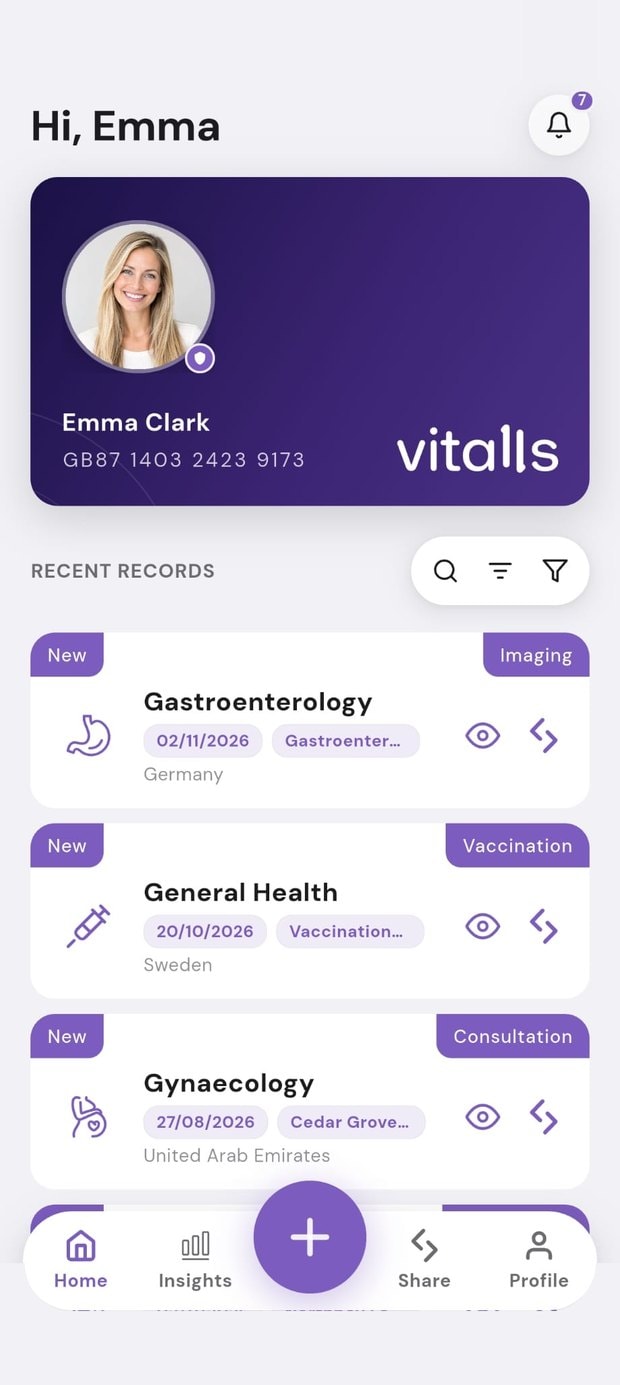
Bouchenak describes Vitalls as a digital health passport: a secure place on a person’s phone for prescriptions, laboratory results, vaccination records, scans and medical reports. Instead of having information scattered across different providers, users can bring their records together and decide what to share with a doctor.
This is an important distinction from traditional electronic health record systems. Hospital records are generally designed around the needs of healthcare providers and often remain within a particular organisation or network. Vitalls takes a patient-centred approach, allowing individuals to manage their information and share it across clinics and countries, subject to their consent.
The platform also includes Insights, which helps users follow changes in health measurements such as blood sugar and cholesterol over time, even when tests have been carried out in different laboratories or countries. The aim is to make medical information easier to access and understand, especially when a patient needs to explain their history to a new healthcare professional.
Bouchenak believes the experience should be as simple as using a banking application. When people need their medical records, they may already be dealing with stress or uncertainty. The technology should make that moment easier, not add another complicated process.
Using AI Without Changing What the Medical Record Says
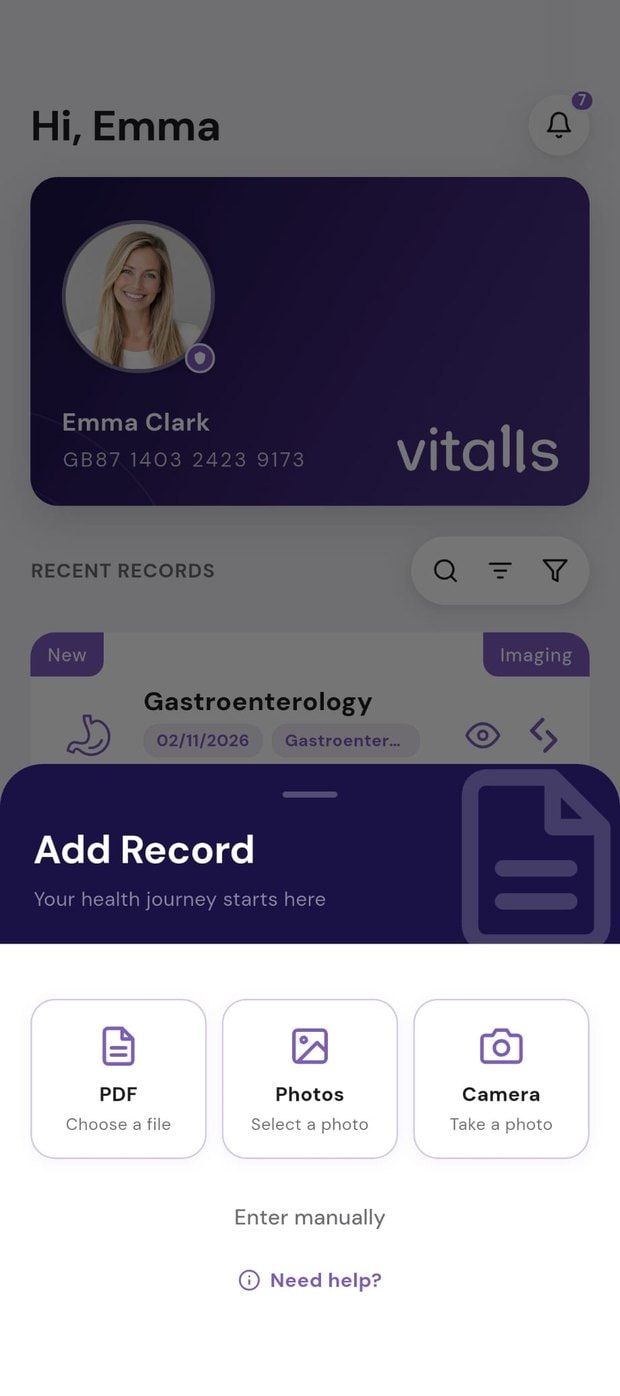
A central part of the platform is Vitalls Intelligence, the company’s own AI layer. Users can take a photograph or upload a medical document, and the system identifies the type of record, extracts key information and organises it by medical specialty. This can include prescriptions, laboratory reports, vaccination records and documents such as ECGs or X-rays.
However, Bouchenak says accuracy matters more than making the system appear intelligent. Vitalls follows a principle of fidelity: the digital version should match the original document rather than interpret or change its medical meaning. Extracted test results are linked to international medical coding standards, helping users follow the same measurements across different countries, languages and units.
The system is also designed to recognise its limitations. If it is uncertain about a record, it flags it for the user to check instead of guessing. It does not attempt to process handwritten documents because, according to Bouchenak, current technology is not reliable enough for that purpose. The original document also remains available as the reference.
Just as importantly, Vitalls is not designed to diagnose medical conditions or replace doctors. Its role is to organise health information so patients and healthcare professionals can access a more complete medical history when making decisions.
Building Trust Around Some of the Most Personal Data
Making medical records portable creates an important responsibility: protecting the information itself. Bouchenak says privacy was one of the first questions considered when Vitalls was being developed, rather than something added after the product was built.
The company says documents are encrypted both while being transferred and when stored. Before AI processing, personal details such as names, dates of birth and identification numbers are masked. The original document remains with the user, while the system processes a masked copy to extract the relevant information.
Users also control access when sharing records. They can give a doctor temporary access for a selected period, such as a few hours or a day, after which that access expires. Doctors can view the records but cannot change them. Bouchenak says the company’s approach is built around the belief that medical information should remain under the individual’s control.
Vitalls says it is ISO 27001 certified and meets SOC 2, HIPAA and GDPR standards. For a young company working with sensitive health information, Bouchenak sees these commitments as essential to earning trust. The challenge is not simply to build a convenient application, but to give people confidence in the way their information is handled.
Early Adoption, Investment and a Global Opportunity
Vitalls launched first on Android before expanding to iOS in early 2025. In October 2026, the company released a completely rebuilt version of the application, with Vitalls Intelligence integrated into the platform. At the time of the interview, the free app had around 2,000 users worldwide, and the company was focused on growing its user base.
The UAE has provided an important environment for that ambition. Bouchenak points to the country’s focus on artificial intelligence and digital health, as well as its international population. Many residents move between countries for work and family, making access to portable medical records a practical need rather than simply a new digital feature.
The company has also signed a memorandum of understanding with MSH MENA to develop integrated solutions for continuity of care across borders. Bouchenak says clinics, insurers and large employers have shown interest in the platform, seeing potential benefits such as easier patient onboarding, less paperwork and fewer repeated tests when recent results are available.
In October 2026, Vitalls secured a US$1.5 million seed investment commitment from Singapore-based EST Growmore, with an option for an additional US$1 million. The agreement was signed during the Abu Dhabi Future Health Summit. The company plans to use the funding to expand its team, scale the platform and introduce new features, while its seed round remains open.
A Future Where Patients Do Not Have to Start From Zero
The road to building Vitalls was not straightforward. After returning from Thailand in 2023, Bouchenak gave himself six months to turn the idea into a company. He prepared a pitch deck and spent months looking for partners, but by October, nothing had worked and he thought the project might be over. It was around that point that he met the people who helped him move forward.
He connects the experience to a lesson from his book, MindSnacks: replace the words hope and wish with plan and action. For him, motivation alone cannot sustain a founder through difficult periods. Discipline, consistency and a clear purpose matter more when progress is slow.
That purpose comes from the people who need better access to their health information. Bouchenak points to the millions of adults living with multiple chronic conditions and believes they should not have to carry the burden of managing scattered medical documents on top of their health challenges.
Over the next three to five years, he wants Vitalls to help people anywhere in the world carry their health history for themselves and their loved ones. His longer-term ambition is to build what he calls the “SWIFT of healthcare”, a trusted global layer through which clinics could access a patient’s verified medical history with the patient’s consent.
For Bouchenak, the future of healthcare should not depend on how many hospitals a person has visited or how many countries they have lived in. Their medical history should follow them, so every doctor they meet can begin with the full picture, not from zero.
