


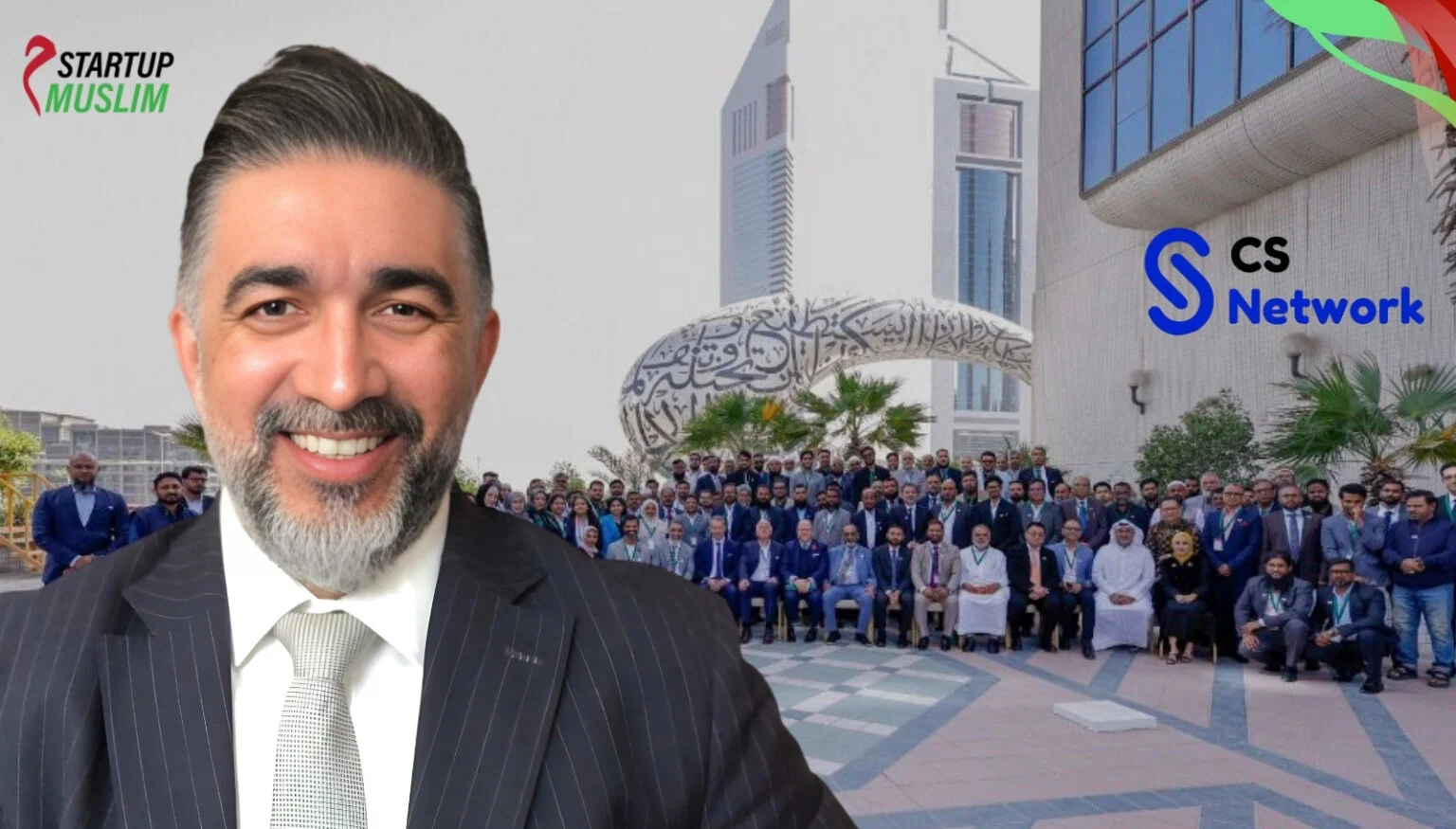
From Corporate Leadership to a Deeper Realization
Abdulla Hassan Thakur’s career spans continents and industries, from serving as Head of Business for MENA at British Telecom UK to advising family businesses and engaging at the board level across the GCC. Over the years, his exposure to multiple markets revealed a recurring imbalance. While economies were expanding and capital was increasingly accessible, meaningful opportunities remained concentrated among those with access to the right networks. This observation led him to a critical realization: capital alone was not the defining factor of success—access was.
In May 2023, Thakur initiated the Global Islamic Chamber of Trade and Commerce to strengthen connections within the Muslim business ecosystem. However, as his engagement deepened, he recognized that this gap was not limited to one community. Across global markets, what was missing was a structured system built on trust—what the Qur’an refers to as amanah, a responsibility that must be upheld in all relationships. This realization ultimately led to the creation of .
Rethinking the Foundations of Global Commerce
The inspiration behind ConnectSouq is deeply rooted in a broader worldview. For Thakur, business is not separate from values; it is an extension of them. Islamic principles, in his view, guide not only personal conduct but also how individuals earn, transact, and build relationships. Yet despite a global Muslim population nearing two billion, there is no unified economic platform that reflects these values at scale.
Modern digital platforms, he argues, are largely designed to extract value rather than create it. They monetize user attention but rarely empower individuals to monetize trust. seeks to challenge this model by creating a global networking marketplace where relationships are not merely social connections but structured economic assets. By enabling individuals to facilitate transactions and earn through trusted networks, the platform shifts the focus from visibility to genuine value creation.
Turning Relationships Into Revenue
At its core, Connect Souq introduces a simple yet powerful concept: relationships can be transformed into measurable economic outcomes. The platform connects buyers and sellers through business partners—individuals who create value by facilitating deals and earning commissions. Instead of relying on cold outreach or expensive marketing channels, businesses can leverage trust-based networks that already exist across more than 30 countries.
This model effectively converts social capital into financial capital. Through tools like the Social Capital Index (SCI), Connect Souq quantifies contribution, engagement, and trust, bringing structure to what has traditionally been intangible. For Thakur, this represents a fundamental shift in how value is created and distributed in the modern economy.
The Challenge of Changing Mindsets
While building the platform required technical and operational effort, the greater challenge has been shifting mindsets. In today’s world, success is often associated with visibility, scale, and financial capital. Trust, although universally acknowledged as important, is rarely treated as a primary driver of economic value.
Networking itself has, in many cases, been reduced to superficial interactions. Thakur’s approach has been to demonstrate outcomes rather than ideas—real deals, real earnings, and tangible impact. As users begin to experience the financial value of trust-based relationships, belief in the model naturally follows.
Scaling Through Ownership and Decentralization
Connect Souq’s growth strategy reflects its underlying philosophy of empowerment. Instead of centralizing control, the platform expands through a franchise model, enabling individuals to build and manage their own networks while remaining connected to a global ecosystem.
Since its launch, Connect Souq has scaled rapidly, establishing more than 110 franchise operations across different sectors and regions. This decentralized approach allows for both local ownership and global reach, creating an interconnected system where opportunities are not limited by geography. Supporting this structure are frameworks like the Social Capital Index, which ensure fairness, accountability, and recognition of individual contribution.
Values as Infrastructure
For Thakur, Connect Souq is not just a business platform—it is built on a foundation of values. Principles such as trust before transaction, ethics before profit, giving before asking, and prioritizing long-term relationships over short-term gains are deeply embedded in its culture.
These are not presented as abstract ideals but as operational principles that guide decision-making and interactions. In his view, justice, fairness, and sincerity are not only ethical imperatives but also essential components of sustainable economic systems.
Advice for the Next Generation
For young entrepreneurs, particularly those within the Muslim world, Thakur offers guidance that is both practical and grounded in principle. He emphasizes the importance of building relationships before building products, focusing on value creation rather than visibility, and maintaining integrity even when shortcuts appear attractive.
Success, he believes, is not driven by strategy alone. It is shaped by sincerity, patience, and consistency—qualities that compound over time and build lasting trust.
Building a New Economic Paradigm
Looking ahead, Thakur’s ambition extends beyond the growth of Connect Souq. He envisions a broader shift in how networking is understood—not as a social activity, but as a structured economic system rooted in trust.
Through frameworks like the Social Capital Index and concepts outlined in his work on structured networking, he aims to establish social capital as a recognized asset class. This would enable individuals across the world to access opportunities based not on privilege or proximity, but on the strength of their relationships and contributions.
If realized, this vision has the potential to redefine how value is created and distributed in the global economy. Because ultimately, as Thakur sees it, the future of business may not belong to those with the most capital—but to those who can build the most trust.
