


In the world of enterprise finance, complexity is the norm. Spreadsheets, fragmented systems, manual reconciliations, and compliance-heavy workflows continue to define how companies operate—despite decades of technological progress.
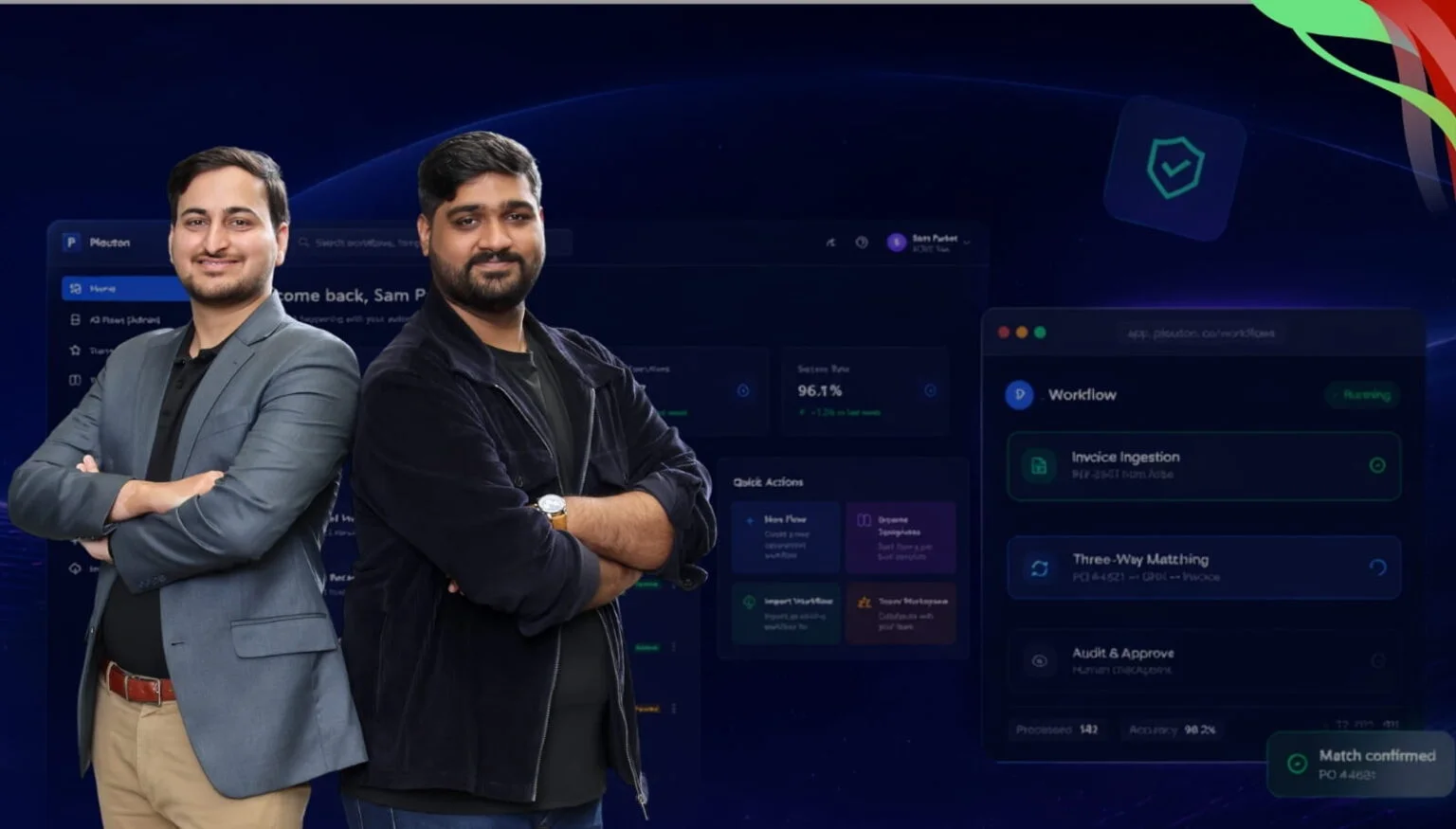
Furqan and Sarfraz, the founders of Plouton AI, saw this inefficiency firsthand. What they’re building today is not just another automation tool—but a new operating layer for finance teams.
From Fintech Foundations to AI-Driven Systems
Furqan’s journey sits at the intersection of finance, technology, and execution. Before founding Plouton AI, he co-founded and exited a licensed fintech company, YPay Financial, which focused on expanding financial access for young investors.
He later led AI and automation initiatives across fintech and enterprise environments through ASF Tech Partners, building solutions for global startups and regulated businesses.
“My work has always been about combining technical depth with commercial execution,” Furqan explains.
His early experience at Deloitte, working on IFRS implementations, further grounded him in the realities of financial systems and compliance.

Sarfraz, now CTO of Plouton AI, brings deep technical expertise shaped by years of building and scaling products for high-growth startups.
Previously the Founder & CEO of YPay Financial, he led the company’s technology stack—from development and DevOps to deployment and scaling operations. His experience spans modern tech stacks like MEAN/MERN, mobile app development, and backend infrastructure.
Together, the duo brings a rare combination: fintech experience, technical depth, and real-world understanding of operational complexity.
Solving a Hidden but Critical Problem
The inspiration behind Plouton AI comes from a problem that exists inside nearly every growing company—but is rarely discussed publicly: finance operations are still highly manual, fragmented, and error-prone.
In mid-market and enterprise environments, workflows like payroll preparation, reconciliation, and financial closing often take days of manual coordination across spreadsheets and disconnected systems.
The founders observed three key issues:
- Finance teams spend 70–80% of their time on manual processes
- Errors are costly and difficult to trace
- Existing tools solve isolated problems—not complete workflows
Plouton AI addresses this by introducing agentic automation—AI agents that operate across systems like NetSuite, Xero, QuickBooks, and Excel, without relying on APIs.
The result is a unified layer that automates workflows end-to-end while maintaining auditability and control. “The goal is simple,” Furqan says. “Turn multi-day finance operations into hours—with higher accuracy.”
Demos
Not Just Automation—Orchestration
What makes Plouton AI different is its philosophy. Most automation tools focus on connecting tasks. Plouton focuses on orchestrating business logic. Instead of just moving data between systems, its AI agents execute workflows, enforce compliance, and allow human-in-the-loop validation—ensuring both efficiency and reliability.
The platform can reduce manual effort by up to 95%, while maintaining full audit trails—critical for finance teams operating in compliance-heavy environments.
Building Trust in High-Stakes Systems
One of the biggest challenges the founders faced was trust. In finance, even small errors can have significant consequences. As a result, companies are naturally cautious about adopting automation.
To overcome this, Plouton AI focused on three principles:
- Prioritizing accuracy and auditability from day one
- Enabling human oversight at every stage
- Starting with specific use cases like reconciliation before expanding
“In finance, adoption is not just about innovation—it’s about trust,” Furqan emphasizes.
A Platform for Global Scale
Plouton AI’s growth strategy is deliberate and focused. The company is initially targeting mid-market and enterprise firms, where financial complexity is high and automation can deliver immediate ROI.
From there, the roadmap includes:
- Expanding into full financial close automation
- Building deeper integrations with ERP and accounting systems
- Scaling across MENA, Southeast Asia, and global markets
- Evolving into a platform with multiple AI agents for finance workflows
The long-term vision is ambitious: To become the default operating layer for finance operations across companies worldwide.
Leadership Rooted in Precision and Ownership
At Plouton AI, culture is defined by three core values:
- Precision & Accountability – Accuracy is non-negotiable in finance
- Ownership – Every workflow is treated as mission-critical
- Continuous Improvement – Systems evolve, and so must the team
Furqan’s leadership style is hands-on and execution-driven—deeply involved in both product and strategy, ensuring alignment between vision and delivery.
Advice for Muslim Entrepreneurs
For aspiring founders, the message is clear: “Start with a real problem,” Furqan advises. He emphasizes patience, intentionality, and grounding in values. “Don’t chase trends. Build something meaningful. And trust the process.”
A Legacy of Systems and Scale
Looking ahead, the founders don’t just want to build a successful company—they want to simplify how businesses operate globally. “If Plouton AI can reduce friction, improve decision-making, and help companies operate more efficiently, that creates value at scale,” Furqan says.
Beyond the product, they hope to inspire more founders from emerging markets to build globally relevant solutions.Because in a world increasingly defined by systems, the real opportunity lies not just in building tools—but in redefining how those systems work.
