


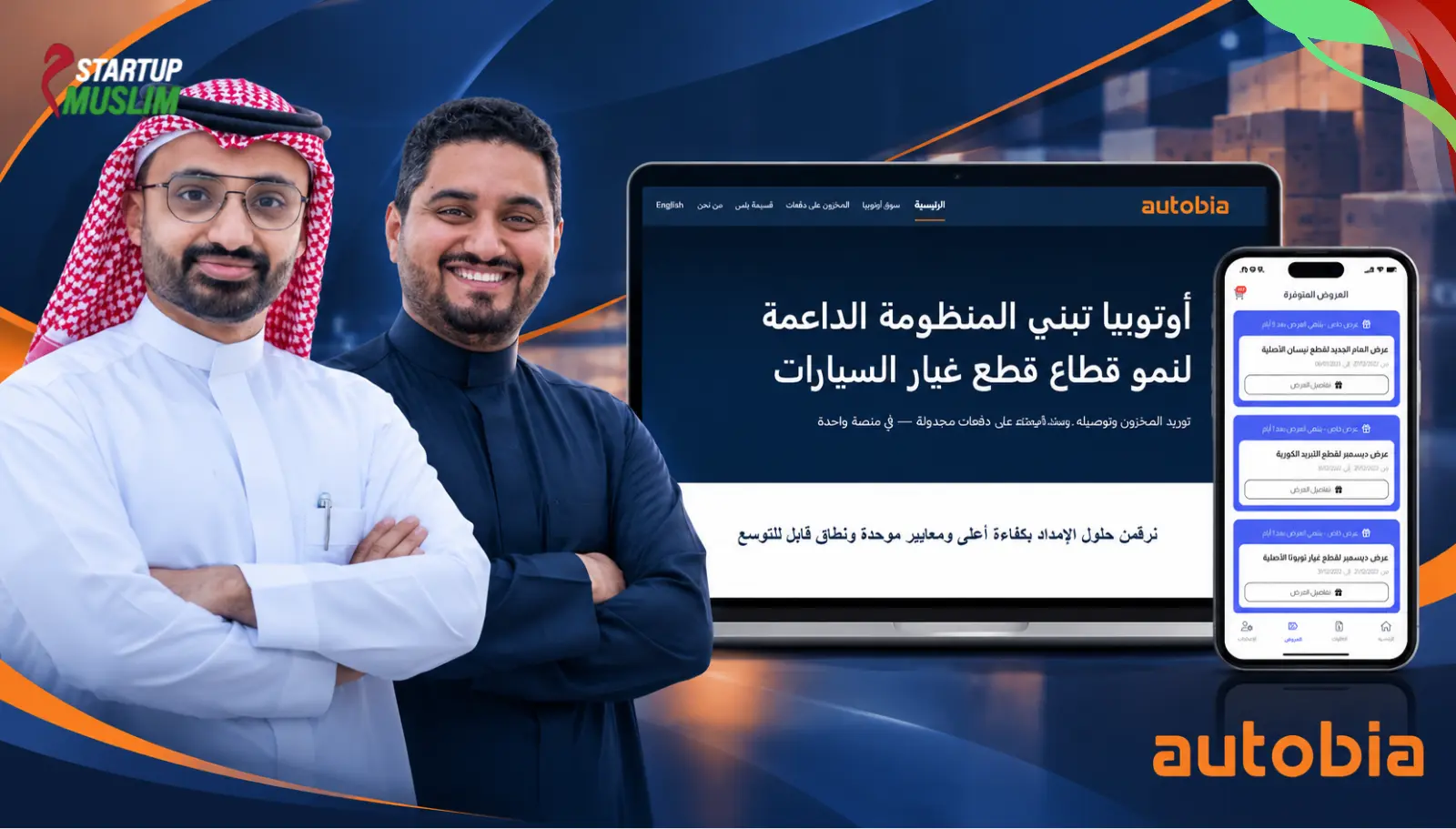
Saudi Arabia’s automotive aftermarket depends on a vast network of spare-parts retailers, wholesalers, distributors and suppliers. Yet, for many businesses, sourcing inventory, managing cash flow and coordinating deliveries remain fragmented processes.
Autobia, a Saudi B2B technology startup, is building a digital infrastructure layer to connect these businesses and make the auto parts supply chain more efficient. The company has raised $12 million (SAR 45 million) in Series A funding, led by Artal Capital, with participation from Aljazira Capital and Wa’ed Ventures, the venture capital arm of Saudi Aramco.
Founded in 2021 by Emad Daghreri and Ahmed Alawfi, Autobia combines a digital marketplace with logistics, fulfilment and embedded financial services, targeting a traditionally underserved segment of the automotive industry.
More Than an Online Marketplace
Autobia connects auto parts retailers and wholesalers with verified suppliers through a single technology platform. Businesses can source inventory, access integrated fulfilment services and coordinate procurement without navigating multiple disconnected providers.
But the company’s ambition extends beyond putting spare parts online.
Traditional auto parts businesses must balance inventory availability, pricing, delivery timelines and working capital. Holding too much stock ties up cash, while insufficient inventory can mean lost sales and dissatisfied customers. Fragmented procurement processes can make these challenges even harder to manage.
Autobia aims to address these constraints through an integrated ecosystem that combines procurement, logistics and technology.
“Our ambition goes beyond digitising auto parts procurement. We are building a technology platform infrastructure that gives traditional auto parts businesses the intelligence, efficiency, and tools they need to compete and grow,” said Emad Daghreri, Co-Founder and CEO of Autobia.
Bringing Financing Into the Supply Chain
One of Autobia’s key differentiators is its focus on embedded financial services.
Inventory purchases can place significant pressure on the cash flow of smaller retailers and wholesalers, particularly when businesses need to stock up before generating revenue. Autobia allows customers to purchase inventory on flexible payment terms through its financing solutions.
The platform also enables businesses to manage payments from their end-consumers through licensed payment and buy now, pay later providers.
Ahmed Alawfi, Co-Founder and COO, sees access to working capital as central to the company’s mission.
“A key part of that vision is expanding access to embedded financial services so our customers can manage working-capital constraints and grow with greater flexibility,” he said.
By bringing procurement and financing together, Autobia is positioning itself as more than a marketplace. It wants to become part of the underlying infrastructure that helps auto parts businesses purchase, sell and manage inventory.
From Seed Funding to a $12 Million Series A
The Series A follows Autobia’s $2.5 million seed round in 2023, led by Sadu Capital, with participation from Wa’ed Ventures, Raz Holding, Techstars and angel investors.
The latest investment brings in Artal Capital and Aljazira Capital alongside existing investor Wa’ed Ventures, providing capital for the company’s next phase of expansion.
Artal Capital’s Head of Alternative Investments, Wassim Moukahhal, described Autobia as a company addressing a large, underserved market through a combination of technology, operational execution and embedded financial services.
The investment reflects confidence in the potential for digital platforms to improve how businesses across the automotive aftermarket procure products and manage their operations.
Building the Infrastructure Behind Every Spare Part
Autobia will use the new funding to expand across Saudi Arabia, strengthen its fulfilment and logistics infrastructure, advance its proprietary dynamic pricing technology and scale its inventory financing solutions.
Dynamic pricing could help the platform respond more effectively to changing market conditions, while stronger fulfilment capabilities can support more reliable procurement and delivery as the business expands.
The company’s broader ambition is to build infrastructure connecting the many businesses involved in the automotive aftermarket, from suppliers and wholesalers to retailers and vehicle owners.
Saudi Arabia’s Vision 2030 agenda has placed growing emphasis on technology, logistics, automotive development and financial services. Autobia is operating at the intersection of these sectors, seeking to modernise an essential part of the economy that often receives less attention than consumer-facing automotive businesses.
For Daghreri and Alawfi, the opportunity is to help traditional businesses compete with greater efficiency, better access to inventory and more flexible financing.
With $12 million in fresh capital, Autobia is preparing to take that model to more businesses across Saudi Arabia, with the potential to extend its infrastructure into the wider region.
