





Why Omar Al Zabir Walked Away from Big Tech to Protect Muslim Families Online
Every technological revolution creates extraordinary opportunities, but it also exposes society to new challenges. The internet has connected billions of people, democratized knowledge, and transformed the way humanity communicates. Yet beneath those remarkable achievements lies a darker reality—one where children are exposed to harmful content at increasingly younger ages, families struggle to navigate digital dangers, and algorithms often prioritize engagement over human wellbeing.
For Omar Al Zabir, these were not abstract problems discussed in research papers or news headlines. They were realities he confronted every single day while working inside one of the world’s largest technology companies.
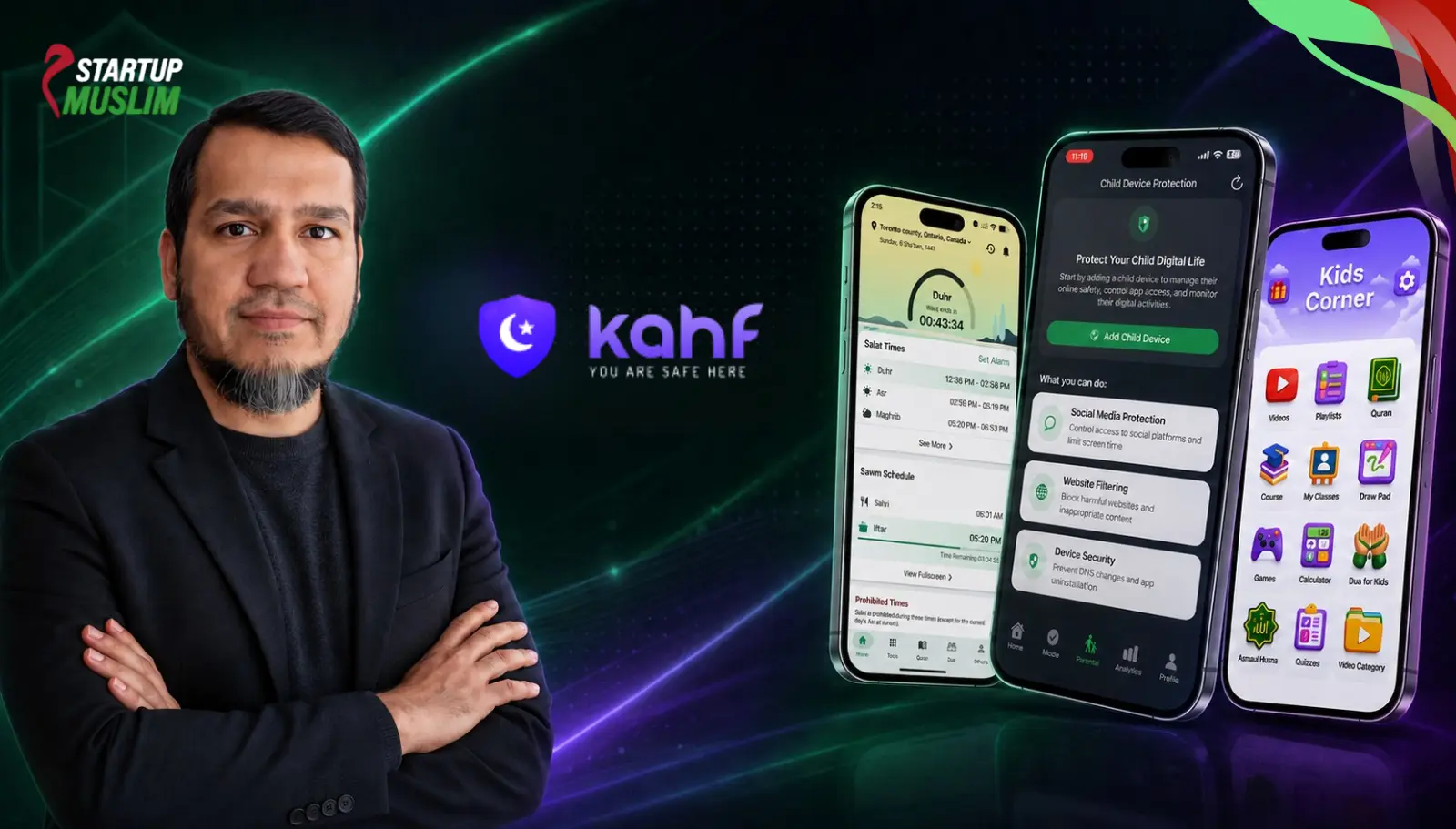
After spending nearly 25 years in the technology industry, building startups, leading engineering organizations, and helping shape products used by billions of people, Omar reached a moment that would redefine his life’s mission. Today, as the Founder of Kahf, he is leading an ambitious effort to build what he describes as a complete halal digital ecosystem—an alternative internet experience where Muslim families can browse, learn, and connect without compromising their values. His journey is not simply the story of another technology startup. It is the story of an engineer who chose to leave Big Tech and dedicate his experience to protecting the next generation.
A Career at the Highest Levels of Technology
Long before Kahf came into existence, Omar had already built an impressive career in software engineering. Over the past two and a half decades, he helped build and scale technology products while leading engineering teams at some of the world’s most recognizable companies. His professional journey included senior engineering leadership roles at BT and Tesco, before joining Meta, where he served as an Engineering Manager responsible for product integrity across Messenger and Instagram Direct.
The role placed him at the center of one of the internet’s most difficult challenges: protecting billions of users from online harm. It demanded sophisticated engineering, large-scale artificial intelligence, and constant vigilance against evolving threats. Every day, Omar and his teams worked to combat scams, harassment, child exploitation, self-harm content, and countless other forms of abuse targeting users across Meta’s platforms.
Alongside his engineering career, Omar pursued another passion that would later prove equally influential. He earned a Master’s degree in Software Engineering as well as a separate Master’s degree in Islamic Studies—two seemingly different disciplines that would eventually converge in an unexpected way. Looking back, he now describes those two fields as “the two halves of my life” that ultimately collided to create Kahf.
When Professional Experience Became Personal
Many entrepreneurs identify business opportunities by studying markets or emerging technologies. For Omar, the inspiration came from something far more personal. Working inside Meta gave him a front-row seat to the realities of the modern internet. He witnessed firsthand how digital platforms were being exploited for industrial-scale scams, online harassment, child grooming, self-harm communities, and other forms of abuse affecting millions of people around the world. But his perspective changed even more profoundly when he returned home each evening.
As the father of three children growing up in the United Kingdom, the internet was no longer just a technical challenge to solve at work. It had become part of his own family’s daily life. Like countless Muslim parents, he began asking difficult questions about the digital environment his children were inheriting. How could parents confidently hand a connected device to a child when harmful content could reach them within seconds? How could Muslim families preserve their values in an online ecosystem designed primarily to maximize attention rather than protect wellbeing? The more he reflected on those questions, the more he realized that existing solutions were failing to address the problem from a values-driven perspective.
Around that time, his future co-founder Nizam approached him with a similar concern. Nizam had already begun exploring ways to tackle the growing problem of online harm and believed they could build something meaningful together. Their conversations quickly evolved into a shared conviction that Muslim families deserved more than another content filter or parental control application. They deserved an entirely different digital experience. That shared vision became the foundation of Kahf.
More Than Internet Safety
The statistics surrounding children’s online exposure are deeply concerning. Research suggests that the average age of first exposure to pornography has fallen to around seven or eight years old, while approximately 73% of teenagers encounter pornographic material during adolescence. In the United Kingdom, nearly one in three people consume pornography. Alongside explicit content, young Muslims are increasingly exposed to anti-Islamic messaging, addictive social media algorithms, misinformation, and platforms intentionally engineered to maximize screen time rather than encourage healthy digital habits.
For Omar, these are not isolated issues. They are symptoms of an internet whose incentives have become fundamentally misaligned with human wellbeing. Today’s digital ecosystem, he argues, is largely powered by surveillance advertising, where users themselves become the product. Platforms optimize engagement because more attention generates more advertising revenue. The unintended consequence is an online environment that often rewards outrage, addiction, sensationalism, and endless scrolling. Parents attempting to protect their families are usually forced to rely on disconnected solutions—a content blocker for one device, a screen-time application for another, browser extensions, parental control software, and various monitoring tools. None of these products, Omar believes, were designed around a coherent Islamic worldview.
Kahf was created to change that. Rather than solving one isolated problem, Omar envisioned building what he calls a parallel halal technology stack—an ecosystem where every digital interaction could align with the values of Muslim families. Even the company’s name reflects that philosophy. Inspired by Surah Al-Kahf, the cave symbolizes protection from the trials and temptations of every age. For Omar, today’s greatest fitnah increasingly arrives through the screens we carry in our pockets.
Building Technology as an Act of Worship
One misconception Omar hopes to challenge is the belief that faith-driven technology must compromise on quality. Too often, he says, “Islamic technology” is perceived as functional but technically inferior—software built with good intentions but lacking the polish, innovation, and engineering excellence of mainstream technology companies.
Kahf aims to prove the opposite. Drawing upon experience from companies like Meta, Google, BT, and Tesco, Omar has assembled a team capable of building products that meet the standards of the world’s leading technology companies while remaining firmly rooted in Islamic values. For him, that pursuit of excellence is itself an act of worship.
Building world-class software and seeking Allah’s pleasure are not competing ambitions. They are two goals that reinforce one another. That philosophy would soon shape Kahf’s remarkable growth. What began as a mission to protect Muslim families would evolve into one of the world’s fastest-growing halal technology ecosystems, serving millions of users while proving that ethical technology can compete at the highest level.
Building the Halal Digital Ecosystem—How Kahf Is Redefining Internet Safety for Muslim Families
Many startups begin with a single product and gradually expand into adjacent markets. Omar Al Zabir, however, never envisioned Kahf as merely another parental control application or internet filter. From the very beginning, his ambition was much larger—to build a complete digital ecosystem where Muslim families could browse, learn, communicate, and consume content without constantly worrying about the hidden dangers of the modern internet.
His belief was simple yet bold. The internet has evolved into an interconnected ecosystem where browsers, advertising networks, video platforms, internet service providers, and mobile applications work together. If every layer of that ecosystem is optimized for engagement rather than wellbeing, then solving only one piece of the puzzle can never provide lasting protection.
Instead of creating isolated products, Kahf began building an entire family of technologies designed to work together.
Beyond a Filter—Building an Entire Digital Ecosystem
Today, Kahf has grown into one of the most comprehensive halal technology platforms in the world, with multiple products addressing different aspects of digital life. Its flagship product, Kahf Guard, provides device-level protection against harmful websites, malicious advertisements, trackers, and inappropriate online content. Since its launch, the application has surpassed an impressive 3.8 million downloads, making it one of the most widely adopted Muslim-focused internet safety applications globally. More importantly, Omar says the platform actively protects approximately half a million users during any given hour, illustrating the continuous impact the technology has on families around the world.
Recognizing that browsing itself required a fundamentally different experience, the company introduced Kahf Browser, described as the world’s first private, safe, and decent internet browser. Rather than simply blocking websites, the browser is designed to provide a cleaner internet experience while protecting user privacy. It has already crossed 350,000 downloads, demonstrating growing demand for alternatives built around ethical principles rather than surveillance-driven business models.
For younger users, Kahf developed Kahf Kids, a platform offering a carefully curated environment containing more than 31,000 family-friendly YouTube videos, Quran learning resources, educational courses, games, and parental control features. The app has already exceeded 400,000 downloads, reflecting the increasing concern among parents seeking safer digital experiences for their children.
The ecosystem continues to expand. Scheduled for launch shortly, Kahf Router extends internet protection beyond individual devices by securing every connected device inside a household. Even before its commercial release, the router had generated significant interest, receiving more than 5,000 pre-orders from families eager to deploy network-level protection in their homes.
Completing the ecosystem is Kahf Ads, an ethical advertising platform serving more than 100 million ad impressions every month while reaching approximately three million Muslims. Unlike traditional advertising networks built upon extensive user profiling and behavioral surveillance, Kahf Ads seeks to create a halal alternative where ethical businesses and publishers can grow without compromising user privacy or Islamic values.
Collectively, these products represent far more than individual software applications. They form the building blocks of what Omar hopes will become a complete halal digital infrastructure. Rather than asking Muslim families to assemble numerous disconnected tools, Kahf offers an integrated ecosystem designed around a coherent set of principles. Every new product reinforces the others, creating a digital environment where protection, education, and ethical technology work together seamlessly.
Building Deep Technology, Not Just Consumer Apps
Although Kahf’s mission resonates emotionally with parents, its success has been equally dependent upon solving exceptionally difficult engineering challenges.
Building internet safety software across thousands of Android devices proved far more complex than many users realize. Different manufacturers implement operating systems differently, with Chinese smartphone brands presenting particularly difficult technical obstacles. According to Omar, it took nearly two years of continuous engineering effort before Kahf Guard could reliably support the wide variety of devices used across global markets. Even then, protecting users required continuously preventing new methods that people discovered to bypass internet restrictions.
The same level of engineering complexity extended into Kahf Browser. Creating artificial intelligence capable of detecting indecent images and videos in real time while preserving battery life required years of research. Rather than relying on cloud-based image processing, which raises significant privacy concerns, Kahf developed an on-device AI system capable of blurring harmful visual content without transmitting personal browsing data to external servers. Achieving that balance between performance, privacy, and usability required another two years of dedicated research and development before the team arrived at a solution they were confident deploying to users.
Even Kahf Router presented unique challenges. Unlike software installed directly on smartphones, network-level protection must withstand attempts by increasingly tech-savvy teenagers to bypass security controls. Building a router capable of protecting entire households while resisting circumvention demanded an entirely different approach to engineering, forcing the team to think not only like software developers but also like cybersecurity experts.
These technical achievements reflect Omar’s broader philosophy that Islamic technology should never settle for lower engineering standards. If Muslim families are to trust Kahf with their children’s digital safety, the technology must compete with—and often exceed—the quality expected from the world’s leading technology companies.
Building a Sustainable Business Without Compromising Values
For many mission-driven startups, commercial sustainability eventually becomes one of the greatest challenges. Omar was determined that Kahf would not become dependent on the same surveillance-driven advertising ecosystem it seeks to replace. To support long-term growth, the company has deliberately adopted a diversified business model built upon three complementary revenue pillars: subscriptions, ethical advertising, and paid educational content. This approach allows Kahf to continue providing core protection services while avoiding dependence on behavioral tracking or intrusive advertising practices that conflict with its principles.
Investors have responded positively to that vision. To date, Kahf has raised approximately US$1.8 million in seed funding from more than 60 angel investors, providing the capital needed to accelerate product development while maintaining strategic independence. Yet Omar believes the company’s greatest challenge extends beyond fundraising or technology. It lies in changing mindsets.
Many organizations recognize the ethical concerns surrounding mainstream advertising platforms but continue investing heavily because of short-term returns. Convincing advertisers and publishers to prioritize long-term values alongside commercial performance remains one of Kahf’s ongoing missions. For Omar, however, lasting change rarely happens overnight. Every additional family protected, every ethical advertiser onboarded, and every child who grows up without unnecessary exposure to harmful online content represents another step toward the internet he believes future generations deserve.
Building With Ihsan—The Legacy Omar Al Zabir Wants to Leave Behind
Every entrepreneur dreams of building a successful company. Few, however, begin their journey by asking a different question. What kind of world will our children inherit because this company exists?
For Omar Al Zabir, that question has guided every major decision at Kahf. While the startup has grown into a rapidly expanding technology company with millions of downloads and multiple products, its mission has never been simply about becoming another successful software business. Instead, Kahf is attempting to build something much more enduring—a digital ecosystem where Muslim families no longer have to choose between participating in the modern internet and preserving their values. It is a mission that continues to evolve, but one firmly rooted in a long-term vision rather than short-term trends.
From Protection to a Complete Halal Digital Life
Although Kahf’s products already protect millions of users worldwide, Omar believes the company’s journey has only just begun. The next phase is not about adding more applications for the sake of expansion. It is about completing an integrated ecosystem where every layer of a family’s digital experience works together to promote safety, privacy, and wellbeing.
One of the company’s immediate priorities is transforming Kahf Guard into a comprehensive device accountability platform. Future versions will extend beyond blocking harmful websites by introducing advanced parental controls, application management, screen scheduling, and the ability to restrict addictive content formats such as short-form videos and endless scrolling feeds.
The upcoming Kahf Router represents another important milestone in that strategy. Rather than protecting individual smartphones or tablets, the router safeguards every connected device inside a household. Following thousands of pre-orders, Omar hopes to expand distribution through partnerships with importers and resellers across multiple countries, making network-level protection accessible to families regardless of their technical expertise.
Meanwhile, Kahf Browser continues to push the boundaries of privacy-preserving artificial intelligence. The company’s on-device image blurring technology is being enhanced to detect increasingly sophisticated forms of harmful visual content while ensuring that user data never leaves the device. Future releases will incorporate additional AI capabilities, including misinformation detection, propaganda awareness, and intelligent browsing assistance—all designed to strengthen users rather than manipulate them.
Kahf Kids will continue expanding its educational library, live classes, and family-friendly content, while Kahf Ads is being developed into a genuine alternative to conventional advertising networks. Omar believes ethical publishers should never be forced to compromise their principles simply to generate revenue. By building a halal advertising ecosystem, Kahf hopes to prove that sustainable digital businesses can thrive without relying on surveillance-driven business models. These initiatives collectively reflect the company’s broader ambition: moving beyond internet protection toward enabling a truly halal digital lifestyle.
Building an AI-First Company
While many organizations are still exploring how artificial intelligence can improve productivity, Kahf has embedded AI into nearly every aspect of its operations. Omar describes the company as AI-first, not simply because it develops AI-powered products, but because artificial intelligence is integrated into the way the business itself operates. Design, software development, testing, deployment, monitoring, analytics, customer support, and digital marketing all leverage AI to accelerate execution and improve quality.
At the center of this approach is the company’s self-hosted collaboration environment powered by Mattermost and its internal AI system, Hermes. Integrated with more than 40 different systems, Hermes helps automate workflows across the organization, allowing approximately 70 percent of the company’s operational work to be completed with AI assistance.
For Omar, this is not merely an efficiency strategy. It represents the future of entrepreneurship. Founders who continue relying exclusively on manual processes, he believes, will struggle to compete in a world where AI dramatically compresses development cycles and increases organizational speed. The challenge is no longer whether businesses should adopt artificial intelligence, but how effectively they can integrate it while preserving human judgment, ethics, and accountability.
At the same time, Omar is careful to emphasize that AI should strengthen—not replace—the company’s mission. Technology remains a tool in service of people, not an end in itself. By keeping employees closely connected to the families whose lives are improved through Kahf’s products, the company nurtures intrinsic motivation that extends far beyond financial performance.
Leading With Amānah and Ihsan
Technology companies often define their culture using familiar corporate values such as innovation, ownership, and customer obsession. Kahf certainly embraces those principles, but Omar believes Islamic values provide an even deeper framework for leadership.
Central to the company’s philosophy is amānah—the concept of trust and responsibility. Every piece of customer data, every engineering decision, and every product feature represents a trust that the company will ultimately be accountable for. That philosophy explains why Kahf Browser performs its AI-powered image analysis directly on users’ devices rather than sending private browsing information to external servers, and why Kahf Guard avoids collecting unnecessary personal data.
Equally important is niyyah, the intention behind the work. For Omar and his team, building Kahf is an act of ʿibādah. Yet he rejects the misconception that religious motivation should excuse mediocre execution. On the contrary, he believes serving the Ummah demands even higher standards of engineering, design, and customer experience. Excellence, or ihsan, becomes both a professional expectation and a spiritual obligation.
This philosophy also shapes his leadership style. Having managed large engineering organizations throughout his career, Omar believes organizations scale through clarity of purpose rather than excessive control. When employees understand the higher mission behind their work—and are trusted with genuine ownership—they naturally strive for greater excellence than any management system can enforce.
A Legacy That Outlives Technology
When asked what legacy he hopes Kahf will leave behind, Omar does not speak about market share, company valuation, or financial success. Instead, his answer centers on a generation of children.
He dreams of a future where reports documenting hundreds of millions of child victims of online sexual abuse no longer exist. A future where young people can grow up using technology without being exposed to harmful content that previous generations considered almost unavoidable. If one day children experience a safer internet without ever realizing Kahf played a role in creating it, Omar says he would consider that the company’s greatest achievement.
He describes that aspiration as ṣadaqah jāriyah—a continuing charity whose benefits endure long after its creators are gone. It is an extraordinary way to think about entrepreneurship. Rather than measuring success by quarterly earnings or investment rounds, Omar measures it by the long-term protection afforded to families he may never meet. For young Muslim entrepreneurs, his own journey offers a powerful lesson. Building an “Islamic company” does not require lowering standards or accepting mediocrity. Nor does building world-class technology require compromising one’s principles. Excellence and faith are not competing ambitions—they strengthen one another.
As artificial intelligence reshapes the future of the internet, Omar Al Zabir is betting that the next generation of transformative technology companies will not simply build faster software or more engaging platforms. They will build technology that serves humanity with integrity. If Kahf succeeds, its greatest innovation may not be another browser, router, or AI system. It may be proving that the future of technology can be both world-class and deeply rooted in timeless values.


