


Betting on the Future of Sovereign Artificial Intelligence
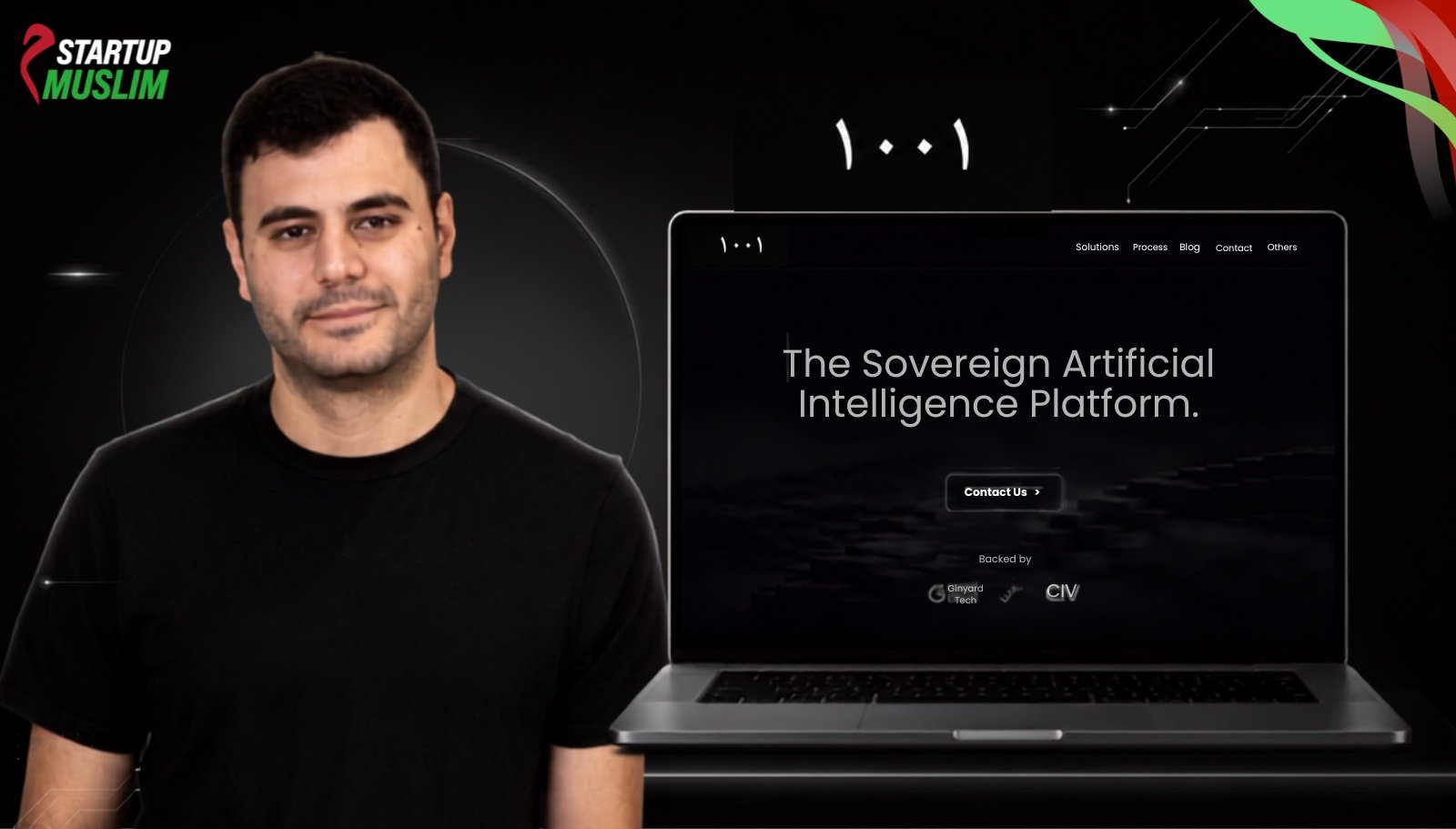
As governments and enterprises increasingly view artificial intelligence as strategic national infrastructure rather than just another software tool, a new generation of AI companies is emerging to address that shift. One of the latest is 1001, a GCC- and London-based artificial intelligence startup that has raised $30 million in a Series A funding round led by Lux Capital, with participation from Sanabil Investments, Hanabi, 9Yards, General Catalyst, CIV, Chris Ré, and several regional and international angel investors.
The investment represents one of the largest Series A rounds for an AI infrastructure company founded in the Gulf and reflects growing investor confidence that the region can become a global builder—not merely a consumer—of frontier artificial intelligence. The fresh capital will enable 1001 to accelerate product development, expand its engineering team, and strengthen its commercial presence across key GCC markets as demand for sovereign AI infrastructure continues to rise.
The company had previously raised $9 million in seed funding in October 2025, backed by CIV, General Catalyst, Lux Capital, and a number of prominent technology investors.
Building AI That Runs Critical Infrastructure
Founded in 2025 by Bilal Abu-Ghazaleh, 1001 is developing AI operating systems designed specifically for critical infrastructure sectors, including aviation, ports, logistics, manufacturing, and energy. Unlike conventional enterprise AI applications that primarily assist employees with tasks such as document generation or customer support, 1001 focuses on operational intelligence—helping organizations monitor complex physical systems, anticipate failures, automate decisions, and optimize large-scale operations in real time.
The company’s platform sits above an organization’s existing operational systems and creates a live digital model of the entire operation. Every asset, workflow, dependency, and operational constraint is continuously analyzed, enabling the AI to identify emerging risks before they become costly disruptions. Rather than simply reporting what has already happened, the platform recommends—or in some cases automatically executes—the best course of action, allowing operators to respond faster and with greater confidence.
This capability is particularly valuable for industries where thousands of high-stakes operational decisions must be made every day. Whether managing airport operations, coordinating cargo movement through ports, monitoring industrial facilities, or optimizing energy infrastructure, organizations increasingly require intelligent systems capable of processing enormous volumes of operational data in real time.
Why Sovereign AI Matters
One of the defining themes behind 1001’s strategy is the concept of sovereign AI. As artificial intelligence becomes increasingly integrated into national infrastructure, governments and strategic industries are becoming more cautious about relying entirely on foreign AI providers to operate mission-critical systems.
Instead of outsourcing decision-making to external platforms, sovereign AI enables countries and enterprises to build, own, and govern their own AI infrastructure while maintaining full control over their data, operational models, and regulatory compliance.
According to Bilal Abu-Ghazaleh, this shift represents one of the defining technology trends of the coming decade.
“The GCC runs some of the world’s most important infrastructure, managing a significant share of global oil flows, container traffic and international aviation,” he said. “Business leaders here don’t just want pilots. They want sovereign systems that deliver measurable results and make thousands of real-time decisions they can trust.”
By allowing organizations to maintain local ownership and governance of AI systems, 1001 aims to give governments and enterprises the confidence to adopt artificial intelligence without compromising operational control.
A Growing Opportunity Across the GCC
The timing of the funding comes as Gulf countries continue making unprecedented investments in artificial intelligence, digital infrastructure, cloud computing, and advanced manufacturing. Across Saudi Arabia, the UAE, Qatar, and other GCC nations, governments are positioning AI as a central pillar of long-term economic diversification strategies.
According to estimates from McKinsey & Company, broader AI adoption could contribute as much as $150 billion to GCC economies, representing approximately 9% of the region’s combined GDP. Critical infrastructure—including transportation, logistics, energy, and industrial operations—is expected to generate some of the largest productivity gains.
Rather than building consumer-facing AI applications, 1001 is targeting these high-value operational environments where better decision-making can translate into significant economic impact. As organizations increasingly seek intelligent systems capable of improving efficiency while maintaining regulatory oversight, the market for sovereign AI infrastructure continues to expand rapidly.
Backed by Leading Global and Regional Investors
The company’s latest funding round attracted support from a diverse group of investors spanning venture capital firms, sovereign-backed investment institutions, and globally recognized technology entrepreneurs.
Leading the round was Lux Capital, joined by Sanabil Investments, a wholly owned company of Saudi Arabia’s Public Investment Fund (PIF), alongside Hanabi, 9Yards, General Catalyst, and CIV. Stanford AI researcher Chris Ré also increased his investment, while a number of notable angel investors—including executives from Ramp, Clay, Cognition, and other leading technology companies—participated in the financing.
Commenting on the investment, Deena Shakir, Partner at Lux Capital, said the company represents the type of mission-driven technology business capable of defining an entirely new category.
“Bilal and the 1001 team are exactly the kind of founders we take pride in backing,” she said. “They are proving that frontier AI for critical infrastructure can be built, owned and governed locally, rather than imported from abroad.”
A spokesperson from Sanabil Investments echoed that sentiment, noting that Gulf economies are investing heavily in data, computing infrastructure, and AI capabilities, with increasing emphasis on developing local expertise rather than depending exclusively on imported technologies.
Scaling Talent and Regional Expansion
The newly raised capital will primarily support the expansion of 1001’s engineering organization while strengthening its commercial, sales, and go-to-market operations throughout the GCC. The company is actively recruiting world-class technical talent and already includes engineers and researchers from institutions such as Yale University, Stanford University, and Carnegie Mellon University.
Beyond hiring, the funding will enable 1001 to deepen relationships with strategic customers across aviation, logistics, industrial manufacturing, and energy while continuing to refine its AI operating system for increasingly complex enterprise environments.
As enterprises move beyond AI experimentation toward full-scale deployment, the company believes demand for intelligent operational systems will continue to accelerate across both public and private sectors.
Building AI Infrastructure for the Next Decade
While much of today’s AI conversation focuses on chatbots, virtual assistants, and generative content, companies like 1001 are building a different layer of the artificial intelligence stack—one that quietly powers critical infrastructure behind the scenes.
Rather than replacing human operators, the company’s technology is designed to augment decision-making, helping organizations anticipate operational risks, optimize complex systems, and improve resilience across industries that underpin national economies.
With $39 million raised across its seed and Series A rounds in less than a year, strong backing from global investors, and an ambitious vision for sovereign AI, 1001 is positioning itself at the center of one of the Gulf region’s most significant technological shifts. As countries increasingly seek to build and govern their own AI capabilities, the company hopes to become the trusted intelligence layer powering the next generation of critical infrastructure across the GCC and beyond.
