


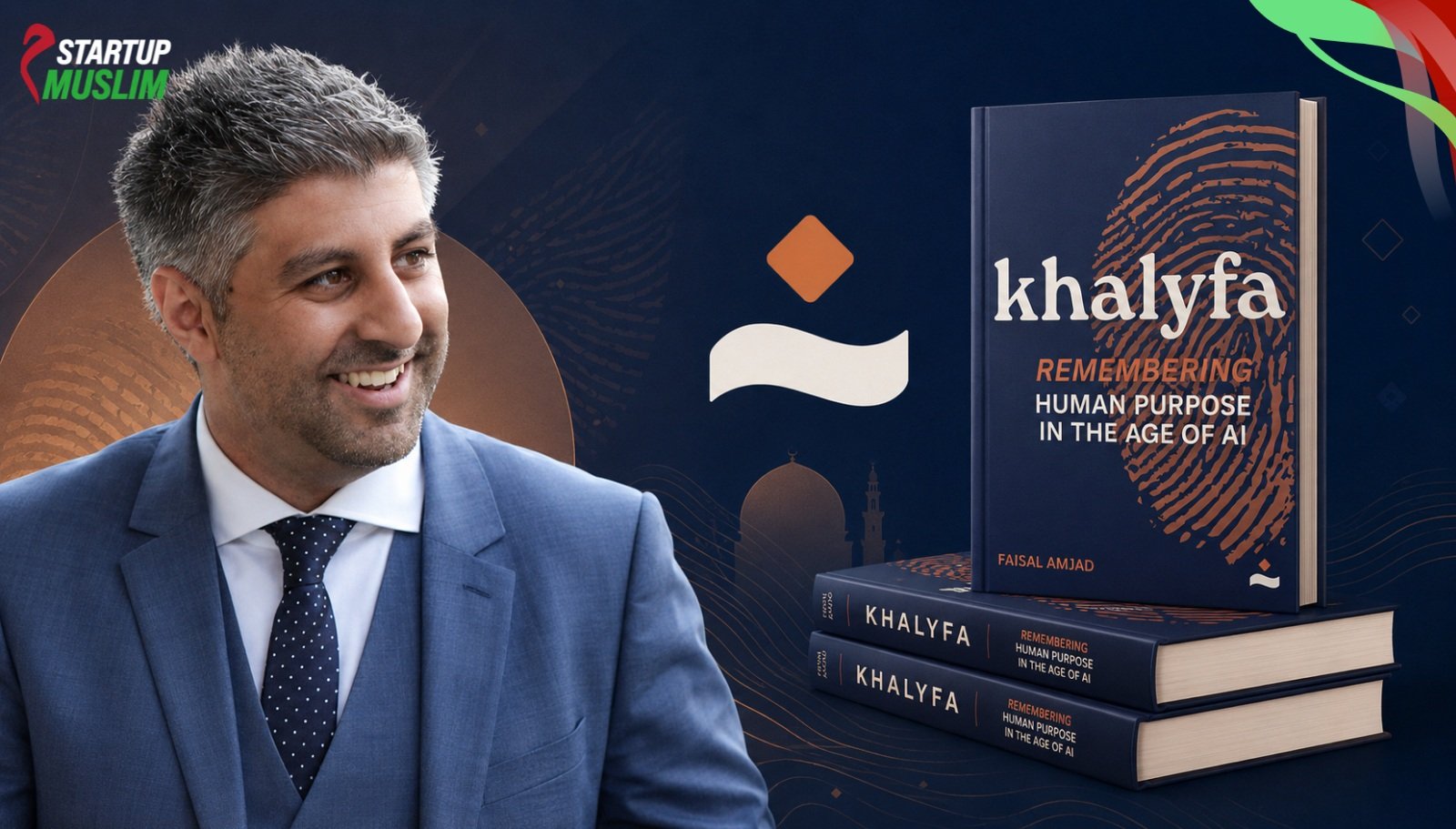
Sometimes Success Feels Empty
From the outside, Faisal Amjad appeared to be doing everything right. He had graduated from law school, built a successful corporate career, managed multimillion-pound procurement budgets, and earned a place on one of the NHS’s prestigious senior leadership programmes. Friends and colleagues congratulated him at every milestone, convinced he was climbing exactly the ladder he was supposed to climb. Yet inside, something felt profoundly wrong.
The defining moment arrived when he was selected as one of just twelve employees—out of more than 250 applicants—for a senior leadership programme within the NHS. It was the kind of achievement most professionals dream about, a clear signal that his career was accelerating. Everyone around him celebrated. Faisal, however, felt absolutely nothing.

“Everyone congratulated me and told me this was huge,” he recalls. “And I felt nothing. That scared me more than failure ever had.” That moment forced him to confront a difficult truth. He had become highly competent at building a life that was never truly his.
Today, that realization sits at the heart of Khalyfa, an education and technology platform helping Muslims discover and live their purpose in an age increasingly defined by artificial intelligence, automation, and what many psychologists now describe as the global meaning crisis.
A Career Built on Other People’s Expectations
Looking back, Faisal describes much of his twenties as a decade spent following instructions rather than making choices.
Growing up in Nottingham, he dreamed of becoming a writer, inspired by authors like Roald Dahl. Journalism seemed like a natural path until the events of September 11 reshaped public discourse. Concerned about the direction media coverage of Muslims was taking, he abandoned that ambition. His parents encouraged him to study law instead, believing his love of language would make him an excellent solicitor. It seemed sensible, so he followed their advice.
That pattern repeated itself throughout his early career. A graduate interview at Boots led him into retail buying. Later came positions involving procurement, project management, and data analysis across organizations including Boots, The Perfume Shop, DHL, and the NHS. At one point he even returned to law school to qualify as a solicitor—not because he wanted to practice law, but because people told him he needed to specialize.
“I was doing what you’re supposed to do,” he says. “Ticking all the boxes, but with almost no agency over any of it.”
For years, competence disguised misalignment. He performed well in every role, received promotions, and built an impressive résumé. Yet achievement without purpose gradually became exhausting.
Entrepreneurship Didn’t Solve the Problem
Determined to build something of his own, Faisal left the corporate world without a concrete plan. Entrepreneurship became his new classroom.
Over the following years he launched multiple ventures, including Amazon FBA businesses, consulting projects, educational platforms, a marketing agency, and even the world’s first smart Himalayan salt lamp, funded through crowdfunding. Several businesses generated healthy six and seven-figure annual revenues, while another venture, Muslim CEO, went on to help more than a thousand Muslims launch online education businesses.
By most entrepreneurial standards, the journey was successful. Yet the emptiness returned. “This time I couldn’t blame anyone else,” Faisal reflects. “These were my businesses. My choices. And I was still burning out.”
That realization became another turning point. The problem had never been corporate life alone. It was far deeper. He simply didn’t understand what he had been created to contribute. Instead of searching for another business opportunity, he began searching for answers.
Building Khalyfa Before It Had a Name
What followed was less a startup journey than a decade-long research project.
Faisal immersed himself in hundreds of books spanning psychology, philosophy, leadership, Islamic scholarship, and human development. He studied with scholars, completed countless courses, and explored the lives of thinkers ranging from Imam Al-Ghazali and Rumi to Malcolm X, Muhammad Ali, and Allama Iqbal. Running quietly alongside his businesses was another initiative called KNOW, an organization devoted to lifelong learning, critical thinking, and purposeful living.
Over time, KNOW evolved from an events company into an educational platform featuring courses, documentaries, and thought leadership around what Faisal called the “Second Golden Age”—a vision for reviving the intellectual and spiritual excellence that once defined Islamic civilization.
Rather than rushing to commercialize his ideas, he spent years refining them. He interviewed more than fifty people simply to understand how they described their struggles. Interestingly, very few spoke about “purpose.” Instead, they talked about burnout, confusion, emptiness, and the persistent feeling that something important was missing from their lives.
That insight fundamentally shaped his approach. “I realized people weren’t searching for purpose,” he explains. “They were searching for relief from feeling lost.”
Measuring the Muslim World’s Purpose Gap
The catalyst for Khalyfa came through research. Determined to understand whether his observations reflected a broader pattern, Faisal commissioned what he describes as the largest study ever conducted on Muslim purpose. Surveying 3,491 Muslims across 101 countries, the findings revealed a striking disconnect. While 66% of respondents said they understood what Allah expected from them and 58% believed they knew their purpose, only 17% believed they were actively living at their full potential.
For Faisal, those numbers changed everything. “This isn’t a faith crisis,” he says. “The knowledge is there. What’s missing is the infrastructure that helps people turn intention into action.”
He believes the Muslim world possesses extraordinary spiritual resources but lacks practical systems that help individuals translate belief into everyday decisions. Khalyfa was built to become that missing architecture.
The timing, he argues, is particularly significant. As artificial intelligence transforms industries and automation reshapes careers, millions of people are discovering that much of their identity was tied to their profession. When work changes, identity begins to crumble.
“The question underneath all of it is simple,” Faisal says. “Who are you when you’re not your job?”
Building an Ecosystem Around Human Purpose
Unlike traditional coaching businesses, Khalyfa has been designed as an interconnected ecosystem. Its thought leadership pillar, Khalyasophy, publishes books, essays, newsletters, and intellectual frameworks exploring purpose through both Islamic tradition and contemporary psychology. The coaching arm, Khalyfahood, delivers cohort-based programmes helping participants identify what Faisal calls their “Purpose Project”—the unique contribution they are designed to make in the world.
The third pillar, Khalyfa Labs, brings technology into the equation. Here, Faisal is developing AI-powered tools including the Khalyfa Code, a personality framework inspired by the 99 Names of Allah, and the Inner Khalyfa app, designed to provide daily practices that reinforce purposeful living.
Together, these initiatives create what he describes as a flywheel. Someone may discover Khalyfa through an article, take an assessment, join a coaching programme, and eventually become part of a wider global movement.
Purpose as a Competitive Advantage
Despite building sophisticated educational frameworks and technology, Faisal insists Khalyfa is ultimately about something far simpler.
It is about helping people become who they were created to be. His leadership philosophy reflects that conviction. Drawing inspiration from Islamic concepts including Tawhid (Oneness), Amanah (Trust), Mizan (Balance), and Mas’uliyyah (Accountability), every business decision is measured against values rather than convenience.
“The business is not ours,” he says. “It belongs to Allah. We are simply entrusted with it.”
That perspective also shapes his advice to aspiring Muslim entrepreneurs. Too many founders, he believes, mistake competence for calling. The world rewards people for becoming highly skilled, but rarely encourages them to ask whether they are building the life they were actually designed to live. “Competence and calling are not the same thing,” he says. “You can become very good at a life you didn’t choose.”
A Vision Beyond Business
Looking ahead, Faisal’s ambitions extend well beyond scaling another education company. He hopes Khalyfa becomes the foundation for something much larger—a revival of purpose-driven leadership throughout the Muslim world.
His long-term vision includes translating the Khalyfa Canon into multiple languages, certifying practitioners across the globe, partnering with schools, and making purpose education accessible to millions. Yet his ultimate aspiration is even more ambitious. “I want to be part of triggering a Second Golden Age,” he says.
For Faisal, the first Islamic Golden Age was never built by people chasing history. It emerged because individuals became deeply aligned with the talents, responsibilities, and purpose Allah had entrusted to them. If enough Muslims rediscover that same alignment today, he believes extraordinary contributions will naturally follow.
As artificial intelligence continues reshaping the future of work, Faisal believes one uniquely human characteristic will become increasingly valuable. Machines may write, calculate, analyse, and even create. But they cannot possess a calling. “They cannot be a khalyfa,” he says. “That is uniquely human.”
In an age increasingly defined by artificial intelligence, Khalyfa is betting that humanity’s greatest competitive advantage will not be intelligence itself, but purpose. And for Faisal Amjad, helping people rediscover that purpose is no longer simply a business—it is the mission he spent a lifetime searching for.
