






In the Middle East, air conditioning is not simply an appliance. It is critical infrastructure. Across the Middle East and North Africa, extreme heat and rising temperatures are making cooling one of the biggest drivers of electricity demand. The International Energy Agency (IEA) estimates that cooling already accounts for nearly half of peak electricity demand and about one-quarter of annual electricity demand across MENA. Summer temperatures regularly exceed 40°C, while average temperatures in the region are rising at more than twice the global rate.
The pressure on power systems is only increasing. MENA’s electricity demand tripled between 2000 and 2024, increasing by more than 1,000 terawatt-hours, and the IEA projects another 50% increase by 2035. Cooling and desalination together are expected to account for close to 40% of the region’s projected electricity-demand growth through 2035.
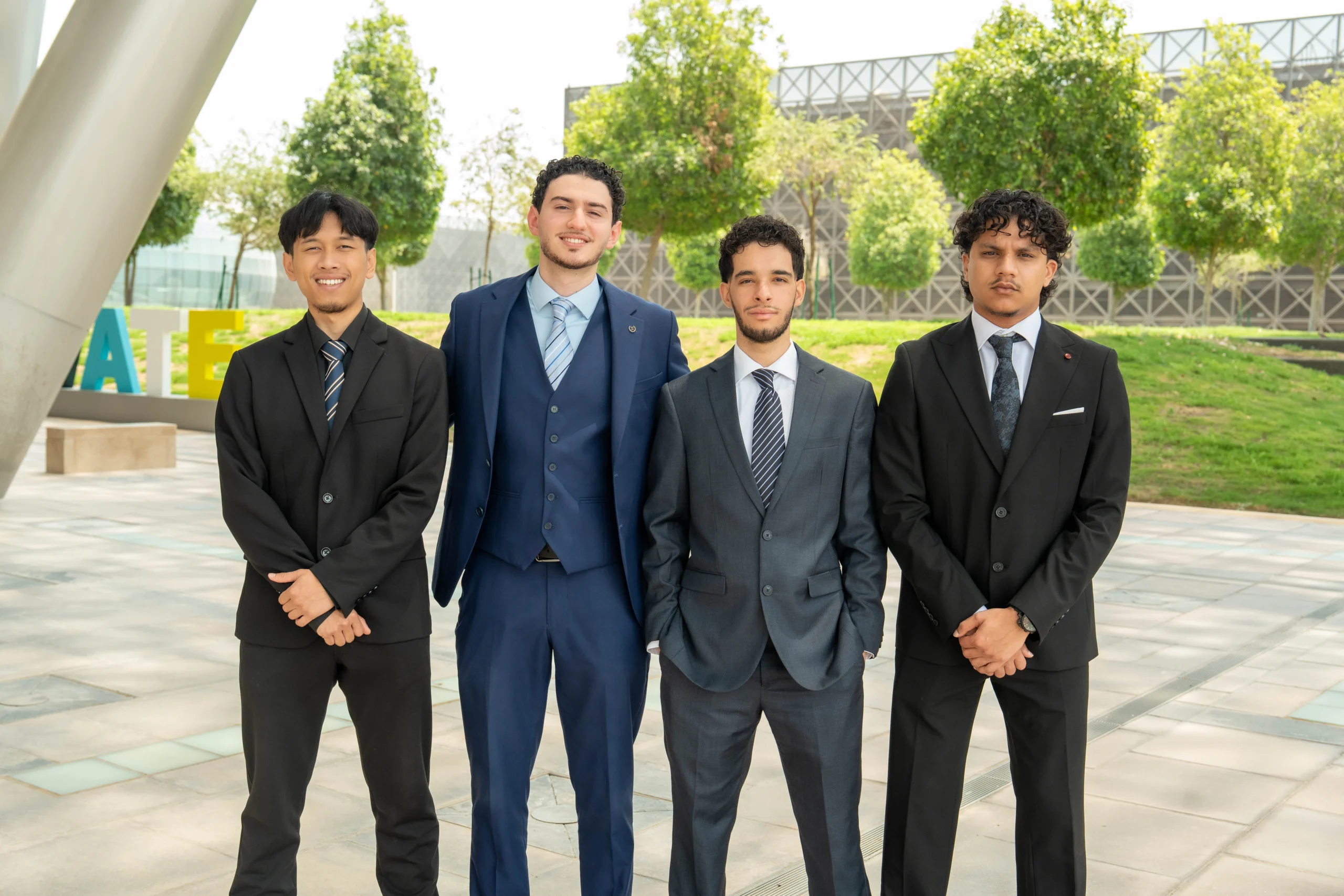
For Anas Rustom, Founder and CEO of Qatar-based climate technology startup Vora, those numbers turned something familiar into a technology problem. Rustom grew up in Qatar, where air conditioning is so ubiquitous that it can become almost invisible. But while looking for problems worth solving with co-founder Mazen, he came across a statistic that changed how he looked at cooling: air conditioning accounts for roughly 70% of electricity demand in Qatar and the GCC. Suddenly, empty rooms being cooled, spaces being overcooled and ACs running for hours simply because nobody had told them to stop looked less like background noise and more like an enormous opportunity. The insight behind Vora was straightforward: the region may not need millions of new air conditioners. It may need to make the millions already installed smarter.



The Problem Wasn’t Cooling. It Was Waste.
The first insight behind Vora was that the region does not necessarily need a better air conditioner. There is already an enormous installed base of machines that work and that people depend on every day. What many of those systems lack is an understanding of the environment in which they operate. A conventional AC knows the temperature it has been instructed to reach, but little about why that temperature makes sense at a particular moment. It does not necessarily know whether anyone is occupying the room, how the weather outside is changing, how the room behaves over several hours or how an individual actually experiences comfort. It follows commands rather than understanding context.
That led Rustom and his team to a different question: what if the AC someone already owns could become intelligent? Vora emerged from that premise, positioning itself as an intelligence layer between the room and the existing cooling system rather than another piece of hardware designed to replace it. The distinction is important because sustainability can sometimes create its own contradiction. Replacing perfectly functional equipment with new equipment may improve efficiency, but it also creates additional cost, installation requirements and physical waste. Vora’s philosophy is that the first question should be whether existing infrastructure can be made smarter before it is replaced.
A Cooling Problem Measured in Terawatt-Hours
The scale of the opportunity becomes clearer when cooling is viewed as an electricity problem rather than simply a comfort problem. MENA’s electricity consumption has tripled since 2000, and the IEA expects demand to rise another 50% by 2035. Cooling currently represents roughly one-quarter of annual electricity demand in the region and nearly half of peak demand, making air conditioning one of the most consequential variables in the region’s electricity system.
The problem becomes particularly acute during extreme heat. On exceptionally hot days, space cooling can account for more than 70% of peak residential electricity demand in parts of the Middle East. This concentration creates a difficult challenge for power systems because cooling demand surges during precisely the periods when temperatures are placing the greatest stress on infrastructure.
The efficiency gap adds another dimension. The IEA says the average efficiency rating of an air conditioner in MENA is less than half that of the average unit in Japan, and estimates that improving AC efficiency could reduce peak-demand growth by 35 GW by 2035. This is the environment in which Vora is being built. The company is not trying to persuade the Gulf to stop using air conditioning. It is attempting to make an essential technology respond more intelligently to the conditions around it.
Giving the Room a Brain
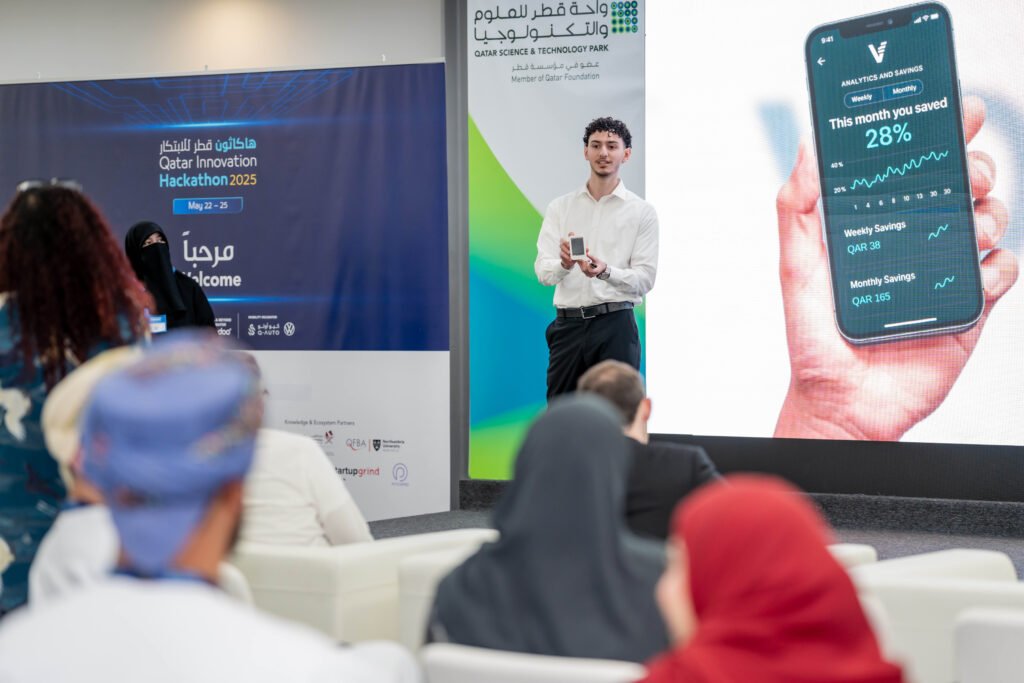
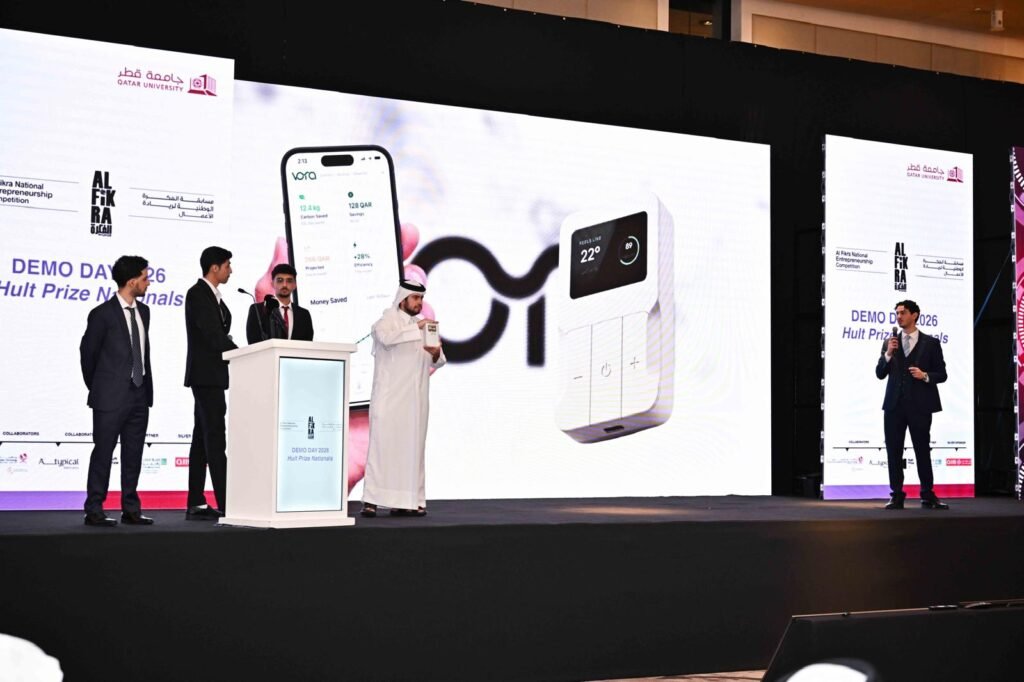
The technology Vora is building sits at the intersection of AI, IoT, hardware, software and climate technology. The easiest way to understand it is to imagine Vora as a decision-making layer between the room and the AC. Its device continuously reads conditions inside the room, combines that information with current and forecast weather, and gradually learns how that particular space responds to cooling. It also develops an understanding of the user’s comfort preferences over time.
The system then looks ahead rather than simply reacting to the temperature at that exact moment. Its optimization engine models how the room could behave under different AC settings and evaluates ways to maintain comfort while reducing unnecessary energy consumption.
That could mean cooling slightly earlier because hotter weather is approaching, or easing off when the room can remain comfortable without consuming as much power. The system also accounts for uncertainty because real rooms, weather conditions and forecasts are never perfectly predictable. Once Vora selects an action, it communicates with the existing AC through infrared, just as the original remote would, then observes the outcome and uses that information for its next decision. The ambition is almost invisible technology: a room that remains comfortable while the intelligence operates quietly in the background.
Why Retrofitting Could Be the Bigger Opportunity
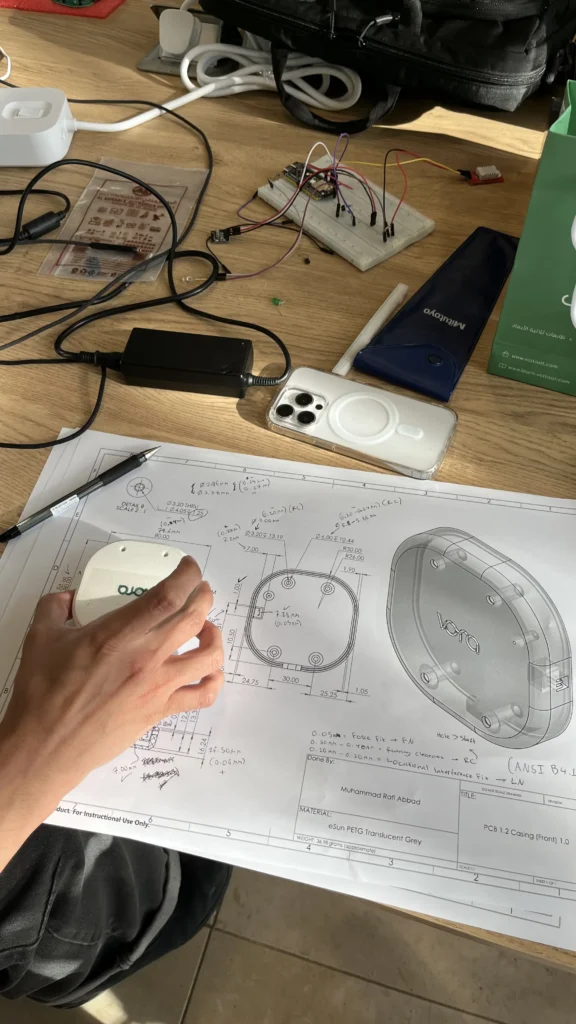
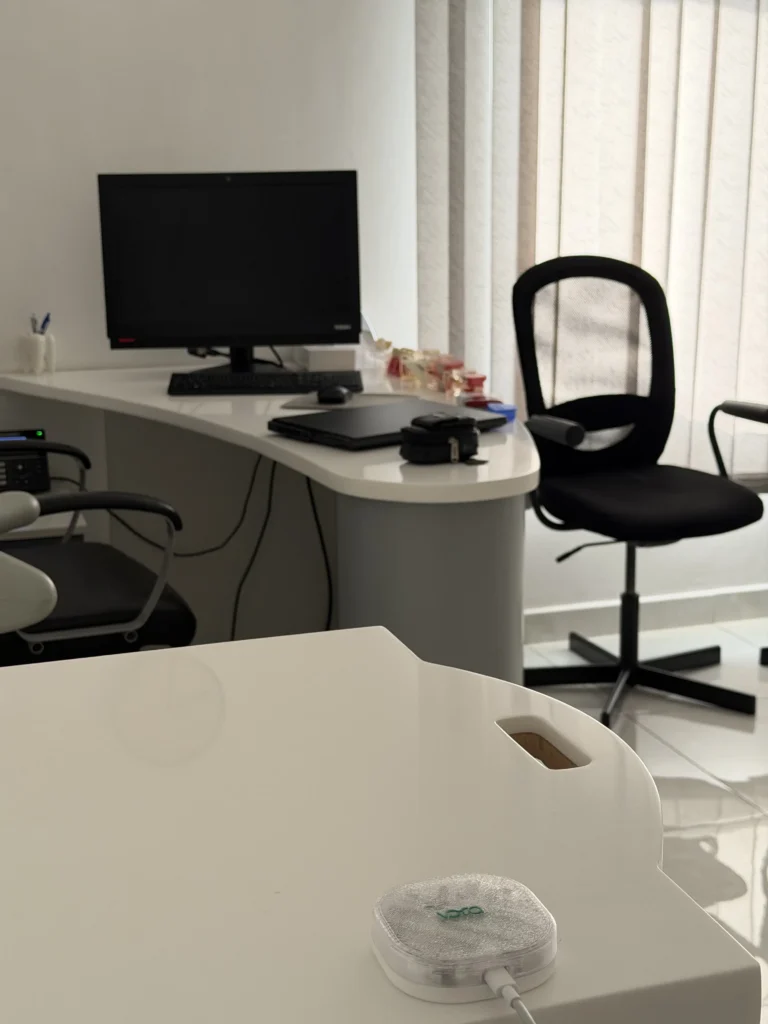
The decision to work with existing AC systems rather than replace them became one of Vora’s most important product principles. For infrared-controlled split ACs, Vora learns the signals from the existing remote and communicates with the system in the same way. The company does not open the AC, modify its internal electronics or rewire it, and the original remote continues to work normally. A small device in the room effectively becomes the intelligent layer on top of equipment that is already there.
That approach has implications beyond product design. Climate technology can only create meaningful impact if it can actually be deployed at scale. Every additional installation requirement, replacement cost or disruption makes adoption harder, particularly in markets where enormous amounts of infrastructure are already in place.
For Vora, retrofitting therefore became more than a convenient feature. It became part of the company’s sustainability thesis: before replacing infrastructure, ask whether intelligence can make it better.
The Hardest Part Was Making AI Work in Real Rooms
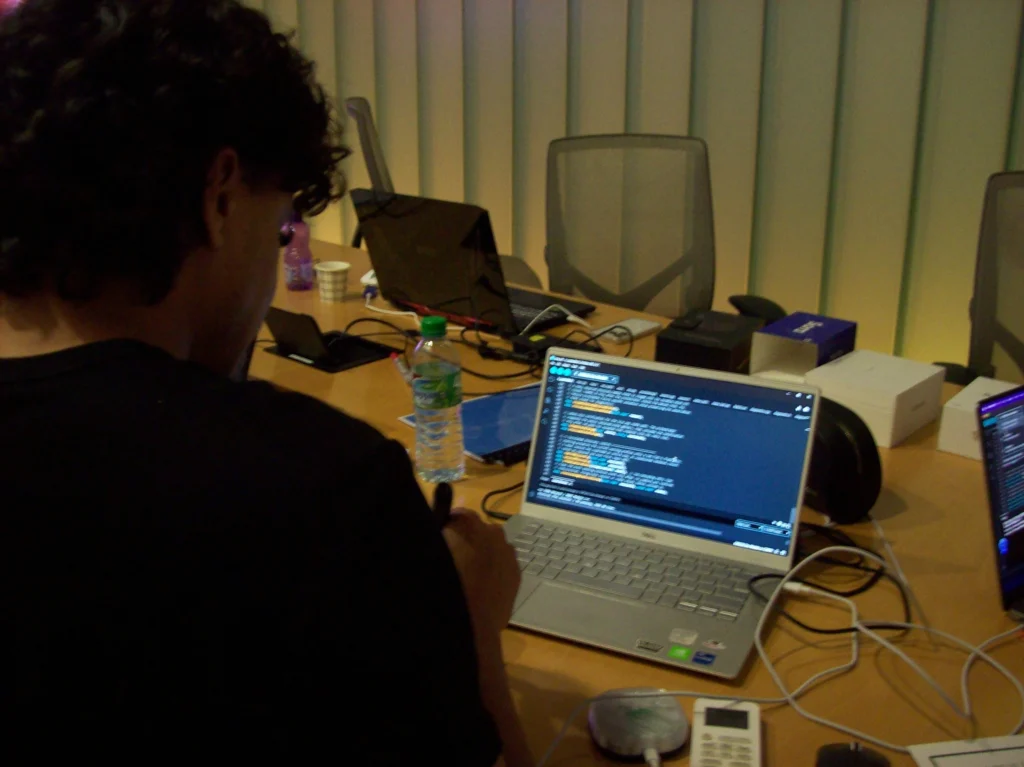
Building an algorithm that performs well in a controlled environment is one challenge. Making that system reliable inside real buildings is another. Rustom says the hardest part of Vora’s development has been getting the technology to work consistently in the real world. Doors open, humidity changes, weather shifts, sensors are imperfect and different AC systems behave differently. Something that looks impressive during a controlled test can behave very differently after being installed in someone’s room for a week.
That reality forced the team to rethink an earlier version of its optimization algorithm. The system already worked, which made the decision to replace it harder, but deeper testing showed that working was not enough. It needed to look further ahead, understand individual rooms more effectively, account for uncertainty and make better trade-offs between comfort and energy. There is a lesson Rustom took from that process. “Throwing away something that is broken is easy,” he says. “Replacing something that works because you know it can be much better is much harder.”
That mindset may be particularly important for a hardware startup. Every iteration exists in the physical world, where assumptions eventually meet unpredictable environments.


From Doha to a Much Larger GCC Opportunity
Vora’s first market is Qatar because that is where the company was built, where it is testing its technology and where its founders experienced the problem firsthand. But Rustom sees the wider GCC as the company’s first major regional opportunity. Saudi Arabia is particularly significant because of its scale. Vora recently exhibited in Riyadh for the first time at LEAP, giving the team a closer look at a market where the same fundamental challenge exists on a much larger scale: cooling is essential, enormous amounts of AC infrastructure are already installed and even small improvements in unnecessary energy consumption can accumulate across the system.
The UAE is another natural market, but Rustom is deliberately resisting the temptation to treat the GCC as one uniform market. The underlying problem may be shared, but the way Vora enters each country will be different. His preference is to prove the technology deeply in one market before expanding into the next. The larger ambition is to establish that technology developed in Qatar around a problem the founders understood personally can eventually become relevant far beyond Qatar and the GCC.



Building a Smarter Definition of Sustainability
Rustom’s background helps explain why Vora sits at the intersection of AI and physical infrastructure.
At Qatar Computing Research Institute, he worked on AI research involving signals such as eye-tracking and EEG. At Hamad Medical Corporation, he worked with computer vision and medical imaging, where the value of AI came from the decisions it could help people make. At Siemens, he moved closer to energy infrastructure, working with building and energy data and predictive tools around how energy was being consumed.
Looking back, Rustom sees a consistent thread: he is less interested in AI as an abstract technology than in what happens when intelligence meets the physical world. That philosophy also shapes his ultimate vision for Vora. He wants to challenge the assumption that solving an energy problem necessarily means replacing everything that already exists. The GCC will continue to depend on air conditioning because cooling is essential, but he believes the region can become dramatically smarter about how that infrastructure is operated.
If Vora reaches the scale its founders envision, the impact could extend beyond lower electricity bills. More intelligent cooling could mean lower energy demand, less unnecessary pressure on power grids and a more efficient way to cool one of the hottest regions in the world. And that may be the bigger opportunity hiding inside an ordinary household appliance. Vora wants to prove that technology built in Qatar, around a problem its founders understood because they lived with it, can eventually help the rest of the world cool more intelligently. The future of cooling may not be about building better air conditioners. It may be about teaching the ones we already have how to think.


