


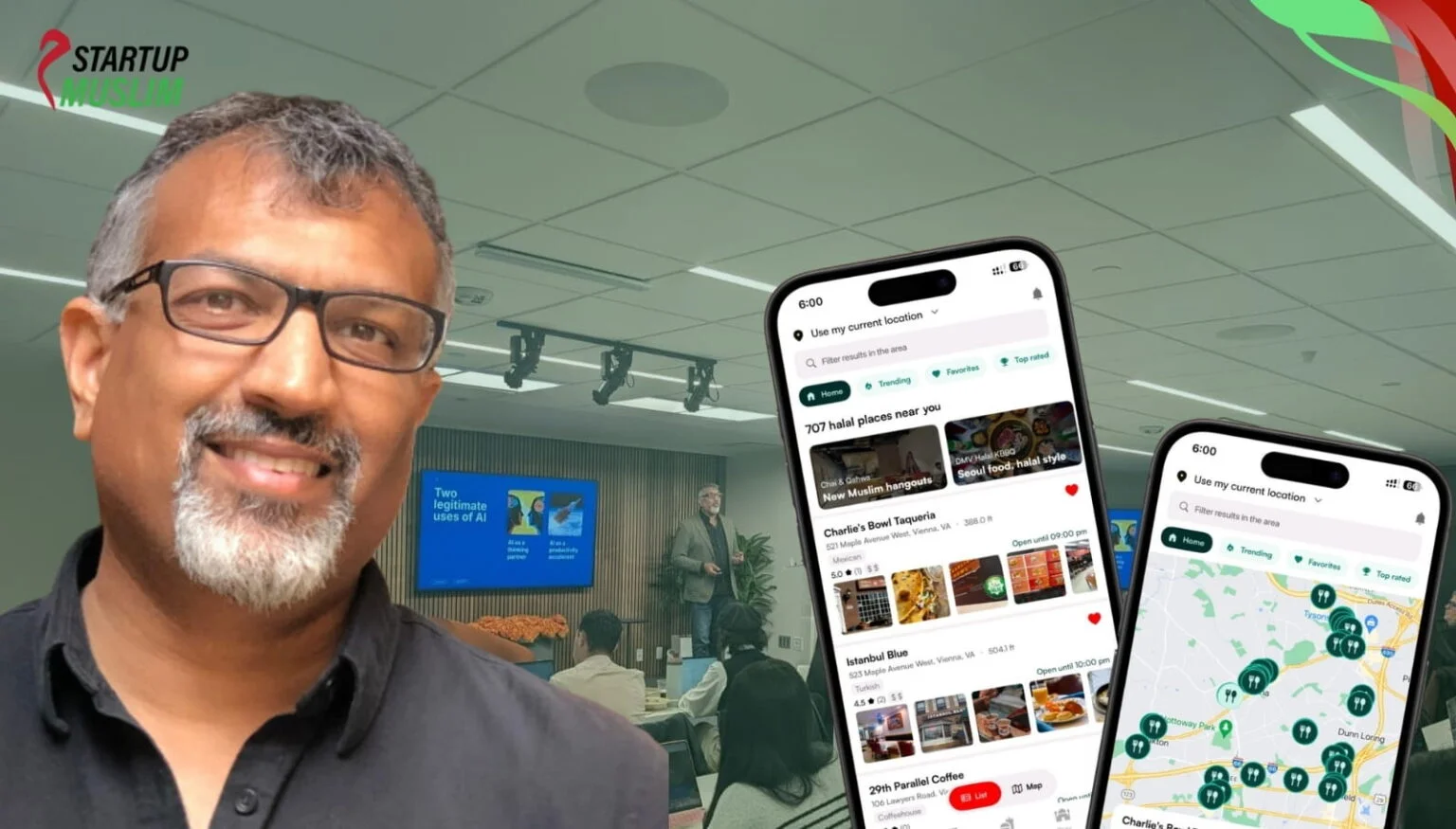
Long before “Muslim tech” became a recognized category, Shahed Amanullah was already building for the global Muslim community—quietly, consistently, and with conviction.
Today, with multiple successful exits and decades of entrepreneurial experience, his journey reflects a rare combination of Silicon Valley execution and community-driven vision.
A Front-Row Seat to the Birth of the Internet
Shahed’s story begins in Silicon Valley during the early days of the internet. After studying civil engineering at UC Berkeley, he initially worked on infrastructure projects like San Francisco’s streetcars. But the rapid emergence of the internet changed everything. “The buzz coming out of the Valley was impossible to ignore,” he recalls.
He taught himself how to code and entered the startup ecosystem in 1998—just as the digital revolution was beginning. What followed was a deep immersion into entrepreneurship, eventually leading him to build and scale multiple ventures.
The Accidental Birth of Zabihah
The idea for Zabihah didn’t begin as a startup. It began as a simple list. Shahed compiled halal restaurant options for himself and his colleagues—just a practical solution to a daily problem. But demand quickly grew beyond his immediate circle.
“That list became Zabihah.com,” he explains, “and it still exists today as the world’s largest guide to halal restaurants.” What started as a utility became infrastructure.
More Than Food—A Cultural Bridge
For Shahed, Zabihah was never just about food. It was about identity, access, and community. “Food is where Muslims meet their neighbors. It’s where stereotypes break down,” he says.
At a time when halal options were limited and fragmented, Zabihah became a central hub—connecting users with reliable information while pushing restaurants toward higher standards and transparency.
It also revealed something deeper:
Muslims were already shaping the restaurant industry in significant ways—but lacked a unified platform to represent that influence.
Building for Muslims—Without Limiting the Audience
One of Shahed’s core philosophies has remained consistent: Build for Muslims—but not only for Muslims. “I want products focused on Muslims to be as good as mainstream—if not better,” he says.
Zabihah’s large non-Muslim user base reflects this approach. The platform didn’t isolate itself as a niche product—it became a gateway into the halal ecosystem for anyone curious or interested.
A Serial Founder With a Community Focus
Zabihah was just one chapter. Shahed went on to build:
- AltMuslim, a digital publication amplifying Muslim voices post-9/11 (later acquired by Beliefnet)
- Affinis Labs, a startup accelerator supporting Muslim founders globally (acquired by Frost Capital)
Each venture reinforced a central theme:
unlocking potential within the Muslim ecosystem. Even Zabihah itself was eventually acquired—further validating its long-term relevance and impact.
The Hardest Problem: Defining “Halal”
Despite its success, Zabihah faced a persistent challenge: standardization and trust. For years, the term “halal” was used loosely, with little transparency. Shahed recognized that modern consumers needed more clarity. “The challenge is getting restaurants to communicate openly—what halal means in their kitchen,” he explains.
Zabihah addressed this by building tools that allow:
- Transparency in sourcing
- Clear communication of standards
- Better-informed consumer decisions
Rather than enforcing a single definition, the platform embraces diversity—while insisting on openness.
The Next Frontier: Halal Delivery
Looking ahead, Shahed sees a massive opportunity in halal-first delivery infrastructure. Zabihah has already experimented with delivery services, onboarding hundreds of restaurants in early pilots.
However, competing with giants like DoorDash and Uber Eats presents significant challenges—especially in terms of capital and scale. Instead of rushing, the team is now refining its strategy—focusing on building a more efficient and targeted approach.
Leadership Rooted in Purpose
Zabihah’s culture is grounded in values that are increasingly rare in tech:
- Non-exploitative business practices (no fees for users or restaurants)
- Investment in community talent
- Purpose-driven execution
In one instance, the leadership team even began a strategic session by performing Umrah together—aligning intention before action.
Advice to Muslim Entrepreneurs: Think Bigger
Shahed’s advice is both practical and ambitious:
- Tap into your networks — community is a competitive advantage
- Think globally — build for everyone, not just Muslims
- Protect your reputation — trust compounds over time
- Focus on execution — ideas alone don’t matter
“Build ‘by Muslims, for everyone,” he emphasizes.
A Legacy Beyond Companies
As he reflects on the future, Shahed’s vision is not centered on valuation or exits—but on impact and continuity. “I want to give it all away—the knowledge, the experience—in service of the next generation,” he says. His ultimate goal is a mindset shift:That Muslim identity is not a limitation in business—but an advantage.
That success doesn’t come despite the community—but through it. In a startup ecosystem often driven by speed and scale, Shahed Amanullah represents something different:
A builder of institutions.
A connector of communities.
And a reminder that sometimes, the most powerful platforms begin with something as simple as a list.
