

Opening Doors: How Qureos Co-Founder Usama Nini Is Reimagining Hiring Across Emerging Markets
-
Mohammed Abubakr / 38 seconds
- June 17, 2026
- 0
- 8 min read

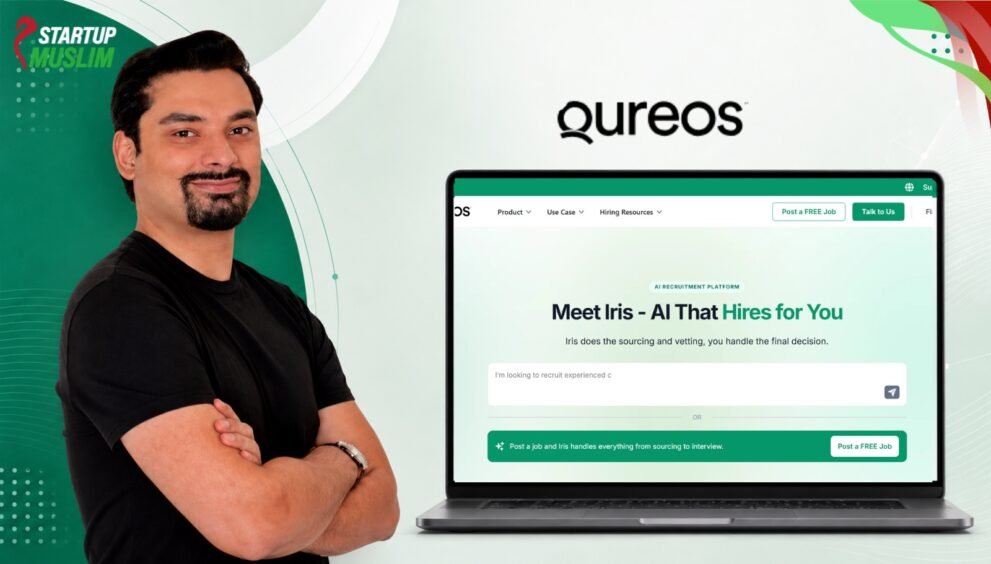
For Usama Nini, the problem with hiring has never been a shortage of talent. Throughout his career, he repeatedly encountered a striking paradox: companies struggled to find qualified candidates, while talented individuals struggled to access meaningful opportunities. The disconnect was particularly visible across emerging markets, where outdated recruitment systems often determined careers more than merit. It became increasingly clear to him that the issue was not the absence of capable people, but the inability of existing systems to efficiently connect talent with opportunity.
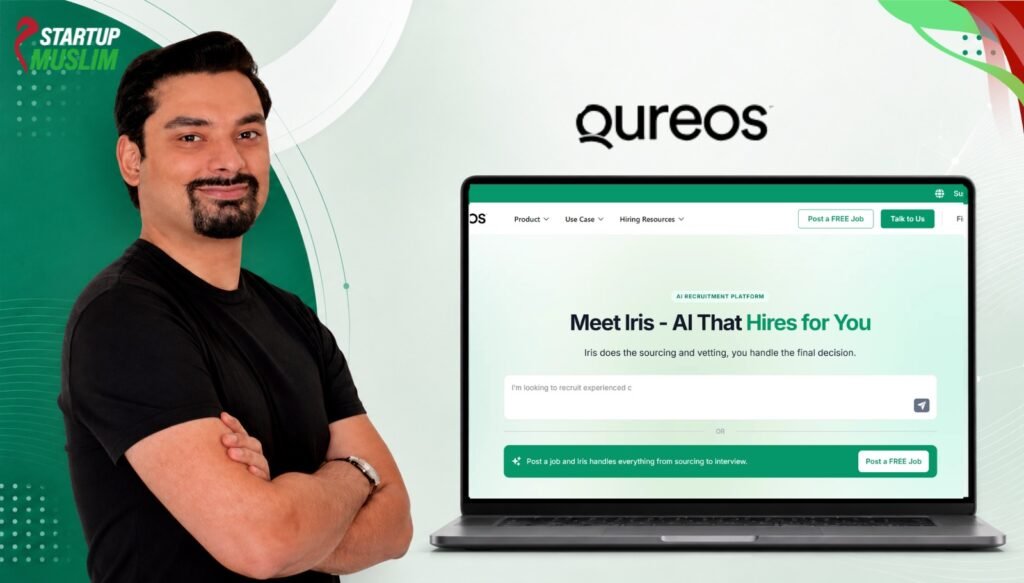
That realization led him to co-found Qureos, an AI-powered hiring platform designed to bridge this gap. Today, the company serves more than 1,000 organizations, has raised over $8 million in funding, and is helping reshape the future of recruitment across the Middle East and beyond. Yet behind the technology and growth metrics lies a deeper mission: ensuring that deserving individuals are not denied opportunities simply because the system failed to recognize their potential.
From Karachi to Canada’s Investment World
Born and raised in Karachi, Pakistan, Usama pursued higher education in Canada, earning a dual degree in Mathematics and Business. His early professional journey took him through accounting, private equity, and hedge fund investments, experiences that gave him a strong foundation in finance and analytical thinking.
His first exposure to the startup world came when he joined an early-stage Canadian fintech company developing an AI-powered bond pricing platform. Working within a fast-moving startup environment fundamentally changed his perspective on innovation and entrepreneurship. “It was my first real taste of what it feels like to build something from nothing,” Usama recalls. “Honestly, I was hooked.”
The experience awakened an entrepreneurial curiosity that would continue to shape the next stages of his career. Later, he led regional expansion efforts for a transportation technology company operating across the UAE, Saudi Arabia, Egypt, and Jordan. Traveling throughout the region exposed him to the realities of labor markets in emerging economies. Businesses consistently complained about the difficulty of hiring qualified talent, while capable individuals struggled to gain visibility and access opportunities that matched their abilities.
“The infrastructure just wasn’t built for them,” he says. That observation became the foundation upon which Qureos was eventually built.
The Hidden Cost of Invisible Talent
For Usama, hiring inefficiencies are not simply operational problems. They carry significant economic and social consequences. He believes emerging markets are often attempting to compete globally while failing to fully utilize the human capital already available to them. One of the clearest examples, he argues, is the underrepresentation of women in formal employment across many developing economies.
“We talk endlessly about becoming stronger and more competitive economies,” he says. “But we’re doing it with one hand tied behind our back.”
When half of a country’s talent pool remains disconnected from meaningful employment opportunities, entire economies suffer. Families lose income potential, businesses lose access to capable professionals, and innovation slows.
Qureos was designed to address these structural barriers by creating hiring pathways based on merit rather than privilege. Through artificial intelligence, the platform enables employers to identify candidates more effectively while opening doors for individuals who may have otherwise been overlooked.
“We’re not just reducing time-to-hire,” Usama explains. “We’re building a more equitable system where merit has a real shot at beating privilege.”
Rethinking the Talent Shortage Narrative
One particular moment fundamentally reshaped Usama’s thinking about recruitment. Toward the end of the COVID-19 pandemic, labor market statistics from the United States showed that job openings had briefly exceeded the number of unemployed individuals. Many observers interpreted this as evidence of a widespread talent shortage.
Usama reached a different conclusion. He questioned whether the problem truly stemmed from a lack of talent or whether the real challenge was the inability of existing systems to efficiently connect people with opportunities.
“I kept asking myself whether this was really a talent shortage problem,” he says. “Or whether it was actually a talent optimization problem.”
The answer, in his view, was obvious.
“The talent exists. The opportunities exist. They just cannot find each other efficiently enough.”
If this inefficiency could exist within one of the world’s most advanced economies, he reasoned, then the challenge was likely even more pronounced across emerging markets. Artificial intelligence, he believed, represented the most powerful tool available to solve this problem at scale.
Building Recruitment Infrastructure for the Future
Since its launch, Qureos has rapidly evolved into one of the region’s leading recruitment technology companies.
The company has raised more than $8 million to date, including a recent $5 million Seed round led by Prosus Ventures and Salica Oryx Fund. Investors also include Oraseya Capital, PlusVC, F6 Ventures, BDev Ventures, Sunny Side Venture Partners, Daniel Tyre, COTU Ventures, and Globivest.
Today, Qureos works with more than 1,000 enterprise and public-sector organizations, including Qatar Airways, Dubai Economy and Tourism, and BAAN Holdings.
The platform distributes vacancies across more than 2,000 job boards worldwide and screens candidates against job requirements in under fifteen seconds. What traditionally required weeks or even months of manual effort can now happen within days.
For employers, the benefits extend far beyond speed. Recruiters often spend hundreds of hours reviewing applications, coordinating interviews, and managing administrative tasks. Qureos enables organizations to automate repetitive processes, allowing hiring teams to focus on relationship-building and strategic decision-making instead.
“We’re turning recruitment from a bottleneck into a genuine competitive advantage,” Usama says.
Staying in Love With the Problem
Like every startup founder, Usama has encountered his share of setbacks. Yet he believes the greatest challenge in entrepreneurship is not external competition, economic uncertainty, or fundraising. Instead, it is learning how to balance conviction with adaptability.
“How do you stay deeply in love with the problem you’re solving while remaining nimble enough to let go of your solution when it isn’t working?” he asks. Throughout Qureos’ journey, the team repeatedly discovered that assumptions needed to evolve. Features had to change. Strategies had to adapt. What remained constant, however, was the underlying mission.
“We had to change the how without abandoning the why.”
For Usama, resilience is not stubbornness. It is the ability to learn continuously while remaining committed to the problem that matters most.
Building the Future of Work
Looking ahead, Qureos plans to deepen its presence across the Middle East while expanding into new markets. The company’s product roadmap focuses on one central question: What should recruiters actually spend their time doing?
Usama believes the answer is not administrative work. Recruiters should not be overwhelmed by résumé reviews, scheduling conflicts, and repetitive tasks. Instead, they should be building relationships with exceptional candidates, understanding their motivations, and helping organizations attract the people who will shape their futures.
Every capability Qureos develops is designed to move closer to that vision. Artificial intelligence handles the operational complexity, while humans focus on the deeply human aspects of hiring. As businesses increasingly embrace automation, Usama believes technology should enhance human potential rather than replace it.
Entrepreneurship as an Act of Service
Usama’s philosophy toward entrepreneurship is deeply influenced by his faith. He sees company building as one of the most meaningful forms of long-term contribution a person can make. Businesses create jobs. Employees support families. Those families contribute to their communities. The impact extends far beyond financial returns.
“Building a company may be one of the most profound forms of Sadaqah Jariyah available to us today,” he says.
He believes Muslim entrepreneurs have a unique opportunity to approach business differently. Success should not be measured solely through valuations and exits, but also through the opportunities created and the lives positively impacted.
“There is something deeply Islamic about gathering hungry, talented people together and channeling that energy into something meaningful,” he reflects. If Muslim communities aspire to thrive economically and socially, entrepreneurship must be embraced not merely as commerce, but as a responsibility to serve others.
Leaving Doors Open for Others
When asked about the legacy he hopes to leave behind, Usama’s response is deeply personal. He acknowledges that many aspects of his own journey were shaped by privileges that others never received. Access to education, supportive family structures, and opportunities for growth opened doors that countless talented individuals continue to find closed.
“I see people who are smarter than me, more talented than me, more hardworking than me,” he says. “But the opportunities never found their way to them.”
Sometimes those barriers arise from financial hardship. Sometimes from health challenges. Sometimes from weak networks or broken systems that fail to recognize potential. Usama hopes Qureos can become part of the solution. “The privilege I was given didn’t stop with me,” he says. “I want to use it to open doors for people who were never handed a key.”
For Qureos, the mission has never simply been about building recruitment software. It is about ensuring that talent, regardless of circumstance, has the opportunity to be discovered. And in a world increasingly defined by access to opportunity, helping people find the doors they deserve to walk through may be one of the most meaningful legacies an entrepreneur can leave behind.
Mohammed Abubakr is the Founder & Editor of StartupMuslim.com. Through StartupMuslim, he documents the journeys of Muslim founders across industries, focusing on the challenges they overcome, the vision that drives them, and the impact they create.His work centers on building a narrative layer for the global Muslim startup ecosystem—one that not only highlights success, but also captures the process, discipline, and values behind it. By conducting in-depth interviews and publishing founder stories, he aims to inspire and enable the next generation of Muslim entrepreneurs to think bigger and build with purpose.