


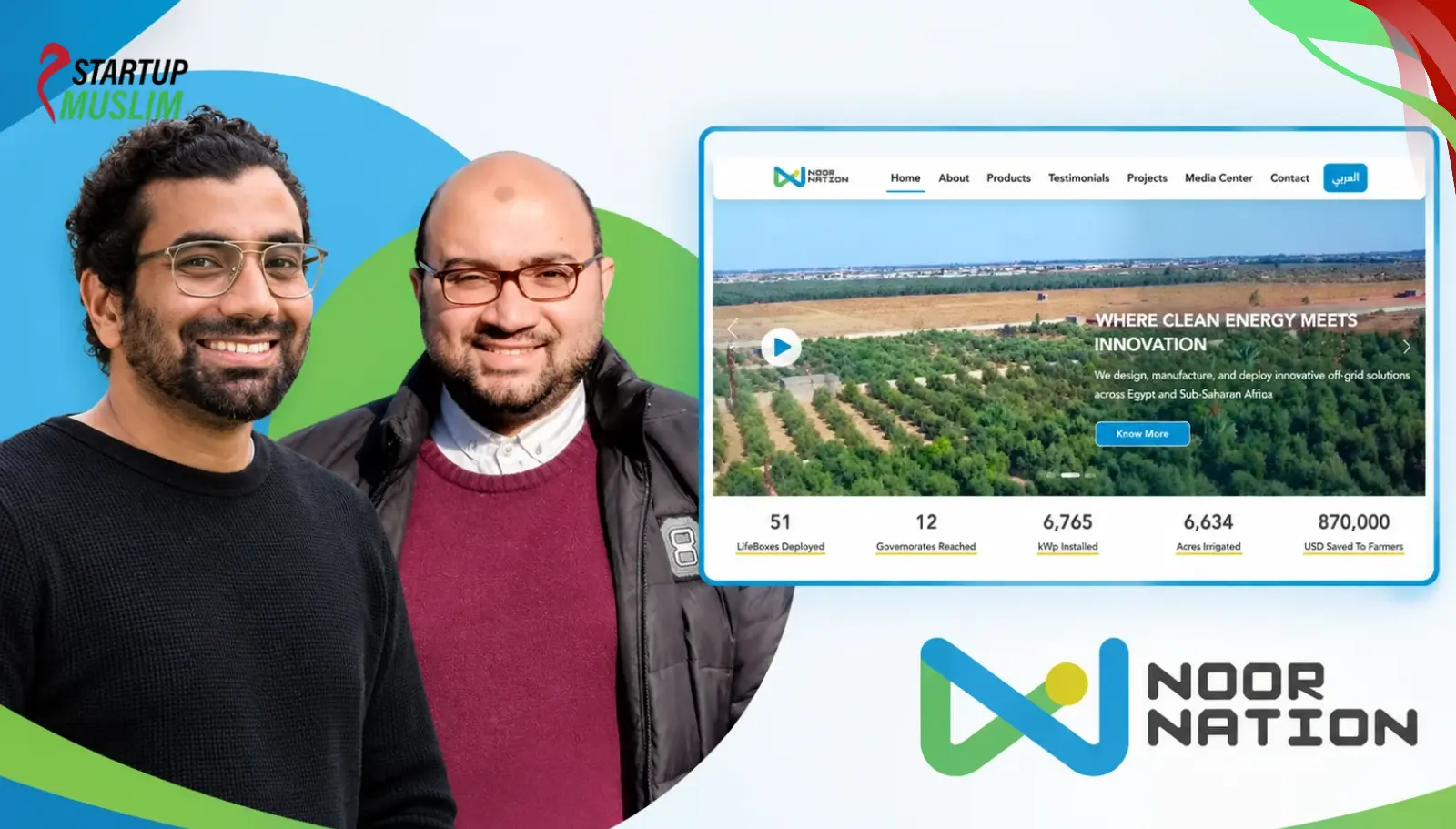
Egyptian climatetech startup NoorNation has raised $1.05 million in seed funding to expand its solar-powered energy and water solutions, with agribusiness group Linah Farms joining its shareholder base after using the startup’s technology across several of its operations.
Founded in 2021 by Ragy Ramadan and Mohamed Khaled, NoorNation develops decentralised renewable energy systems for agricultural businesses, rural communities and other users with limited access to reliable infrastructure. The round also includes climate tech investor Catalyst Fund and Saudi investment firm KBW Ventures.
The investment marks a shift in the relationship between NoorNation and Linah Farms, which previously purchased the startup’s solar solutions for its agricultural and hospitality operations. Following several successful installations, Linah has moved from customer to investor and development partner.
NoorNation plans to use the funding to expand its clean energy systems and develop a pay-per-use solar irrigation model aimed at farmers who cannot afford the upfront cost of installing solar-powered water pumps.
Turning Solar Energy Into a Practical Farming Solution
Agriculture remains an important part of Egypt’s economy, but many farms continue to rely on diesel-powered pumps to access groundwater for irrigation. These systems expose farmers to fuel costs and can make agricultural operations more expensive, particularly when energy prices fluctuate.
NoorNation is developing an alternative through its flagship product, LifeBox. The self-contained solar-powered system provides electricity and water for applications including irrigation and desalination, allowing users to access essential infrastructure without depending entirely on conventional power sources.
The company develops and assembles its systems in Egypt, serving agricultural businesses, hotels and other customers that need reliable energy solutions. Its technology is designed for both off-grid environments and commercial operations seeking to reduce their energy costs.
According to the company, NoorNation has installed approximately 66 projects with a combined capacity of 7 megawatts across 13 Egyptian governorates, serving more than 5,200 feddans of agricultural land.
From Customer to Investor
Linah Farms’ participation in the funding round follows a commercial relationship built around the deployment of NoorNation’s technology. The agribusiness group has used the startup’s systems at its farms, agricultural school and Sultan Gardens Resort in Sharm El Sheikh.
One installation involved a hybrid solar-diesel system supporting a deep well at Linah’s date farm in Bahariya Oasis. NoorNation founder and CEO Ragy Ramadan said the project had generated more than EGP 3 million in diesel savings. A separate 400-kilowatt solar installation at the resort reportedly reduced electricity costs by more than EGP 2.2 million.
These projects helped demonstrate the potential financial benefits of the technology before Linah committed capital to the company.
The new partnership includes plans for five additional solar installations with a combined capacity of approximately 1.13 megawatts across Linah’s agricultural operations in Bahariya Oasis and West Minya. The projects will expand the deployment of renewable energy while giving NoorNation an established commercial partner for its next phase of growth.
For an early-stage technology company, a customer becoming an investor can provide more than capital. It can also create opportunities to test products in real operating environments, establish a reference customer and develop further commercial relationships.
Making Solar Irrigation Accessible to Smaller Farmers
Beyond larger commercial installations, NoorNation is developing a model designed to address the upfront cost of solar irrigation for smallholder farmers.
Under its Solar Irrigation as a Service model, farmers can access solar-powered pumping systems without purchasing the equipment outright. Instead, they pay for water according to usage, with payments handled through a pay-as-you-go structure.
The model also incorporates a transition from traditional flood irrigation to drip irrigation, which can help reduce water waste. Farmers are expected to gain ownership of the installed systems after five to seven years, according to the company.
This approach addresses two barriers to adoption: the initial investment required for solar equipment and the cost of moving away from established irrigation practices. By spreading payments over time, NoorNation aims to make renewable energy accessible to farmers who might otherwise continue relying on diesel pumps.
The company has already launched pilot projects for the service, including an initiative in Aswan involving the World Food Programme and the Adaptation Fund. Linah Farms is also expected to support financing for the model as the partnership develops.
Expanding Beyond Egypt
NoorNation’s ambitions extend beyond its domestic market. The company has carried out projects in the United Arab Emirates and supplied two LifeBox desalination units to hospitals in Tajikistan in collaboration with UNICEF.
Its international work demonstrates the potential applications of decentralised energy and water infrastructure in markets where reliable utilities remain a challenge. However, expanding into additional countries will require the company to adapt its systems to different operating conditions, regulations and customer needs.
The latest seed round gives NoorNation additional resources to develop its manufacturing capacity, deploy more systems and expand access to its solar irrigation service. The company also plans to introduce an updated platform with automated irrigation and remote sensing for soil and water, according to EnterpriseAM.
KBW Ventures, which participated in the latest round, had previously invested in NoorNation in 2024 for an undisclosed amount. The new financing therefore adds to an existing investor relationship as the startup moves toward broader commercial deployment.
What Comes Next for NoorNation?
NoorNation’s next phase will test whether its technology and pay-per-use model can serve a larger number of farmers while maintaining commercially sustainable operations. Its ability to demonstrate measurable savings, reliable equipment performance and affordable payment structures will be important to wider adoption.
The company also faces the challenge of scaling manufacturing and installation capacity without compromising service quality. Solar irrigation systems must perform reliably in demanding agricultural environments, while the economics of the pay-per-use model depend on effective collection, maintenance and long-term customer relationships.
The $1.05 million seed round provides capital and a strategic partnership with an established agribusiness customer. Whether NoorNation can turn that support into a wider network of renewable energy installations will depend on its ability to make clean energy practical and affordable for the businesses and communities it serves.
For NoorNation, the opportunity lies in connecting renewable energy with a basic economic need: helping farms access the power and water required to operate, while reducing their dependence on costly conventional systems.
Follow Startup Muslim to discover the people and businesses shaping the Muslim business world.
