


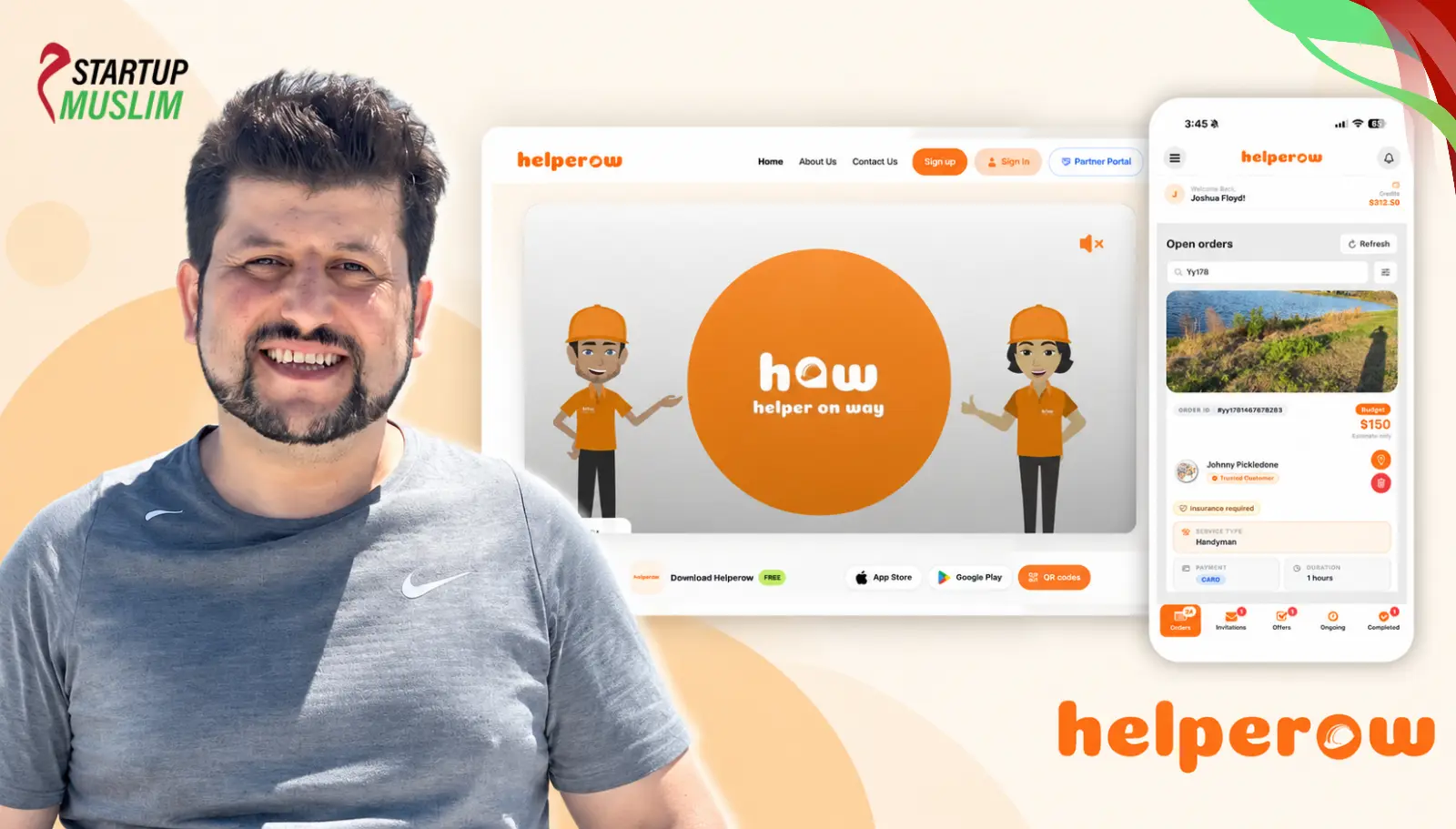
A home improvement project should not take weeks of unanswered calls, failed promises and unexpected costs. Yet for many homeowners, finding someone reliable to fix a door, repair a leak or renovate a room can become a frustrating experience. Yunus Kazan, founder of Helperow, knows this problem firsthand. What began as a small project in his own home eventually led him to build a technology platform designed to change how people find, hire and work with home service professionals.
The idea emerged when Kazan and his wife wanted to add a door to their hallway to create a private guest area. They tried several apps, spent a week calling contractors and eventually hired a carpenter through a Home Depot service provider. The carpenter collected half the payment upfront, began the work and never returned. After more failed attempts to find someone reliable, they finally completed the project through a personal referral.
What should have taken a few days stretched to 20 days and cost nearly twice the original budget.
For Kazan, the experience revealed a problem that technology had not yet solved well enough. Finding a contractor was only the beginning. Homeowners also needed clear agreements, reliable communication, accountability and confidence that the work would be completed before the job was considered finished. Helperow was created to bring these steps together in one place.
From Software Engineering to Solving an Everyday Problem
Kazan’s move into entrepreneurship grew out of his background in software testing, engineering and artificial intelligence and machine learning. His work in these fields taught him to examine how systems function, identify where they fail and build solutions that make complicated processes easier to manage. With Helperow, he wanted to apply that experience to a problem people face in their everyday lives.
The home improvement experience with his wife became the starting point. After researching existing marketplaces, he found that helping customers discover service professionals did not necessarily address the problems that followed. A homeowner might find a contractor but still struggle to agree on the scope, track progress, manage changes or resolve a payment dispute.
Kazan began to see the opportunity as something larger than another contractor directory. He wanted to build a platform that supported the entire process, from the first request to the final payment. That meant creating a system that considered the needs of homeowners and professionals rather than focusing only on helping one side find the other.
The idea also shaped the way he approached product development. Instead of treating the customer experience as a simple search followed by a booking, Helperow was designed around the steps required to complete a job successfully.
Why Finding a Contractor Is Only Half the Problem
Home service marketplaces have made it easier for customers to discover contractors, compare options and request quotes. But the work itself can still involve separate conversations, unclear expectations, schedule changes and disagreements about what has been completed. Helperow aims to address these gaps by connecting the stages of a job within one platform.
Customers can post a request, compare offers, communicate with professionals, manage work updates and approve completion before payment is released. The aim is to give both sides a clearer record of what was agreed and what was delivered. By keeping these steps connected, Helperow wants to reduce the uncertainty that can turn a small repair into a much bigger problem.
The platform also recognises that different projects need different workflows. Its Quick Help offering is designed for everyday repairs and maintenance, while Full Project is intended for more involved jobs that require clearer scopes, work packages and milestones. This distinction matters because replacing a damaged fixture is not the same as coordinating a room renovation.
For Kazan, the broader opportunity lies in making home services easier to manage from beginning to end. The goal is not simply to help customers find a professional, but to help them get the work done with fewer surprises.
Building Trust Between Homeowners and Professionals
Trust is one of the hardest challenges in a home services marketplace. Customers are allowing someone into their homes and spending money on work that may be difficult to assess before it is finished. Service professionals, meanwhile, need clear expectations, relevant opportunities and confidence that their time and work will be treated fairly.
Helperow is building its approach around visibility and accountability. Written communication, clear offers, work updates and before-and-after photographs can help both sides understand what has been agreed and what has been completed. Customer approval before payment release adds another step to the process, although the effectiveness of the model will depend on how well these workflows operate in real situations.
The company is also developing its Helperow Pro+ Network to build relationships with individual professionals and service crews. Its core participation model does not require professionals to pay for leads or maintain a subscription simply to join the platform. Instead, Helperow aims to generate revenue when transactions take place, connecting its business model to the work completed through the service.
That approach is intended to lower the initial barrier for professionals while giving customers a more structured way to manage projects. But trust cannot be built through software alone. Kazan recognises that onboarding, customer support and the way problems are handled will remain important as the marketplace grows.
Early Traction and the Challenge of Building a Marketplace
As of October 21, 2026, Helperow reported more than 60 registered customers and over 250 registered service providers or crews, including more than 150 active providers. The company also reported revenue of more than $30,000. It had not yet provided figures for completed jobs, repeat bookings or month-on-month growth, making it too early to draw firm conclusions about retention or the consistency of marketplace activity.
These numbers point to an early-stage business still working to turn initial adoption into a dependable service. In a local marketplace, attracting one side is not enough. Customers need professionals available when they need them, while professionals need a steady flow of relevant work to remain engaged.
The challenge becomes more complex because home services cover a wide range of jobs. Plumbing, painting, electrical work and renovations have different requirements, and even two projects in the same category can vary considerably. A platform that works well for a small repair may need a different process to manage a renovation involving several tasks and milestones.
Kazan says this has reinforced the need to stay close to customers and professionals, build local relationships and pay attention to the details of service delivery. Expansion will depend on Helperow’s ability to offer a consistent experience, not simply on increasing registrations.
Using AI to Make Home Projects Easier to Manage
Kazan’s technical background also influences how Helperow is developing its product. His experience in software testing has made him attentive to situations where confusion can arise, such as unclear job descriptions, changes in scope or disagreements over payments. His engineering experience helps him turn those problems into connected workflows that customers and professionals can follow.
One area of development is an AI project assistant intended to help customers turn an initial idea into a clearer plan. A homeowner may know that a room needs renovation without knowing how to break the work into manageable stages or explain the requirements to a contractor. The assistant is being developed to help organise that request into a more useful scope and work packages.
The company also sees opportunities to use AI to improve matching and reduce repetitive administrative tasks. For service professionals, Helperow is developing a Pro+ AI co-worker that is intended to support their daily work, with a subscription planned for those who choose to use the tool. The company is also considering advertising for professionals and businesses as its user base grows.
Its core monetisation model is a 15% service fee on transactions through the platform. The longer-term challenge will be to make sure the fee and any additional paid services offer enough value to both sides, particularly as professionals weigh the cost of participating against the work and tools they receive.
A Bigger Vision for the Future of Property Services
Kazan sees Helperow becoming more than a place to find a contractor. His long-term vision is to build a platform that people can use throughout the life of a property, from routine maintenance to major renovations. Homeowners, landlords, property managers and businesses all face related challenges when arranging work, coordinating schedules, documenting progress and managing payments.
Bringing these activities together could give Helperow a role across a wider range of property services. The company wants to support not only the search for a professional but also project planning, scopes, offers, contracts, milestones and completion records. For independent service providers, it aims to combine opportunities to earn with practical tools to organise jobs, communicate with customers and grow their businesses.
Kazan plans to expand across the United States, but building a national platform will require success at the local level first. Customers need to see that the service works, and professionals need a clear reason to keep using it. Each completed project will be an opportunity to build that confidence and improve the platform. His experience with a single door in his own home gave him a clear reason to start Helperow. Turning that frustration into a lasting business will require solving the same problem for many different people, across different types of projects and markets.
For Kazan, the ambition is simple: make home services easier to arrange, easier to manage and more dependable for everyone involved.
