





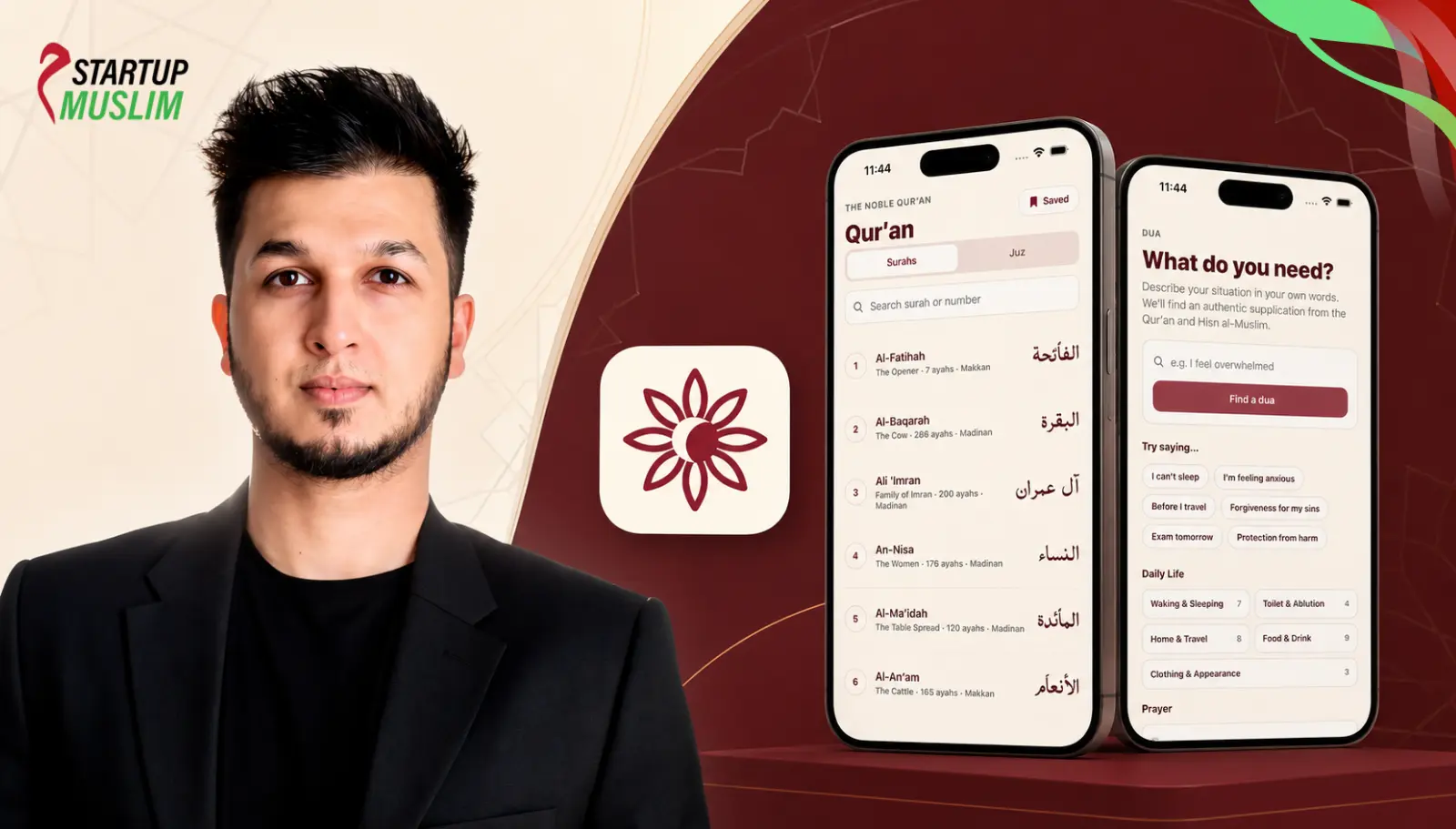
The former Amazon engineer isn’t building another Islamic app. He’s building a trusted companion designed to help millions of Muslims reconnect with their faith through authentic knowledge, thoughtful technology, and privacy-first design.
When Life Gives You a Second Chance
Every entrepreneur can point to a defining moment that changed the trajectory of their life. Sometimes it is spotting an untapped market opportunity. Sometimes it is frustration with an existing product. And occasionally, it is a deeply personal experience that forces someone to completely rethink what success means.
For Kamran Mohammed, Founder of My Amaal, that defining moment came after surviving a devastating accident with his wife—an experience that transformed not only his relationship with faith but also his understanding of purpose. Until then, Kamran had been building exactly the kind of career many software engineers dream about. Born in Hyderabad, India, he moved to the United States in 2018 to pursue a Master’s degree in Computer Science at SUNY Buffalo before going on to work for some of the technology industry’s most respected companies, including Amazon, CloudTrucks, and Rippling. From the outside, his career appeared to be following the perfect trajectory.
Yet beneath the professional accomplishments, something was missing. “My journey to My Amaal wasn’t really a career story,” Kamran reflects. “It was a faith one.” That distinction lies at the heart of everything he has built since.
Rediscovering Islam Through Adversity
Kamran openly speaks about a chapter of his life that many people would hesitate to share publicly. There was a time, he says, when Islam occupied only a small place in his daily routine. “There was a period when I barely prayed a single salah a day,” he admits. Like countless professionals balancing demanding careers, ambitions, and family responsibilities, he gradually found himself drifting away from the consistency he desired in his worship.
Everything changed when he and his wife were involved in a serious accident that they barely survived. Emerging from that experience gave them a perspective that no career milestone or financial success ever could. Suddenly, life no longer felt guaranteed. The realization that everything could disappear in an instant forced them to ask difficult questions about how they were living and what they wanted their lives to stand for.
Rather than simply returning to normal, the couple embarked on a quiet journey of rediscovering Islam together. They committed themselves to learning more about their faith, strengthening their daily worship, and becoming better Muslims one step at a time. It was a deeply personal transformation, driven not by external expectations but by an internal desire to draw closer to Allah.
“We spent the years after that quietly working on ourselves as Muslims,” Kamran says. “My Amaal grew directly out of that. We started by building a solution to the problems we were facing. As it turned out, a great many Muslims were facing exactly the same ones.”
The Problem Hidden in Plain Sight
As Kamran and his wife began rebuilding their relationship with Islam, they naturally turned to technology for guidance. After all, there are hundreds of Islamic applications available today offering everything from prayer times and Quran recitation to duas, Islamic calendars, and educational content. On paper, the ecosystem appeared mature.
In reality, Kamran found himself increasingly frustrated. In fact, before beginning work on My Amaal, he made an unusual decision—he deleted every Islamic application from his phone.
It wasn’t because the apps lacked features. If anything, many tried to do too much. The problem was that they had forgotten who they were designed to serve. Kamran believes many Islamic applications unintentionally assume users already possess a strong understanding of Islamic terminology, jurisprudence, and religious practice. Scholars and lifelong students of Islam may find those interfaces intuitive, but ordinary Muslims returning to the faith—or those simply trying to strengthen their practice—often find them intimidating.
“I’m a good example,” Kamran explains. “When I was rebuilding my own practice, I’d come across terms scholars used casually and not even know what they meant. The apps weren’t built for someone like me. They were, in a sense, built for scholars, not for the everyday Muslim who sincerely wants to learn.”
The problem extended beyond complexity. Kamran also found many applications cluttered with advertisements, overloaded with features competing for attention, and inconsistent in citing authentic sources. Users were often expected to trust information without knowing whether it came from authentic Sunnah or cultural folklore. For someone trying to rebuild his understanding of Islam from the ground up, that uncertainty became increasingly difficult to accept.
Building for the Everyday Muslim
Instead of asking how he could create another feature-rich Islamic application, Kamran asked a much simpler question: What would an Islamic app look like if it were designed for someone who wasn’t already an expert?
That single question became the foundation of My Amaal. His vision was never to compete with scholars or replace traditional Islamic learning. Instead, he wanted to create a trusted companion for the everyday Muslim—the person trying to pray more consistently, understand unfamiliar Islamic concepts, learn authentic duas, or simply build better habits without feeling overwhelmed by technical language or conflicting opinions.
“The opportunity I saw,” Kamran says, “was a simple but underserved one: an app for the person who genuinely wants to learn, follow, and understand Islam from the ground up, without needing to already be an expert, and without having to worry about whether what they’re reading is authentic.”
That philosophy would ultimately shape every design decision My Amaal would make. Instead of maximizing features, the goal became maximizing trust. Instead of creating another content platform competing for attention, Kamran envisioned building something far more valuable—a digital companion that quietly helps Muslims become more consistent in their worship, one authentic step at a time.
Building a Worship Companion, Not Just Another App
When Kamran describes My Amaal, he is careful not to call it an Islamic app. In his mind, that label is too narrow and carries assumptions that don’t reflect what he is trying to build. Prayer time applications, Quran readers, and collections of duas already exist in abundance. His ambition is far broader. He wants My Amaal to become a worship companion—the one application Muslims instinctively turn to whenever they have a question about their deen, need guidance for a particular situation, or simply want to strengthen their relationship with Allah.
Whether someone wants to understand how to perform Janazah prayer, learn about the significance of Ashura, discover the appropriate dua for a difficult moment, or prepare for the White Days of fasting, Kamran envisions My Amaal becoming the trusted starting point. More importantly, he wants the platform to remain firmly within its boundaries. “The philosophy that anchors everything is ‘a librarian, not a mufti,'” he explains. “We retrieve and present authentic, referenced content, and we never issue rulings ourselves.”
That distinction is deliberate. Rather than attempting to replace scholars or offer religious opinions, My Amaal focuses on making authentic Islamic knowledge accessible and understandable. The platform points users toward trusted sources, allowing scholars to remain the authorities while removing many of the barriers ordinary Muslims encounter when trying to learn. In an age where misinformation spreads easily online, Kamran believes that clarity and authenticity are among the product’s greatest strengths.
Using Technology to Encourage Worship, Not Addiction
Technology companies often compete for one thing above all else: attention. Endless notifications, infinite scrolling, and engagement algorithms are designed to maximize the amount of time users spend inside an application. Kamran believes that philosophy is fundamentally incompatible with the purpose of My Amaal.
“We use technology to focus attention, not capture it,” he says.
That philosophy influences every feature within the application. The salah tracker, for example, isn’t designed as a gamified productivity tool. Instead, it quietly helps users build consistency through one-tap prayer logging, gentle streaks, and a clear weekly overview that encourages habits without creating anxiety. Prayer reminders are intelligently timed based on the user’s location, but they avoid becoming intrusive or overwhelming.
Similarly, the Islamic calendar goes beyond displaying dates. It adapts to the user’s location and prayer times, ensuring that important occasions such as Laylat al-Qadr, the White Days, or Ashura appear before they arrive, giving users the opportunity to prepare rather than simply react. Instead of flooding people with information, the application surfaces what is relevant at the right moment, allowing worship to become part of everyday life rather than another item on a digital checklist.
AI with Privacy at Its Core
Artificial intelligence has become one of the defining technologies of this decade, but Kamran believes its value depends entirely on how it is used. Rather than employing AI to collect more user data or optimize advertising, My Amaal uses intelligent technology to make worship more personal while preserving user privacy.
One example is the platform’s dua recommendation feature. Rather than forcing users to browse through hundreds of supplications, My Amaal matches authentic duas to the circumstances a person is experiencing. Someone facing anxiety, illness, gratitude, or uncertainty can quickly find relevant supplications that have been carefully sourced from authentic references.
What makes this approach different is where the personalization happens.
“The matching runs entirely on your device,” Kamran explains. “Nothing leaves your phone, so a personal experience never costs you your privacy.”
That commitment reflects a broader philosophy that privacy is not simply another feature to advertise but an amanah—a trust between the platform and its users. Every design decision is filtered through that principle. Personal information is not monetized, advertisements are deliberately excluded, and every piece of religious guidance is accompanied by clear references so users know exactly where the information comes from. For Kamran, trust is built not only through authentic content but also through respecting the people who use the platform.
Early Traction Built Entirely Through Trust
Although My Amaal is still in its earliest stages, the initial response has given Kamran confidence that the problem he experienced personally resonates with Muslims around the world. The application launched on iOS less than two weeks before this interview, yet its growth has been entirely organic, without spending anything on marketing or advertising.
The early numbers are encouraging. Within days of launch, My Amaal recorded 275 installs from approximately 929 App Store views, representing an impressive 44.3 percent conversion rate. Its launch announcement on LinkedIn generated more than 20,000 impressions, hundreds of engagements, and enthusiastic discussions from Muslims who shared similar frustrations with existing Islamic applications.
Yet Kamran is far more interested in engagement than download numbers. During the Android beta, a small group of just twenty-two testers opened the application more than 300 times within six days, logging over 100 prayers and completing dozens of adhkar sessions. Those numbers tell him something far more important than install statistics ever could.
“People aren’t just installing it,” he says. “They’re actually using the features it was built for, day after day.”
For a product whose mission is to encourage consistency in worship, that level of daily engagement represents the strongest validation possible. It suggests that My Amaal is becoming what Kamran always intended it to be—not merely another application downloaded onto a phone, but a trusted companion helping Muslims strengthen their relationship with Allah through small, meaningful acts repeated every single day.
Building Trust Before Building a Business
In a startup ecosystem obsessed with rapid growth, aggressive monetization, and venture funding, Kamran’s approach feels almost countercultural. When asked about My Amaal’s business model, he doesn’t begin by discussing subscriptions, pricing strategies, or revenue projections. Instead, he talks about trust.
“Honestly, today we don’t treat My Amaal as a business at all,” he says. “We treat it as a tool and a companion that deserves a place on every Muslim’s phone, whether they were born into the faith or found their way to it.”
That philosophy shapes every decision the company makes. Kamran believes that before asking users to pay for anything, a product must first earn a permanent place in their daily lives by being genuinely useful. For My Amaal, success is not measured by how quickly it can monetize its users but by whether it can become an indispensable part of their worship. Revenue, he believes, should be the outcome of trust—not the objective that drives every product decision.
This mindset also explains why My Amaal has made two commitments that are increasingly rare in today’s digital economy. The app is completely free of advertisements, and Kamran says it always will be. Equally important, user privacy is treated as non-negotiable. “Even when we introduce paid features,” he explains, “anyone who genuinely can’t afford them will still have access. That’s the beauty of Islam. Amaal go far further than money or wealth, and our model will always reflect that.”
Growing with Discipline, Not Feature Bloat
One of the biggest challenges facing software companies today is knowing what not to build. As users request new features and competitors continue expanding their offerings, many products gradually become cluttered, losing the simplicity that made them valuable in the first place. Kamran believes resisting that temptation has been one of the hardest—and most important—parts of building My Amaal.
“The hardest part has been discipline,” he says. “Resisting feature bloat, staying true to our audience, and remaining authentic without getting pulled into unnecessary debates.”
Rather than trying to become everything for everyone, My Amaal has deliberately chosen to focus on a specific audience: everyday Muslims who sincerely want to strengthen their relationship with Allah but may not possess years of formal Islamic education. Every piece of content is therefore written in clear, accessible language, while every recommendation is supported by authentic sources. At the same time, the platform consciously avoids issuing religious rulings or entering areas where scholarly opinions differ. That restraint is intentional. Kamran would rather build a smaller product that people trust completely than a larger one that compromises its credibility.
The company’s commitment to transparency extends beyond its content. My Amaal publishes a public methodology explaining how information is selected, reviewed, and presented, allowing users to understand not only what the app teaches but also the principles behind its editorial decisions. In an era where artificial intelligence can generate convincing answers to almost any question, Kamran believes transparency has become one of the most valuable features a digital product can offer.
A Vision That Extends Beyond an App
Although My Amaal is still at an early stage, Kamran’s ambitions extend far beyond its current feature set. The immediate priority is the full Android launch, making the platform accessible to a significantly larger portion of the global Muslim community. Beyond that, however, he envisions My Amaal evolving into a comprehensive worship companion that supports Muslims through every stage of their spiritual journey.
Future releases will deepen coverage of the Islamic calendar, expand the library of carefully sourced duas and daily adhkar, and continue refining the app’s private, on-device personalization capabilities. Kamran also hints at dedicated experiences designed specifically for Muslim families seeking to grow together in faith, as well as new tools for reverts navigating the early stages of their Islamic journey. Despite these ambitions, he insists the product’s guiding principles will remain unchanged. Every new feature must continue to be authentic, simple, private, and calm—qualities he believes are increasingly rare in modern technology.
Technology in Service of Faith
As artificial intelligence becomes embedded in almost every digital experience, Kamran believes entrepreneurs have a responsibility to think carefully about what they are optimizing for. Much of today’s technology industry is built around maximizing engagement, capturing attention, and collecting user data. My Amaal deliberately moves in the opposite direction. Instead of encouraging users to spend more time inside the app, it encourages them to spend more meaningful time outside it—in prayer, reflection, remembrance, and learning.
That philosophy also shapes the advice Kamran offers aspiring Muslim entrepreneurs. He encourages founders to begin with real problems, ideally ones they have experienced personally, rather than chasing trends or copying successful startups. More importantly, he believes trust should become the product itself. “If you’re building for the Ummah,” he says, “protect people’s privacy as an amanah rather than a feature, be transparent about your sources and your limits, and never monetize their attention or their faith.”
For Kamran, lasting impact and commercial success are not competing objectives. He believes that companies which genuinely serve people with sincerity, patience, and excellence will ultimately build businesses that endure. Barakah, he says, compounds over time just as consistently as good engineering.
A Different Vision for Islamic Technology
The Islamic technology ecosystem has grown rapidly over the past decade, producing countless applications for prayer times, Quran recitation, charity, and Islamic education. Yet My Amaal represents a different direction. Rather than competing to offer more features, Kamran is competing to build more trust. Rather than designing technology that captures attention, he wants to create technology that quietly supports worship before stepping into the background.
That vision is rooted in his own journey. The accident that nearly claimed his life did more than inspire a startup; it reshaped his understanding of success itself. Today, My Amaal reflects that transformation. It is not simply software built by an experienced engineer. It is a product built by someone who experienced firsthand the challenges of rediscovering faith and who decided to remove those same obstacles for millions of others.
If Kamran succeeds, My Amaal will become far more than another Islamic application. It will become the trusted companion he once searched for himself—a calm, authentic, and deeply thoughtful guide that helps Muslims take one small, consistent step closer to Allah every single day.


