


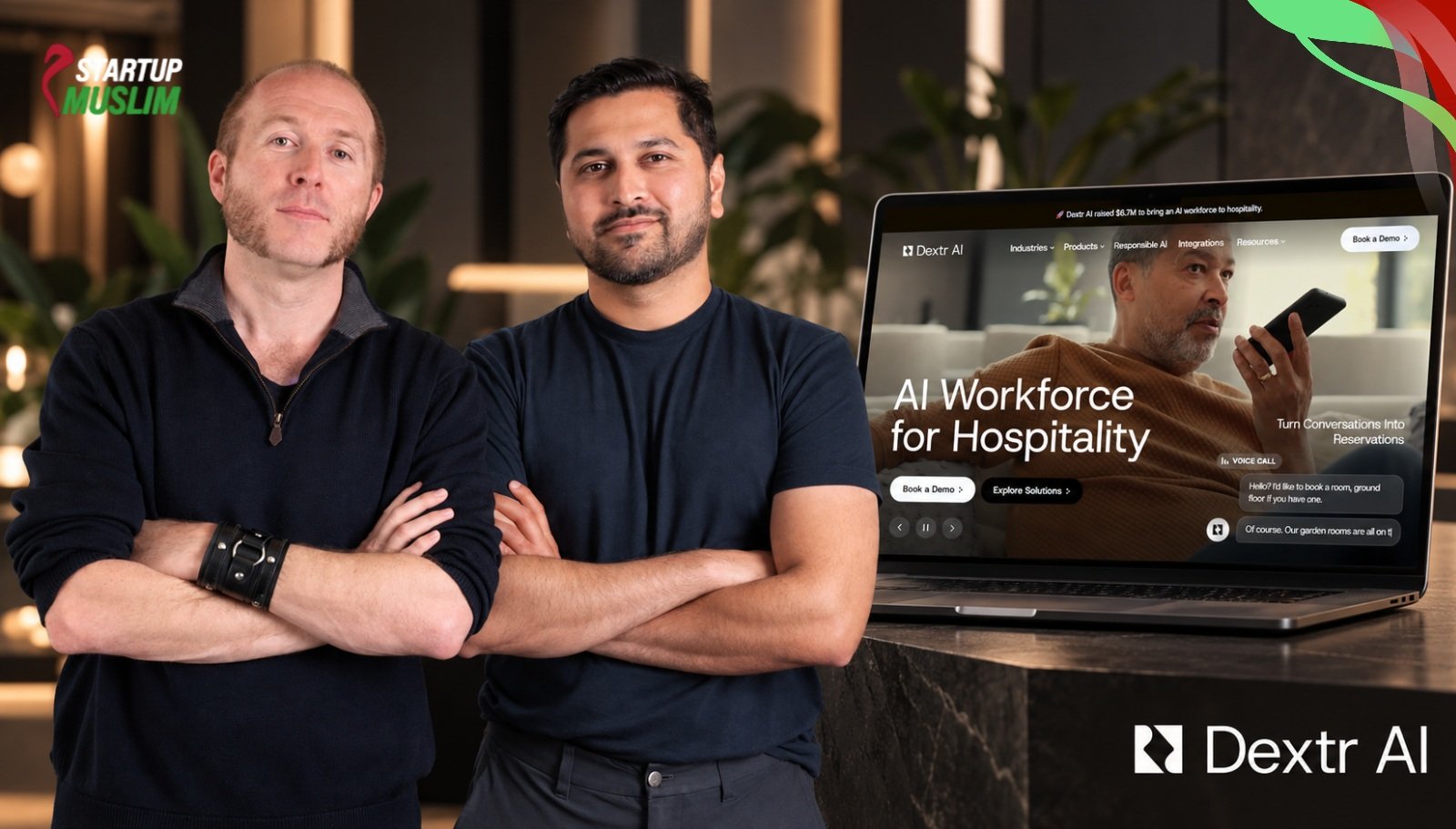
Hotels have no shortage of software. What they lack is coordination. Reservation systems, guest management tools, workforce platforms, marketing software and back-office applications often operate independently, leaving employees to bridge the gaps. The result is higher administrative workloads, rising labor costs and missed revenue opportunities.
Dextr AI, founded by Sajid Shariff and Scott Arnold, wants to change that. The company has raised $6.7 million in seed funding, led by Elevation Capital with participation from Foundation Capital, to build what it describes as an AI workforce for hospitality. Dextr says its platform is already handling more than one million interactions every month across hundreds of properties in the US, Canada, the UK and Europe, including franchised properties operating under Hilton, Wyndham, Best Western and IHG flags.
From AI Tools to an AI Workforce
At the center of Dextr’s platform is Doss, a command layer that allows hospitality employees to control specialized AI agents using natural language, either by text or voice. The idea is simple: instead of learning another software interface, employees can tell their AI workforce what needs to be done. Around Doss are specialized agents including Daisy, which handles voice calls and reservations; Alfred, which manages guest requests and service recovery; Manny, which handles workforce and back-office operations; and Cosmo, which focuses on sales and marketing. The platform operates across voice, text, email and online chat, while integrating with dozens of hospitality software systems.
Sajid Shariff Wants AI to Give Time Back to Hospitality
For Shariff, the opportunity is not about replacing hospitality workers. It is about removing the repetitive work that prevents them from focusing on guests.
“Our mission is to enable a fully agentic workforce that fills in the gaps, and enable staff to focus their time where it really matters – on guests.”
Shariff’s vision extends across the organization. A revenue team, marketing team, general manager or maintenance crew can direct the same AI workforce according to their role and permissions.
“The technology finally bends to the operation instead of the other way around.”
That philosophy is central to Dextr’s approach. Rather than selling AI as another standalone tool, the company is attempting to make it an operational layer connecting the systems and people already inside a hospitality business.
The Founders Are Betting on Measurable ROI
Dextr’s pitch is backed by reported customer results. The company says one reservation contact center generated $80,000 in incremental revenue within 60 days, representing a reported 49x ROI. A six-property hotel group eliminated 1,200 unnecessary labor hours, resulting in an 8% EBITDA improvement, while another destination resort reportedly achieved $120,000 in annual savings while maintaining 92% guest satisfaction.
Dextr also says properties using Alfred increased their OTA ratings by an average of 0.4 points within 90 days. The company is already processing significant transaction volume as well, including tens of millions of dollars in phone reservation payments each month on behalf of customers.
Scott Arnold Brings Deep AI Engineering Experience
Co-founder and CTO Scott Arnold, who previously worked at Meta, brings the technical experience behind Dextr’s agentic architecture. Together with Shariff, he is building a platform designed to work inside the complexity of real hospitality operations rather than simply demonstrate AI capabilities in isolation. That distinction could become increasingly important as hotels move from experimenting with generative AI to deploying autonomous systems that interact with guests, employees, reservations and financial workflows.
Building the Operating Layer for Hospitality
Dextr’s team of nearly 20 includes AI product builders, strategists and engineers with backgrounds spanning Meta, BCG, McKinsey, Stanford and Harvard. With its new $6.7 million seed round, the company now has additional capital to expand a platform that is already operating across hundreds of properties. Its ambition is larger than automating hotel phone calls or guest requests. Dextr wants hospitality employees to have an AI workforce they can direct in plain language, while the underlying agents handle the repetitive operational work. For Shariff, the end goal is straightforward: let technology handle more of the work so people can spend more time taking care of people.
