


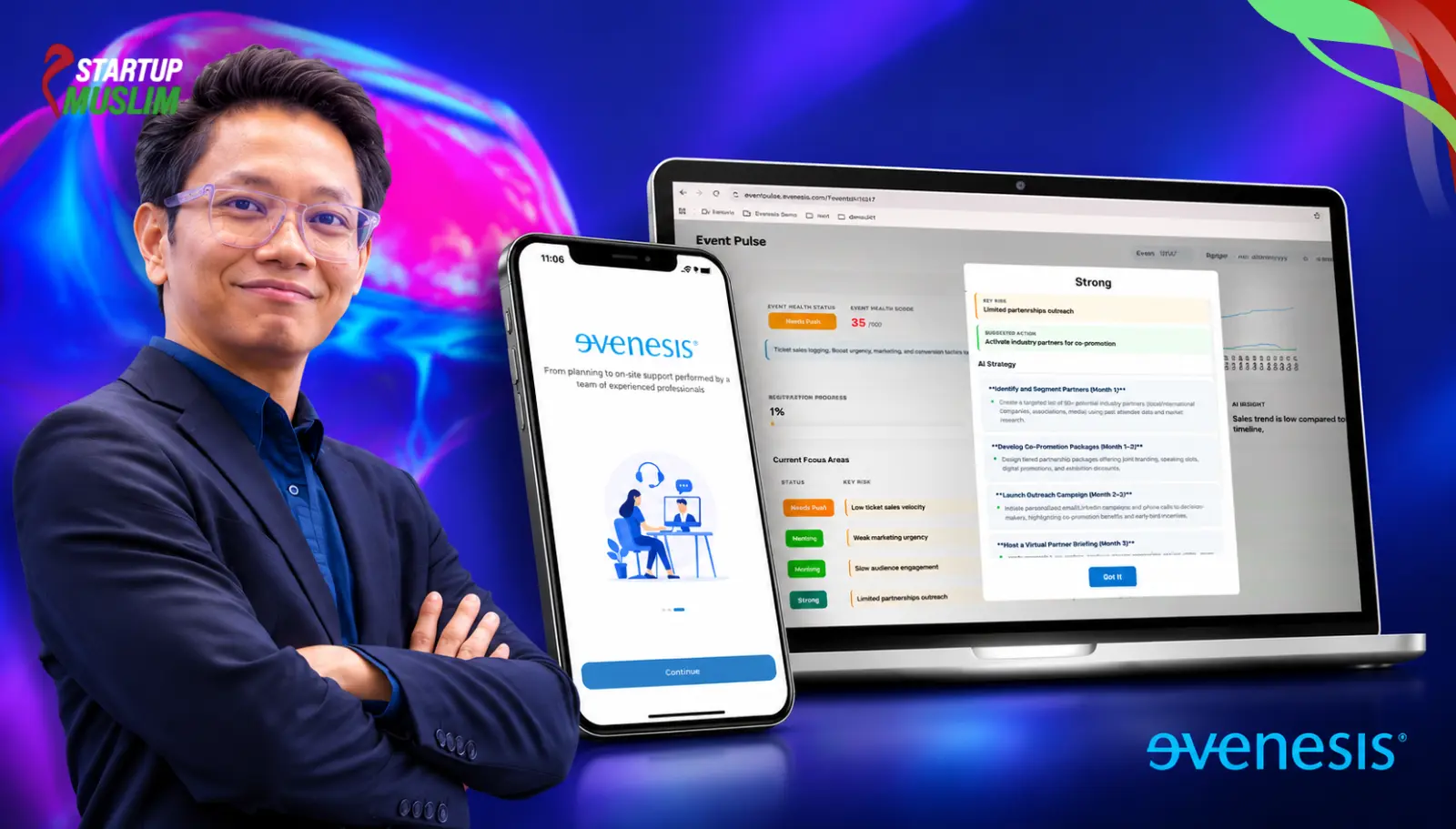
From a digital wedding RSVP idea to a platform that has powered more than 3,500 events, the Malaysian entrepreneur has spent 16 years building technology around the real needs of event organisers.
An event may last a day, a weekend or perhaps a week. But behind those few days are months of planning, hundreds of decisions and countless details that need to come together at exactly the right time. For organisers, even a small failure in registration, check-in or communication can affect the entire experience.
Yusno Yunos understood the power of technology long before he entered the event industry. His early career took him from Carnegie Mellon University to large-scale technology projects at Malaysia’s Tenaga Nasional Berhad. Yet the idea that eventually became Evenesis did not come from a corporate assignment or a market research report. It came from organising his own wedding.
Sixteen years after establishing the company, Yunos has built an event technology business that has powered more than 3,500 events, served over five million attendees and supported organisers across more than 16 countries. The journey has involved an early market pivot, years of largely self-funded growth, a global pandemic and a gradual move towards AI-powered event intelligence. His story is also a reminder that successful technology businesses are not always built by starting with a grand vision. Sometimes, they begin with a problem that someone simply wants to solve.
From Software Developer to Entrepreneur
Yunos began his professional journey at Carnegie Mellon University, where he worked as a web developer and assisted a researcher on a project. He later joined Tenaga Nasional Berhad, where he worked on CRM systems, mobile field force automation and Geographic Information Systems. Unlike smaller software projects, these systems had to support large organisations and real business operations.
The experience taught him an important lesson about technology. A system may be technically impressive, but that alone does not make it successful. It must fit into the way people work, solve a genuine problem and be reliable enough for people to use every day.
His later work as a software architect gave him further experience in leading teams and translating business requirements into technical solutions. These skills would become important when he started Evenesis. But entrepreneurship demanded a different set of abilities, including sales, customer acquisition, cash flow management and team building. The transition from building systems to building a business would prove to be one of his biggest learning experiences.
A Wedding Problem Becomes a Business Idea
The idea for Evenesis emerged from Yunos’ own wedding preparations in 2007. He wanted to make invitations and RSVP management easier through a digital system. With a software background, he saw an opportunity to replace parts of a familiar but often cumbersome process with technology. In 2009, he pitched the digital RSVP concept to the Malaysia Digital Economy Corporation (MDEC) and secured funding. That support helped turn the idea into a business, leading to the establishment of Y Us Sdn Bhd in 2010.
The original concept focused on weddings, but the company soon discovered that a good idea does not automatically become a viable business. People could appreciate the convenience of digital invitations and RSVP management, yet getting them to pay for the solution was difficult. The team began looking at corporate events, conferences and exhibitions. These organisers faced recurring operational challenges, from attendee registration and communication to check-in and reporting. Unlike a one-time wedding customer, corporate organisers often managed multiple events and had a clearer reason to invest in tools that could save time, reduce costs and improve delivery. That change in direction helped Evenesis find a more sustainable market.
Learning That Customers, Not Code, Decide Product-Market Fit
For a technical founder, improving a product can become an endless exercise. There is always another feature to build, another process to automate and another technical improvement to make. Yunos learned that the more important question was whether customers were willing to pay for the solution and continue using it. The move into corporate events changed how the company approached product development. Instead of concentrating only on what the software could do, the team had to understand how event organisers worked, where they faced difficulties and which parts of the process created the most value.
Today, Evenesis describes its experience through the scale of its delivery rather than disclosing its financial performance. Over 16 years, the company has powered more than 3,500 events, served over five million attendees and supported events in more than 16 countries. It has also provided more than 200 kiosks since 2023. Yunos sees these milestones as evidence of the company’s evolution from an event management application into a broader technology and managed services business. The goal is no longer limited to helping organisers register attendees. It is about supporting more of the event journey, from attracting the right audience to improving operations and understanding outcomes.
Fourteen Years of Building Before Institutional Investment
Evenesis grew primarily through customer revenue for around 14 years, alongside grant support during its early development. Yunos describes this period as a combination of choice and necessity. The company had to learn to sell, deliver and manage resources carefully, staying close to customers because their willingness to pay was essential to its growth. That approach also shaped the company’s understanding of international expansion. Taking software into another country is not simply a matter of making the platform available in a new market. It requires local relationships, a suitable commercial model and the ability to deliver services in a way that fits the market.
The investment from VentureTECH marked a new phase for Evenesis, supporting platform development and regional growth plans. Indonesia is progressing well, while the company has placed its plans for Saudi Arabia and the wider Gulf region on hold given the current crisis. Yunos says the company has learned to adjust the timing of expansion rather than assume that the same strategy will work everywhere. For a business that spent many years growing through its own customer base, the investment offers an opportunity to build on an established operating foundation.
Why Events Need More Than Software
One of Evenesis’ key differences is its combination of software-as-a-service and managed services. Yunos believes that event technology must be judged not only by the features it offers but also by how reliably it works when an event is taking place. An event has a fixed date. When attendees arrive, registration and check-in systems must function, equipment must be ready and support teams must be able to respond when something goes wrong. There is little room to postpone the experience while a technical issue is resolved.
Some customers have experienced teams and prefer to operate the platform themselves. Others need support with configuration, integrations, hardware, badge printing and on-site operations. Evenesis can work with both types of organisers, offering software where customers need it and practical delivery support where they require more assistance.
For Yunos, this combination is about understanding the event beyond the screen. Providing check-in software is only one part of the job. Knowing how to prepare equipment for peak arrival times and handle unexpected situations on the ground can make the difference between a system that looks good in a demonstration and one that works when it matters. That practical understanding has helped the company build longer-term customer relationships.
Surviving COVID and Rebuilding the Business Around AI
The pandemic was one of the most difficult periods in Evenesis’ history. Physical events were postponed or cancelled, leaving the company to reconsider how it could continue serving customers when traditional gatherings were no longer possible. The response was to expand into virtual meetings, webinars, e-conferences, virtual exhibitions and online business matching. This was not the first time the company had needed to change direction. Its earlier move from weddings to corporate events had already taught Yunos that remaining committed to a problem sometimes requires changing the original solution.
That same thinking now shapes the company’s approach to artificial intelligence. Rather than adding AI simply because it is a growing technology trend, Evenesis starts by asking what an event is meant to achieve, what challenges stand in the way and how technology can help measure success.
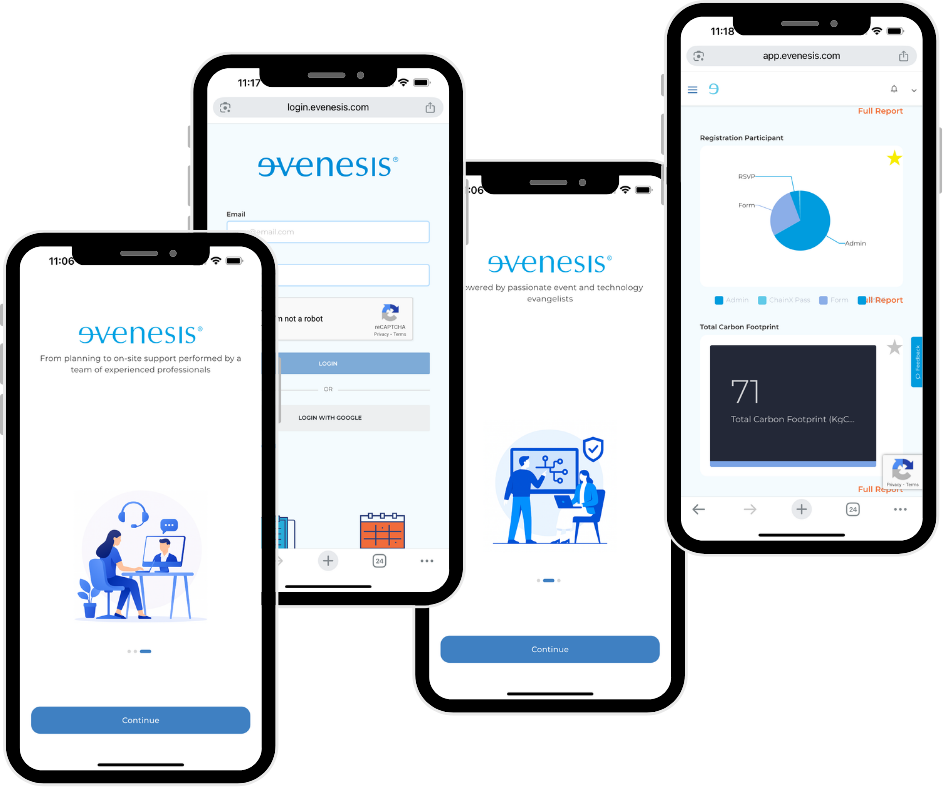
Its solutions include CrowdX, which applies vision AI to crowd counting and audience insights; EventPulse, which helps organisers make sense of event data; and BizMatch, which combines business matching with AI-assisted recommendations. The aim is to help organisers make better decisions, reduce manual work and create more relevant experiences. Yunos also stresses that privacy and responsible data handling must remain part of implementation.
Building a Malaysian Technology Company for Global Markets
Yunos’ long-term vision is for Evenesis to become a trusted event technology company from Malaysia, serving organisers internationally across the full event journey. That includes attracting attendees, creating meaningful connections, improving event operations and using data to understand results. Sustainability is also part of the company’s direction, with technology playing a role in helping organisers use resources more effectively and measure their impact.

Beyond the company, Yunos has remained involved in Malaysia’s technology and entrepreneurship ecosystem through mentoring, university engagements and industry associations. His work with MACEOS, the Malaysian Association of Convention and Exhibition Organisers and Suppliers, gives him opportunities to connect technology, sustainability, industry and academia. He believes founders should share the practical lessons they gain from building businesses, including the mistakes that rarely appear in textbooks.
His advice to Muslim entrepreneurs is grounded in integrity and responsibility. Customers, employees and business partners place their trust in founders, and how that trust is handled matters throughout the journey. He also encourages entrepreneurs to stay curious, work with people from different backgrounds and understand the markets they want to serve.
“Have faith, put in the work and remain willing to learn,” he says. For Yunos, the original idea may change many times as a business grows. What matters is continuing to build something useful, responsible and sustainable. Evenesis began with a wedding invitation problem, but its journey has become a much larger effort to make events work better through technology.
