


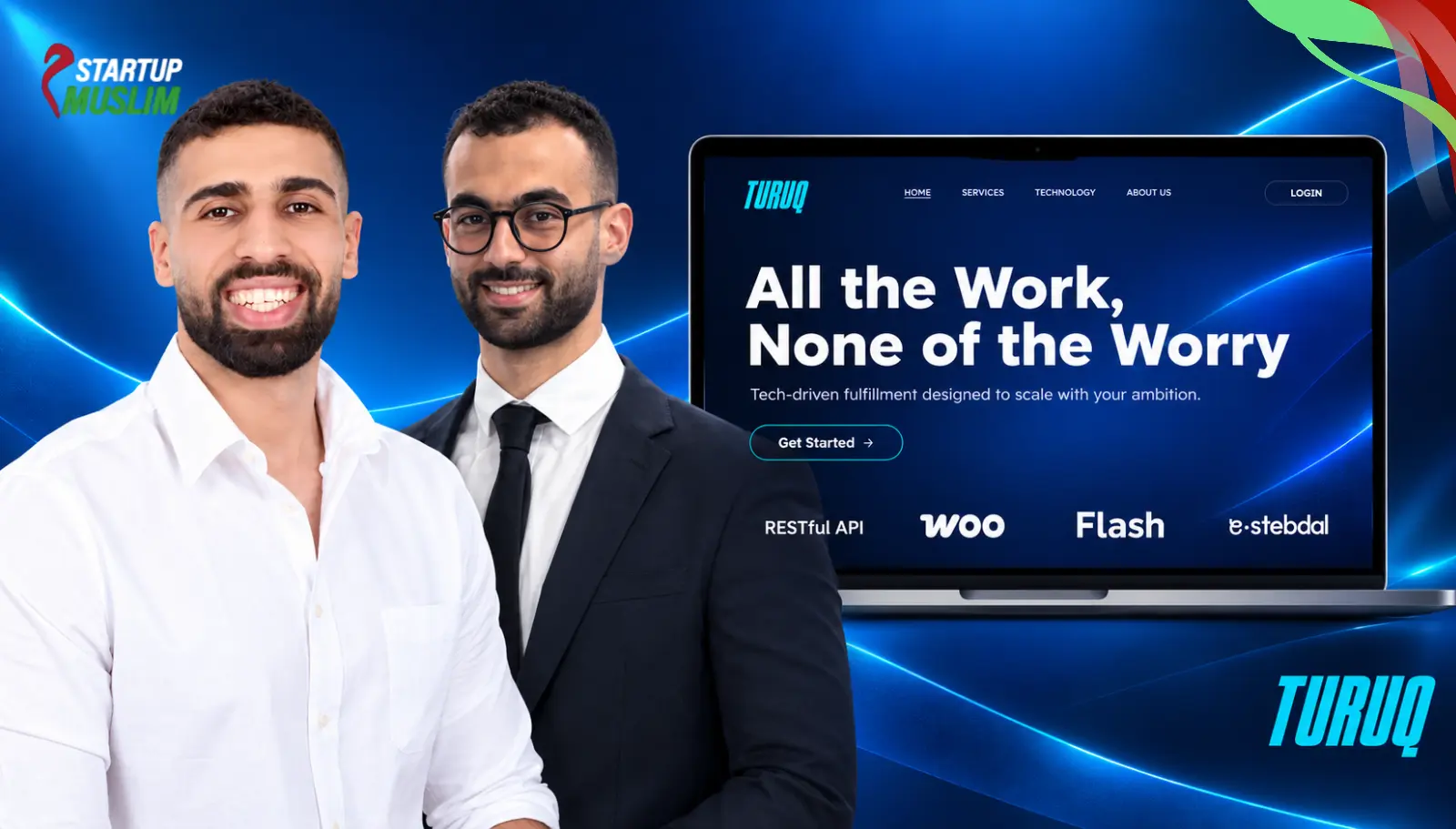
Egyptian logistics startup Turuq Innovations has secured seed investment from venture capital firm Den VC to expand its technology infrastructure and fulfilment operations, as it looks to help e-commerce businesses manage deliveries without building their own logistics networks.
Founded in February 2023 by Ahmed Atta and Karim Kamal, Turuq provides an integrated logistics platform that brings warehousing, inventory management, order processing, packaging and last-mile delivery under one system. The company serves online merchants across Egypt, helping them manage the operational side of selling and delivering products.
The financial terms of the investment have not been disclosed. According to reporting by EnterpriseAM, the round represents Turuq’s first external investment, with the company planning to use the capital to strengthen its internal systems, expand its team and prepare its operations for higher order volumes.
Turuq’s approach addresses a challenge facing many e-commerce businesses: managing fulfillment and delivery can become increasingly complicated as order volumes grow. Merchants may need to coordinate storage, inventory, packaging, courier services and customer updates across different providers. Turuq brings these functions together through a single technology-driven platform.
Building Logistics Infrastructure for Online Businesses
Turuq operates as a third-party logistics provider, allowing online merchants to outsource much of the infrastructure required to process and deliver orders. Its platform combines inventory management and warehousing with order fulfilment, courier coordination and nationwide shipping.
The company also uses real-time tracking, automated dispatching and optimised courier routes to improve visibility across the delivery process. Rather than requiring merchants to develop their own logistics systems, Turuq offers an integrated service designed to support their operations as their businesses grow.
The startup has developed proprietary software for warehouse and courier management. This gives the company greater control over its operational processes while providing merchants with visibility into their orders and inventory.
According to Den VC’s portfolio information, Turuq operates on a pay-per-delivery model, with additional services including express delivery, branded packaging and integrated warehousing. This structure allows merchants to access logistics services according to their requirements rather than investing in the infrastructure themselves.
An Investment to Strengthen Operations
The seed investment will support Turuq’s technology development, operational capacity and organisational growth. The company plans to strengthen its internal systems, expand its fulfilment capabilities and build the infrastructure needed to handle increasing demand from e-commerce merchants.
In comments reported by EnterpriseAM, co-founder Ahmed Atta said the company was not raising capital to cover operating losses. Instead, the investment is intended to strengthen its foundations and prepare it for more aggressive expansion.
The company has also indicated plans to pursue a larger funding round around mid-2027 to support its next stage of growth.
The investment follows Turuq’s participation in InvestIT, an investment-readiness programme run by Egypt’s Information Technology Industry Development Agency and the Technology Innovation and Entrepreneurship Center, with Flat6Labs operating the programme. The initiative helps startups prepare for fundraising and connect with potential investors.
Turuq’s investment came approximately a year after its participation in the programme, highlighting how relationships developed through startup support initiatives can continue to create opportunities after formal participation ends.
A Micro-Fulfilment Model for Faster Deliveries
One of Turuq’s key operational priorities is its micro-fulfilment network. Instead of relying entirely on a single large warehouse, this model distributes inventory and fulfilment activities across smaller locations closer to demand.
The approach can help reduce pressure on individual facilities during periods of high order volumes and support more efficient delivery operations. It may also create opportunities for faster shipping as the network expands.
Turuq has already established a fulfilment hub in Cairo’s Fifth Settlement and a sorting centre in Maadi, according to EnterpriseAM. The company combines its own delivery operations in selected areas with third-party providers elsewhere.
Atta has also discussed plans to introduce same-day delivery through the micro-fulfilment network. If implemented successfully, the service could help online merchants offer faster delivery options while allowing Turuq to expand its reach without relying exclusively on large centralised facilities.
Expanding Beyond Traditional Logistics
Turuq’s longer-term strategy extends beyond managing physical deliveries. The company is developing technology that could allow it to provide logistics software to other operators, creating another potential source of growth.
One opportunity under consideration is entering the Saudi Arabian market through a software-as-a-service model. Rather than immediately building and operating its own warehouse network abroad, Turuq could license its warehouse management technology to local operators that already have physical infrastructure.
This approach could allow the startup to expand geographically while limiting the capital and operational risks associated with establishing facilities in a new market. However, the company has not announced a definitive launch timeline for this strategy.
Its immediate priorities remain strengthening its Egyptian operations, expanding fulfilment capacity and preparing its platform to support more merchants and higher order volumes.
What Comes Next for Turuq?
Turuq’s funding comes as online merchants increasingly depend on logistics providers to manage the complexity of fulfilment and delivery. For smaller businesses, outsourcing these operations can reduce the need for substantial upfront investment in warehouses, inventory systems and delivery infrastructure.
The company has reported serving more than 300 merchants since launch, with approximately 90 to 100 active at a given time. EnterpriseAM also reported that monthly order volumes range from 50,000 to 100,000, depending on seasonality, based on figures provided by Atta.
These figures suggest that Turuq has moved beyond the early stage of testing its business model and is now focused on improving its capacity and operational systems. Its next challenge will be maintaining service quality as volumes increase, while ensuring that expansion does not undermine delivery reliability or profitability.
The undisclosed seed investment provides additional resources for that effort. Whether Turuq can turn its integrated logistics model into a scalable business across Egypt and eventually other markets will depend on its ability to manage costs, maintain merchant relationships and build reliable infrastructure.
For Atta and Kamal, the goal is to make logistics less of a barrier for e-commerce entrepreneurs, allowing them to focus on their products and customers while Turuq manages the operational work behind each order.
Follow Startup Muslim to discover the people and businesses shaping the Muslim business world.
