


Solving the Economics of Convenience
On-demand delivery has reshaped consumer expectations. What was once a luxury—getting products delivered within minutes—is now increasingly seen as a baseline service. Yet behind this convenience lies a persistent and often overlooked problem: the economics do not work.
For Ali Ahmed, Co-founder and CEO of Robomart, this inefficiency was impossible to ignore. Having previously built in the on-demand delivery space, he witnessed firsthand how costly last-mile logistics can be for retailers, platforms, and consumers alike.
The model, while popular, often operates at a loss. “The only way to make on-demand delivery sustainable is through automation,” Ahmed explains. That insight became the foundation for Robomart.
A Builder at the Intersection of Robotics and Business
Ahmed’s path to founding Robomart reflects a blend of technical depth and entrepreneurial experience. A roboticist by training, he has spent over 15 years building technology companies, founding four startups and authoring a book on robotics. His academic journey includes a dual Master’s degree—an MBA and an MSc—alongside time spent in a Computing PhD program, which he eventually left to pursue entrepreneurship full-time.
Before that, he worked across global organizations including Groupon, Unilever, and GSK, gaining exposure to both technology and large-scale business operations.
This combination of technical expertise and commercial understanding would later prove critical in tackling one of the hardest problems in logistics.
From Delivery to Autonomous Retail
Robomart represents a fundamental shift in how goods are delivered. Instead of sending products from a warehouse to a customer, Robomart brings the store itself to the customer.
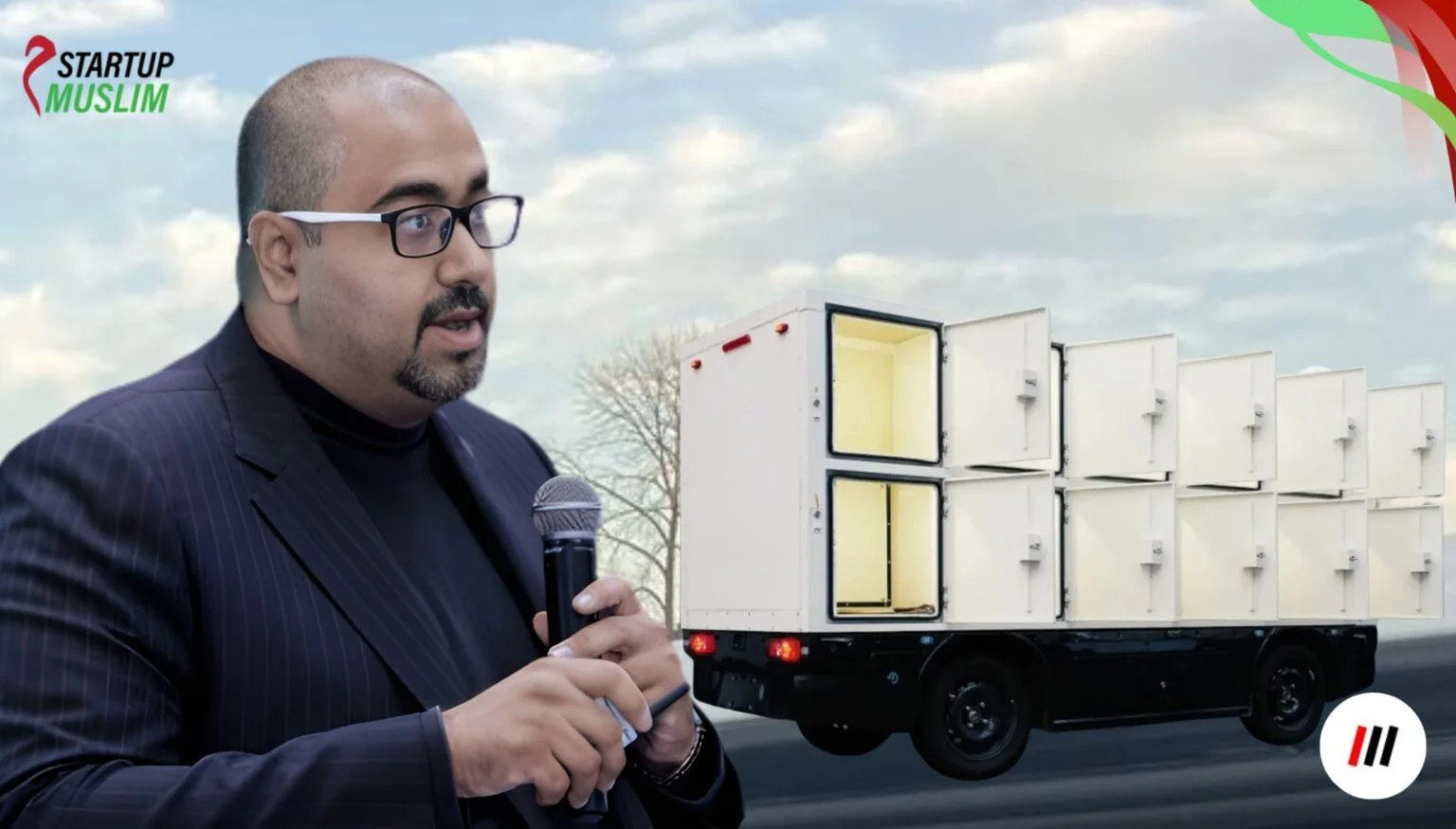
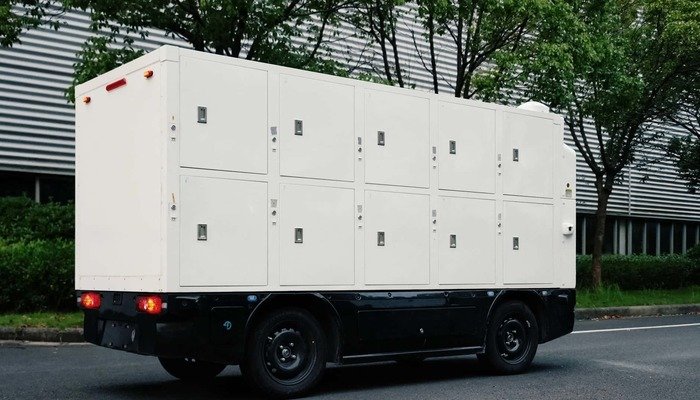
At the center of this vision is the Robomart RM5, an autonomous delivery robot designed for the
road. Equipped with ten lockers and capable of carrying up to 500 pounds of goods, it can serve multiple retailers in a single trip—transforming how last-mile delivery is executed.
This model reduces delivery costs by minimizing human intervention while increasing efficiency through consolidated routing. Ahmed describes Robomart as “self-driving stores and delivery robots for the road,” positioning the company not just as a logistics provider, but as a new category within retail infrastructure.
The Challenge of Building From Scratch
Like many deep-tech ventures, Robomart’s early days were defined by constraints—particularly capital. Building a working autonomous system requires significant engineering effort, hardware integration, and real-world testing. For Ahmed and his team, the first challenge was turning vision into a tangible prototype with limited resources.
The breakthrough came through assembling the right team—individuals who could translate complex ideas into functional systems. “That’s how we made the first Robomart a reality,” Ahmed reflects. From there, the company began iterating, improving both hardware and software with each generation of its robots.
Scaling Autonomous Infrastructure
Robomart is now entering a critical phase of growth. With the rollout of RM5 Robomarts, the company plans to begin deployment in select zones before expanding across major markets. The initial focus is on California and Texas, with plans to scale into hundreds of zones and eventually expand nationwide.
This phased approach reflects the operational complexity of deploying autonomous systems in real-world environments, where regulatory and logistical factors must align. For Ahmed, the opportunity is clear: to build the infrastructure that makes on-demand delivery not just fast—but economically viable.
Building With First Principles
At the core of Robomart’s culture is a disciplined approach to thinking and execution. Ahmed emphasizes working quickly while maintaining integrity, questioning assumptions through first-principles reasoning, and making decisive choices even in uncertain conditions. “Clarity comes from action,” he says. “As you step on the path, the path becomes clear.”
This philosophy reflects the realities of building in emerging technologies, where progress often depends on experimentation rather than predefined playbooks.
The Fascination of Autonomous Systems
Despite the operational challenges, Ahmed remains deeply motivated by the technology itself. “As a roboticist, it still amazes me that humans taught sand to think,” he says.
For him, watching autonomous robots operate in the real world is more than a milestone—it is a glimpse into a future where machines handle increasingly complex tasks with precision and autonomy.
Advice to Entrepreneurs: Start Before You’re Ready
Ahmed’s advice to aspiring founders is direct. “If you’re thinking of starting a startup, just do it,” he says. In his view, entrepreneurship is less about perfect preparation and more about persistence and action. The path forward often reveals itself only after the journey begins.
A Vision of Abundance
Looking ahead, Ahmed’s ambition extends beyond Robomart as a company. He envisions a future where automation significantly reduces the cost of delivering goods and services—unlocking a new era of accessibility and efficiency.
His goal is to help build “the robots that ushered in the age of abundance.” In an industry defined by incremental improvements, Robomart represents a more fundamental shift. Not just delivering faster. But redefining how delivery itself works—through autonomous systems like the RM5 Robomart that bring the store directly to the customer.
