





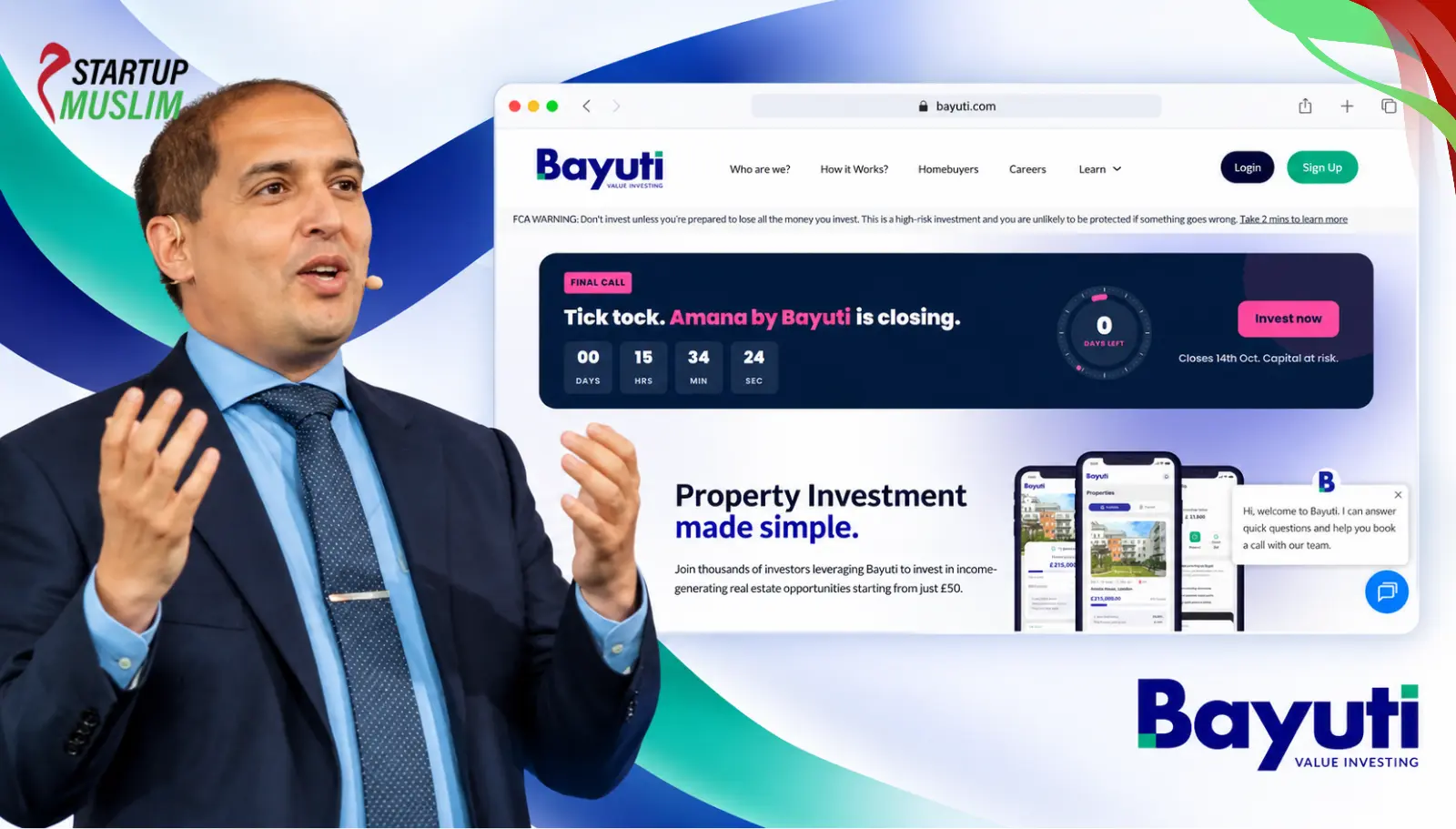
For more than a decade, Anouar Adham worked inside Islamic banks, institutions created to offer financial services consistent with Islamic principles. Yet the longer he spent in the industry, the more he questioned whether its products delivered a genuinely different outcome for customers. Contracts might change, but the experience often remained familiar: customers took on long-term financial obligations while carrying much of the economic risk themselves.
One conversation crystallised the problem. A colleague at one of the bank’s main branches admitted that he could not clearly explain the substantive difference between its Sharia-compliant car financing and a conventional loan. If someone working inside an Islamic bank struggled to distinguish the two, Adham wondered, how could ordinary customers be expected to see a meaningful difference?
That question eventually led him to build Bayuti, a UK-based property venture seeking to expand access to ownership through shared-equity homeownership, fractional property investment and a broader debt-free financial ecosystem. Rather than simply offering another Islamic financial product, Adham wants to change how people enter the property market, build wealth and participate in the value of assets.
The Problem With Changing Contracts, Not Outcomes
Adham’s criticism of Islamic finance centres on the difference between contractual compliance and economic experience. In his view, many products marketed as Sharia-compliant have retained the fundamental characteristics of conventional debt, leaving customers committed to payments regardless of what happens to the assets they acquire. He believes Islamic finance has an opportunity to move closer to its original emphasis on ownership, shared risk and reward.
Property makes the challenge particularly visible. Buying a home often requires a substantial deposit, while conventional financing can leave households committed to long-term repayments that do not automatically adjust when property values fall. For Muslim consumers who want to avoid interest-based borrowing, the available choices can feel especially constrained.
The ownership gap among Muslims in England and Wales illustrates the wider issue. The 2021 census figures cited by Adham show that 45.6% of Muslims lived in owner-occupying households, compared with 62.8% of the population overall. Although that difference has multiple causes, he believes financing arrangements that some households cannot use in good conscience can be one contributing factor.
Bayuti’s answer is to make ownership, rather than borrowing, the starting point. But the company is pursuing that principle through distinct products: a shared-homeownership model for families seeking to buy a home and an investment platform through which individuals can participate in property from smaller amounts of capital.
Two Routes Into Property Ownership
Bayuti’s homeownership proposition is built around CrowdToLive. According to its public website, eligible homebuyers in England can start with a deposit of 5%, purchase an initial share of a property and move into the home while the remaining share is funded through the platform. The buyer pays rent on the portion they do not own and can purchase additional shares over time, reducing the rented portion as their ownership increases. <Cite refs={[“turn852346view0”]}/>
This is a shared-ownership structure rather than a conventional loan. The homebuyer begins as a co-owner and gradually increases their stake, with the goal of eventually owning the entire property. The model is intended to give families a route into homeownership without taking on a conventional interest-bearing mortgage, while allowing them to build equity as their financial circumstances permit.
Bayuti also offers a separate property investment proposition through which people can invest from as little as £50. That product serves a different purpose: it allows individuals to participate financially in property without needing to buy a home or accumulate a large deposit. Investors may benefit from rental income and changes in property value, but they also face the possibility of losses.
The distinction matters because investing in property is not the same as owning the home in which one lives. Bayuti is trying to serve both groups: people who want exposure to property as an asset class and families who want a path towards owning their own home. Its broader public offering also references community-oriented housing initiatives, extending the company’s interest in ownership beyond the individual investor.
Why £50 and a 5% Deposit Matter
The financial barriers to entering the property market operate at different levels. For aspiring homeowners, the deposit can be the biggest obstacle; for people who simply want to begin investing, the cost of acquiring an entire property makes direct ownership unrealistic. Adham sees these as related problems because both restrict participation in an economy where property remains an important store of wealth.
Bayuti’s £50 investment entry point is designed to lower the barrier to participation. It does not make someone a homeowner, nor does it guarantee returns, but it gives people an opportunity to begin investing in property without first accumulating substantial capital. The 5% deposit advertised for CrowdToLive addresses the separate challenge faced by eligible homebuyers who have some savings but cannot meet the larger upfront requirements associated with many home purchases.
Both propositions carry risks and practical constraints. Property values can fall, rental income can fluctuate, and homeownership involves ongoing costs beyond the initial deposit. For Adham, however, the objective is to make participation more accessible while remaining clear that ownership and investment involve financial responsibility.
His longer-term philosophy extends beyond real estate. When people are excluded from owning productive assets, he believes they miss opportunities to participate in the wealth an economy creates. Bayuti begins with property because it is a tangible and familiar asset, but the underlying ambition is to make ownership a more attainable part of everyday economic life.
A Growing UK Market for Sharia-Compliant Homeownership
Bayuti is entering a UK market in which several established providers already help households purchase property without conventional interest-bearing mortgages. Their approaches share an emphasis on property ownership but differ in their institutional structure, financing arrangements and path towards full ownership.
Gatehouse Bank and Al Rayan Bank offer Home Purchase Plans based on joint ownership. Under the diminishing Musharaka structure used by Gatehouse, the customer and bank own shares in the property, the customer pays rent on the bank’s remaining share and additional payments gradually increase the customer’s ownership. Al Rayan also describes its home purchase plans as interest-free arrangements based on joint ownership.
StrideUp offers another version of this model. Its Home Purchase Plan involves the provider co-purchasing the property with the customer, who starts with an initial deposit and gradually buys back the provider’s share through payments comprising rent and an acquisition component. The provider says its product is designed as a Sharia-compliant alternative to a conventional mortgage.
Pfida’s OwnTogether represents a different approach within the wider market. Its model has been described as a shared-equity alternative in which rent is linked to local rental conditions and the provider’s share is intended to be sold back at its original purchase price, rather than being tied to the property’s subsequent market value. Its approach differs from the more widely used diminishing Musharaka structures.
These companies are addressing the same broad need through different models. Bayuti’s distinctive positioning is the combination of a homeownership pathway advertised from a 5% deposit, a property investment proposition starting at £50 and its wider ambition to build a debt-free ecosystem. The opportunity is not simply to offer another alternative to a conventional mortgage, but to connect homebuyers and investors within a broader approach to property ownership.
Building a Debt-Free Business in a Debt-Financed World
One of Bayuti’s biggest challenges has emerged during fundraising. Adham says that even investors interested in supporting a debt-free business have sometimes proposed debt financing as a condition of investment. In one instance, a venture capital firm wanted to invest but required Bayuti to accept debt financing, a condition the company declined.
The decision involved a commercial trade-off. Borrowing could have allowed Bayuti to finance more properties and potentially increase the company’s value more quickly, but Adham believed that pursuing growth through a structure contrary to the company’s founding purpose would undermine its proposition. For him, the financing strategy is not a secondary operational choice; it is part of the business’s identity.
Bayuti is also trying to connect several parts of the property ecosystem, including individual investors, families seeking shared homeownership and charities interested in fundraising and property investment. That ambition requires technology, capital, operational capability and partners who understand the company’s long-term objectives. Adham believes alignment among founders, shareholders and partners is essential because the methods may change as a company grows, but its underlying purpose should not.
Why the Muslim Startup Ecosystem Needs a Capital Ladder
Adham’s ambitions extend beyond Bayuti. He believes the global Muslim startup ecosystem lacks a sufficiently developed financing pathway to support founders from their earliest experiments through venture growth and eventually into private equity and public markets.
He points to the Islamic finance industry, which he describes as roughly $6 trillion in size, and argues that this scale has not translated into an equivalent capital ecosystem for Muslim entrepreneurs. Founders need a connected ladder of funding, from angel investment and venture capital to private equity, supported by institutions that can finance companies at different stages of development.
His shorthand is that the ecosystem needs its own Sequoia and its own Vanguard. The point is not simply to replicate those organisations, but to build institutions capable of backing ambitious businesses early, supporting them as they scale and providing long-term investment opportunities as they mature. Without that continuity, founders may be forced to build on limited resources even when their industries have substantial pools of capital.
Bayuti’s long-term ambition therefore has two dimensions: to make debt-free property ownership more accessible and to contribute to a financial ecosystem in which businesses built around similar principles can find the support they need to grow.
A Five-Year Vision Built Around Ownership
Adham wants Bayuti to become the first name people consider when they want to invest in property or buy a home without conventional interest-bearing debt. The company has set its sights on reaching hundreds of thousands of families, helping them access ownership through shared-homeownership arrangements and investment opportunities.
Achieving that ambition will require more than a compelling philosophy. Bayuti must build trust, develop its products, secure aligned capital and make its model accessible without obscuring the financial risks involved. It will also need to demonstrate that its different ownership pathways can operate at scale in a property market where conventional mortgage financing remains deeply established.
Adham’s experience in finance has left him sceptical of glossy narratives about entrepreneurship. He believes founders must understand risk and reward, measure outcomes rather than intentions and accept that failure is part of building a company. His advice to young Muslim founders follows the same principle: money should be the outcome of a meaningful purpose, not the purpose itself.
For Adham, Bayuti’s success will ultimately be measured by whether more people can own a meaningful share of the wealth being created around them. The company’s approach combines a route towards homeownership for families, a lower entry point for property investors and a broader ambition to make asset ownership more inclusive.
“Wealth is being created all the time, and I want more people to own a slice of it.”


