



More than 1,400 years ago, in the trading city of Makkah, Khadija bint Khuwaylid (RA) was building a life around commerce. She was a successful businesswoman who managed substantial trading interests and employed others to conduct business on her behalf. Among those she entrusted with her trade was a young Muhammad ﷺ, whom she hired to lead one of her caravans to Syria because of his reputation for honesty and trustworthiness.
Her story offers an important reminder for a modern Muslim world that sometimes forgets its own history: women participating in economic life, building enterprises, employing others and creating opportunity is not a new idea. Entrepreneurship, when rooted in responsibility and service, can become more than a way of generating income. It can become a mechanism for dignity, independence and community development.
More than fourteen centuries later, in Herat, Afghanistan, Somaya Suleimankhil is pursuing that same broader idea through a very different enterprise. Through Naiko Gallery, she is using art to create economic and professional opportunities for Afghan women while preserving traditions that might otherwise struggle to find a place in the modern world.
It Started With Seven Women
Somaya’s relationship with art began long before Naiko existed. As a child, she developed an interest that continued through school and university, eventually training under different teachers and masters in traditional arts, including calligraphy under Ustad Zaki Al-Hashemi. What began as a personal passion gradually became a professional calling, and after university she began thinking about how art could become a sustainable livelihood rather than simply an activity pursued for love.
She initially brought together a small group of women artists who worked primarily out of passion. But as employment opportunities became increasingly limited, Somaya began asking a more fundamental question: could this small group become a professional institution where women could learn, work and earn an income through their skills?

The answer became Naiko. Somaya travelled from Herat to Kabul to obtain the necessary cultural and artistic licence, and Naiko officially began its activities in 2023. What started with seven women would eventually grow into an organisation with around 170 active artists working across three branches in Herat.
Building a Business When the Environment Keeps Changing
The growth did not happen in a conventional entrepreneurial environment. Naiko’s early years were marked by financial difficulties, limited access to materials and concerns from families who were initially hesitant about allowing their daughters to work outside the home. For Somaya, building the organisation therefore meant building trust at the same time. The team worked to demonstrate that the activities were safe, professional and meaningful, gradually convincing families and institutions that art could provide women with a legitimate path to learning and economic participation.
Then came another challenge: restrictions affecting Afghan women sometimes directly disrupted Naiko’s ability to operate. On several occasions, Somaya says, the organisation’s office was sealed and its activities were stopped. Rather than interpreting those moments as the end of the journey, the team adapted, changing locations, increasing its use of digital platforms and finding different ways to continue its work. There is something deeply entrepreneurial about that response. Entrepreneurship is often presented through stories of funding rounds, rapid growth and market expansion. But in environments where the basic conditions for operating a business can change unexpectedly, entrepreneurship can also mean simply finding a way to continue.
From Seven Women to 170 Artists
The most meaningful measure of Naiko’s growth may therefore not be its sales or physical footprint, but the number of women who have passed through its doors. The organisation grew from seven women to 14, then 21, and eventually to around 170 active artists across three branches in Herat. For Somaya, the significance of that growth goes beyond employment. When a woman learns a skill and begins earning from it, she can gain not only financial independence but also confidence, professional identity and a greater sense of control over her future.
That philosophy echoes an important dimension of Khadija’s (RA) own example. Her economic activity was not simply about accumulating wealth. Historical accounts describe her as a businesswoman who employed others and was also known for using her wealth to support people in need.
The parallel is not that Somaya’s work resembles the scale or circumstances of Khadija (RA), but that both stories illustrate a broader principle: economic activity can create opportunities for other people. For Naiko, every artist who develops a skill and finds a pathway to income becomes part of a larger ecosystem of women supporting themselves through their own capabilities.


Four Years, 14 Women and a Quran
Perhaps nothing captures the character of Naiko better than a project that took four years to complete.
Fourteen women came together to produce a Quran manuscript without financial or institutional support behind them. They continued because of their love for the work, their faith and their commitment to one another. For Somaya, the experience became one of the foundations of Naiko’s development, teaching the artists patience, discipline, consistency and collective responsibility.
The project has since evolved into an even larger body of work. During the past year, a new group of trained Naiko artists completed a full Quran manuscript in Arabic Naskh calligraphy, fully illuminated with tazhib and incorporating handmade paper. They also completed a separate manuscript of Surah An-Naba, along with the first three Juz’.
For Somaya, Quranic calligraphy represents more than an artistic discipline. It connects Naiko’s artists to Islamic culture while giving their work a deeper sense of purpose, and it has helped generate greater appreciation and support from their community.

Preserving Tradition Without Leaving It in the Past
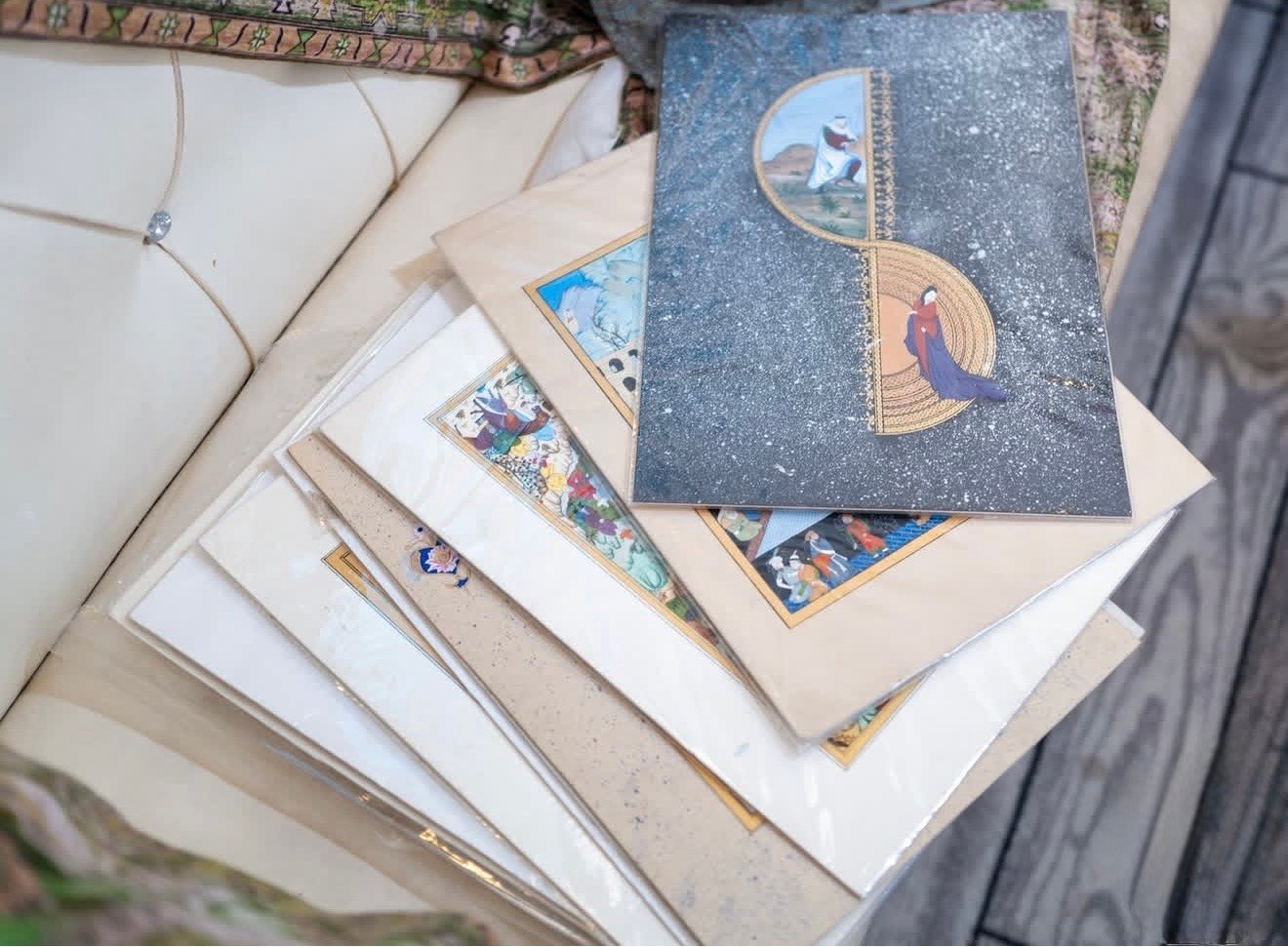
Naiko’s challenge is not simply to preserve Afghan art, but to ensure that it remains relevant. Somaya works across traditional disciplines including miniature painting, calligraphy and tazhib, but she does not see preservation as freezing these forms in their historical state. The team experiments with composition, presentation, scale and applications while maintaining the traditional foundations of the work.
That philosophy extends into handmade products. Naiko wants traditional Afghan art to move beyond galleries and become part of everyday life, creating products that can reach contemporary consumers without stripping them of their cultural identity.
This is where art and entrepreneurship intersect. Cultural preservation requires artists, but sustainable cultural preservation also requires markets. Without customers, collectors, galleries and institutions willing to support the work, even extraordinary artistic traditions can struggle to survive.
Building a Global Market From Herat
Naiko’s next challenge is therefore international. The organisation has developed payment and shipping systems that make it easier to send artworks and handmade products abroad. But Somaya believes the bigger opportunity lies in developing long-term relationships with international galleries, collectors and art platforms that can introduce Afghan women artists to audiences beyond Afghanistan.
The obstacles remain substantial. International payments, shipping, travel, exhibitions and access to global networks can all be difficult, while Somaya says being Afghan itself can make participation in international programmes challenging even when artists receive invitations or have their work accepted. Digital platforms have consequently become an important bridge to the outside world. They allow Naiko to showcase its work, communicate with customers and discover opportunities when physical travel and participation are difficult.
Yet Somaya’s ambition is larger than selling individual paintings or manuscripts. She wants Naiko to become a sustainable platform for Afghan art: a place where artists can learn, create, produce, present and sell their work both locally and internationally.
That vision brings the story back to the deeper meaning of entrepreneurship. Khadija (RA) did not merely participate in commerce; she created an economic ecosystem around the capital, people and opportunities she controlled. Somaya is working on a much smaller scale and under extraordinarily different circumstances, but her objective similarly extends beyond herself: build something that allows other women to participate. And perhaps that is why her final message to young Afghan women is so powerful.
“You do not have to see the whole path from the beginning. Start with the step you can take today.”
For Somaya Suleimankhil, that first step began with seven women and a belief that art could become a livelihood. Today, 170 artists stand behind that decision, and Naiko is still trying to take the next step.
