


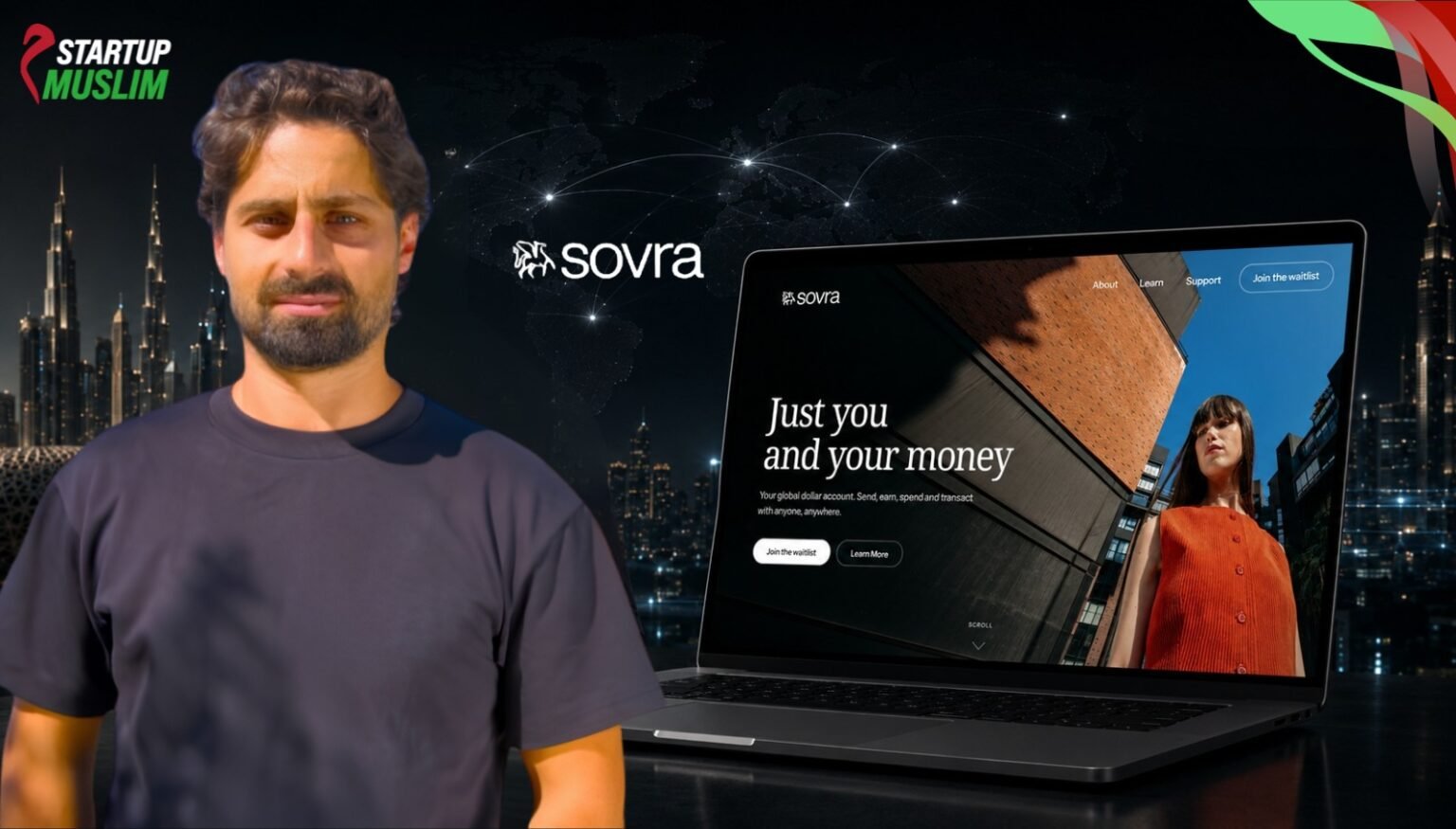
In 2019, Ahmad Wehbi watched Lebanon’s banking system collapse. Bank deposits that millions of people believed were secure suddenly became inaccessible. Withdrawal limits were imposed. Savings accumulated over years of hard work were effectively trapped. Meanwhile, the Lebanese pound lost more than 98 percent of its value, devastating the purchasing power of ordinary citizens.
For Wehbi, it was more than an economic crisis. It was a deeply personal lesson about the fragility of financial systems and the dangers of placing blind trust in intermediaries. That experience would eventually inspire Sovra, a MENA-focused fintech startup that is reimagining how people save, spend, and move money.
This week, Sovra announced that it has raised more than $2 million in a pre-seed funding round led by Pharsalus Capital, with participation from a notable group of regional and global angel investors. The investors include Karim Atiyeh, founder of Ramp; Hisham Al-Falih, founder of Lean Technologies; Hany Rashwan, founder of 21Shares; and Egyptian billionaire Naguib Sawiris, Chairman of Orascom Development Holding AG. The funding will support the expansion of Sovra’s engineering and product teams as the company prepares for its public launch.
Building Financial Sovereignty
Sovra is not positioning itself as another digital bank. Instead, the company is building what it describes as a “global dollar account” that gives users complete ownership and control over their money. Through the Sovra mobile application, users can hold digital dollars, earn yield, transfer money globally within seconds, and spend using cards supported by the Visa and Mastercard networks.
The defining characteristic of the platform lies in its architecture. Unlike traditional financial institutions, Sovra operates using a self-custodial model. This means users maintain direct control over their assets, while the platform acts purely as infrastructure rather than a gatekeeper.
“There has always been something between people and their money; a bank, a border, a fee, a policy, a form,” said Ahmad Wehbi, Founder and CEO of Sovra. “Sometimes it worked. Sometimes it took everything.”
“The technology to remove the middleman now exists. Sovra is the simplest way in. Your money works for you and answers only to you. If we disappear tomorrow, it’s still there. That’s not a company policy alone, but the architecture we have built for Sovra.”
For people living in regions where financial instability has become an unfortunate reality, this distinction matters enormously.
Solving a Regional Problem
While fintech innovation has accelerated across the Middle East and North Africa, large portions of the population remain underserved.
According to the company, nearly two-thirds of adults across the MENA region are either unbanked or underbanked. Even among those with access to bank accounts, many continue to face significant challenges, including inflation, currency devaluation, capital controls, and restrictions on accessing their own savings.
Cross-border transfers present another hurdle. Remittances often take several days to process and can cost more than six percent per transaction. Sovra believes these inefficiencies have created an opportunity to rethink financial access altogether. The platform is initially targeting three key customer segments: young professionals across MENA, university students seeking easier access to global financial tools, and the region’s diaspora communities living abroad.
For these users, financial services are no longer just about convenience. They are about preserving value, maintaining flexibility, and securing independence.
Powered by Stablecoins and Global Infrastructure
At the heart of Sovra’s offering is USDC, the regulated dollar-backed stablecoin issued by Circle. Each digital dollar is backed by an equivalent US dollar held in reserve. Circle, which is listed on the New York Stock Exchange, operates under regulatory oversight in the United States, while its reserves are independently audited by Deloitte.
This infrastructure allows Sovra users to hold dollar-denominated balances while maintaining direct ownership through self-custodial accounts.
Beyond storing value, users can also access additional functionality. The platform enables free transfers between accounts, spending through globally accepted payment cards, and connections to third-party decentralized finance protocols that offer yield-generating opportunities. By integrating established financial and blockchain infrastructure, Sovra aims to simplify access to services that have traditionally been fragmented and difficult for ordinary users to navigate.
A Founder Shaped by Crisis
Sovra’s origins are deeply intertwined with Wehbi’s own experiences. Having witnessed Lebanon’s financial collapse firsthand, he understands the emotional consequences of losing trust in institutions that people once believed would protect them.
The company’s broader team reflects this mission. Sovra brings together talent with backgrounds at organizations including McKinsey, Revolut, JumpCloud, and the decentralized finance ecosystem. More importantly, many members share lived experiences of disrupted access to savings and financial services.
This combination of technical expertise and personal understanding shapes the company’s approach. Rather than building theoretical solutions, Sovra is addressing problems its founders have personally experienced.
Investor Confidence in a New Financial Model
The caliber of investors backing Sovra reflects growing confidence in alternative financial infrastructure across emerging markets. Anthony Ghosn, Managing Director at Pharsalus Capital, believes the company’s mission extends beyond convenience.
“By giving people sovereign, self-custodial alternatives to fragile fiat and banking systems, Sovra is helping restore financial dignity in Lebanon and beyond,” he said.
“For those of us with ties to the region, these issues are deeply familiar. Ahmad and the Sovra team stand out for having the courage and clarity to build where others have been constrained by the scale of the problem.”
The participation of founders from companies such as Ramp, Lean Technologies, and 21Shares further signals investor belief that financial sovereignty may become one of the defining fintech themes of the coming decade.
The Future of Money in MENA
Sovra enters the market at a time when consumers are increasingly questioning traditional assumptions about money. People want faster transfers, lower fees, greater transparency, and more control over their financial lives. For millions across MENA, those expectations are not simply about improving user experience. They are about protecting their futures from circumstances beyond their control.
Whether Sovra succeeds in becoming the region’s preferred global dollar account remains to be seen. What is clear, however, is that its founding vision resonates deeply with a generation that has witnessed economic volatility firsthand.
For Ahmad Wehbi, the mission is ultimately about restoring something many people lost during times of crisis i.e. trust. By placing ownership back into the hands of users themselves, Sovra hopes to redefine what financial freedom means for the Middle East and beyond.
