


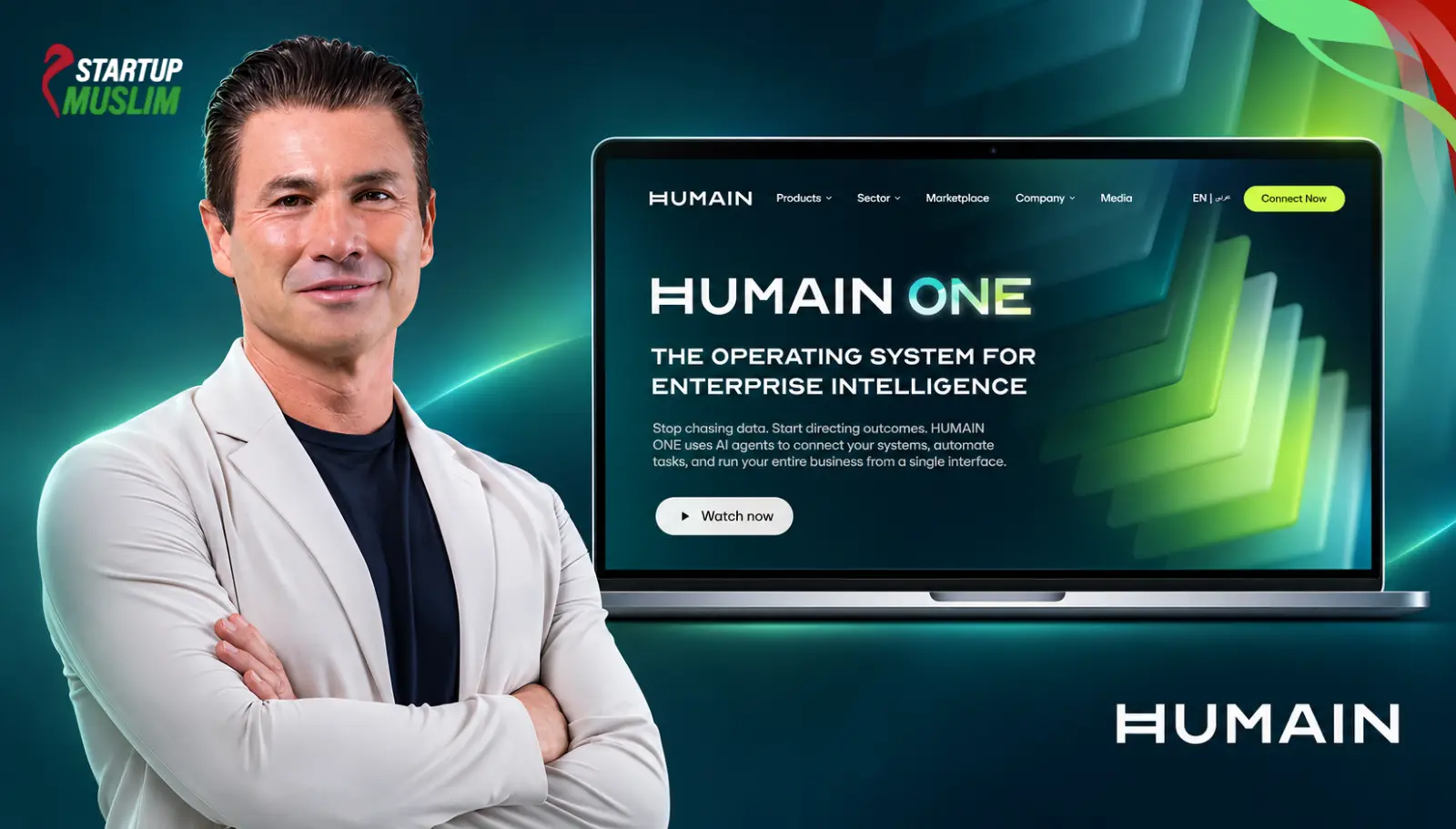
Saudi Arabia’s state-backed AI company HUMAIN has gained one of the world’s largest energy companies as a strategic shareholder, with Aramco committing approximately $2.6 billion in cash alongside AI and computing assets to accelerate its expansion.
Saudi Aramco has completed a transaction to acquire a 49% stake in HUMAIN, the artificial intelligence company launched by Saudi Arabia’s Public Investment Fund (PIF). Announced on November 1, 2026, the deal gives Aramco a significant minority position, while PIF retains its controlling 51% ownership.
The transaction includes approximately SAR 9.9 billion ($2.6 billion) in cash contributions from Aramco during 2026, in addition to AI, computing and digital assets. Both shareholders will also contribute technology capabilities and talent to support HUMAIN’s expansion.
The agreement brings together two of Saudi Arabia’s most influential institutions behind a company aiming to build an integrated artificial intelligence ecosystem, from the infrastructure required to power AI systems to the models and applications used by businesses and governments.
From a PIF Initiative to a National AI Ambition
HUMAIN was launched in May 2025 by the Public Investment Fund, chaired by Saudi Crown Prince Mohammed bin Salman. Its creation formed part of Saudi Arabia’s broader ambition to establish itself as a global technology hub and accelerate the development of its digital economy.
Rather than concentrating on a single AI product, HUMAIN was designed to operate across the entire AI value chain. Its business spans next-generation data centres, high-performance computing infrastructure, cloud platforms, advanced AI models and industry-specific applications.
The company is also developing AI solutions for sectors including energy, healthcare, manufacturing and financial services. Its approach is intended to give organisations access to the computing infrastructure and software capabilities needed to develop and deploy AI at scale.
One of its notable developments is ALLaM, a multimodal Arabic large language model developed with the Saudi Data and Artificial Intelligence Authority (SDAIA). The model reflects an effort to strengthen Arabic-language AI capabilities and develop technology suited to regional linguistic and business needs.
Why Aramco Is Investing in HUMAIN
For Aramco, the transaction represents more than an investment in a fast-growing technology sector. It creates a direct strategic relationship with a company whose infrastructure and services the energy giant expects to use across its own operations.
Aramco plans to leverage HUMAIN’s AI capabilities to develop industrial applications, improve operational performance and expand the use of advanced digital technologies throughout its business.
AI has applications across the energy industry, from analysing complex operational data and supporting predictive maintenance to improving industrial processes and decision-making. Access to dedicated computing infrastructure and AI services could help Aramco develop and deploy these applications more efficiently.
The investment also gives Aramco exposure to the wider AI infrastructure market. As a shareholder and strategic partner, the company expects to benefit from HUMAIN’s services and potential revenue opportunities beyond its own operations.
Aramco President and CEO Amin H. Nasser said the company had achieved $11.3 billion in Technology Realized Value since 2023, with a significant portion attributed to AI solutions.
That figure represents Aramco’s reported value from technology initiatives, rather than revenue generated by HUMAIN. Nevertheless, it demonstrates the importance the energy company places on technology as part of its industrial strategy.
HUMAIN Targets 3 Gigawatts of AI Data Centre Capacity by 2030
A central part of HUMAIN’s expansion plan is its ambition to deploy 3 gigawatts of AI data centre capacity by 2030.
AI data centres provide the computing power required to train and operate advanced AI models. As demand for generative AI, cloud computing and enterprise AI applications grows, access to large-scale computing infrastructure has become an increasingly important part of the global technology industry.
Building this infrastructure requires substantial investment in computing hardware, electricity, cooling systems, connectivity and technical expertise. HUMAIN’s target therefore represents a significant long-term infrastructure programme, rather than simply an expansion of software products.
The company is positioning itself to serve both regional and international customers seeking access to AI computing capacity. Its ambition is not only to support Saudi Arabia’s domestic technology ecosystem but also to become a global exporter of AI capabilities.
The 3-gigawatt figure is a future deployment target, not a description of HUMAIN’s currently operational capacity. Reaching it will depend on construction, equipment deployment, power availability and the ability to secure customers for the infrastructure.
International Partnerships Are Supporting the Expansion
HUMAIN has been developing relationships with major global technology companies as it builds its AI ecosystem. Its partnerships include companies such as NVIDIA, Microsoft, AMD, Qualcomm, Amazon Web Services, Google Cloud and Groq.
These relationships are important because developing a competitive AI infrastructure business requires more than financial resources. Access to advanced chips, cloud technologies, networking systems and specialised expertise will be essential to building and operating large-scale computing facilities.
A recent development also highlights HUMAIN’s efforts to attract international customers.
On October 21, 2026, HUMAIN and DataVolt announced a preliminary framework agreement with AI cloud company Nebius for data centre capacity at their planned campus in Oxagon, part of Saudi Arabia’s NEOM development.
The proposed arrangement includes up to 50 megawatts of capacity for Nebius. The allocation represents half of the initial 100 megawatts under construction within the project’s planned first phase of 360 megawatts. Operations are expected to begin in phases from the fourth quarter of 2027.
The agreement illustrates how HUMAIN’s infrastructure ambitions could connect with international AI companies looking for additional computing capacity.
A Partnership That Connects Energy, Capital and Artificial Intelligence
The Aramco transaction brings together two different but complementary strengths.
PIF provides long-term investment backing and experience in developing strategic sectors, while Aramco brings industrial expertise, technology assets and a potential large-scale customer for AI infrastructure.
This combination could give HUMAIN an advantage as it attempts to build a business that serves both government and private-sector customers. Aramco’s industrial operations also provide an environment in which AI applications can be developed and deployed in real-world settings.
For Saudi Arabia, the partnership supports a broader economic objective: developing domestic capabilities in advanced technology while reducing dependence on traditional sources of economic growth.
It also reflects the growing connection between the energy and AI industries. Data centres require significant amounts of electricity, while energy companies are increasingly exploring AI to improve efficiency and manage complex operations. Bringing these sectors closer together could create opportunities across both industries.
However, the scale of the ambition also brings challenges. Building data centres requires considerable capital, reliable energy supplies, access to advanced chips and sustained customer demand. HUMAIN will need to convert its infrastructure plans and strategic partnerships into commercially viable services.
What the Deal Means for Saudi Arabia’s AI Future
The completion of Aramco’s 49% investment marks an important step in HUMAIN’s development. With PIF retaining a 51% stake, the company now has two major Saudi institutions contributing capital, technology assets and expertise to its expansion.
The transaction does not, by itself, establish HUMAIN’s long-term market value or guarantee that its ambitious infrastructure targets will be achieved. Its success will ultimately depend on execution, customer adoption and its ability to compete in a rapidly developing global AI market.
But the strategic direction is clear. Saudi Arabia is investing not only in the adoption of artificial intelligence but also in the infrastructure, models and industrial capabilities needed to participate in the global AI economy.
For HUMAIN, the next milestone will be turning that ambition into operational capacity and commercially successful AI services.
Follow Startup Muslim to discover the people and stories shaping the Muslim business world.
