





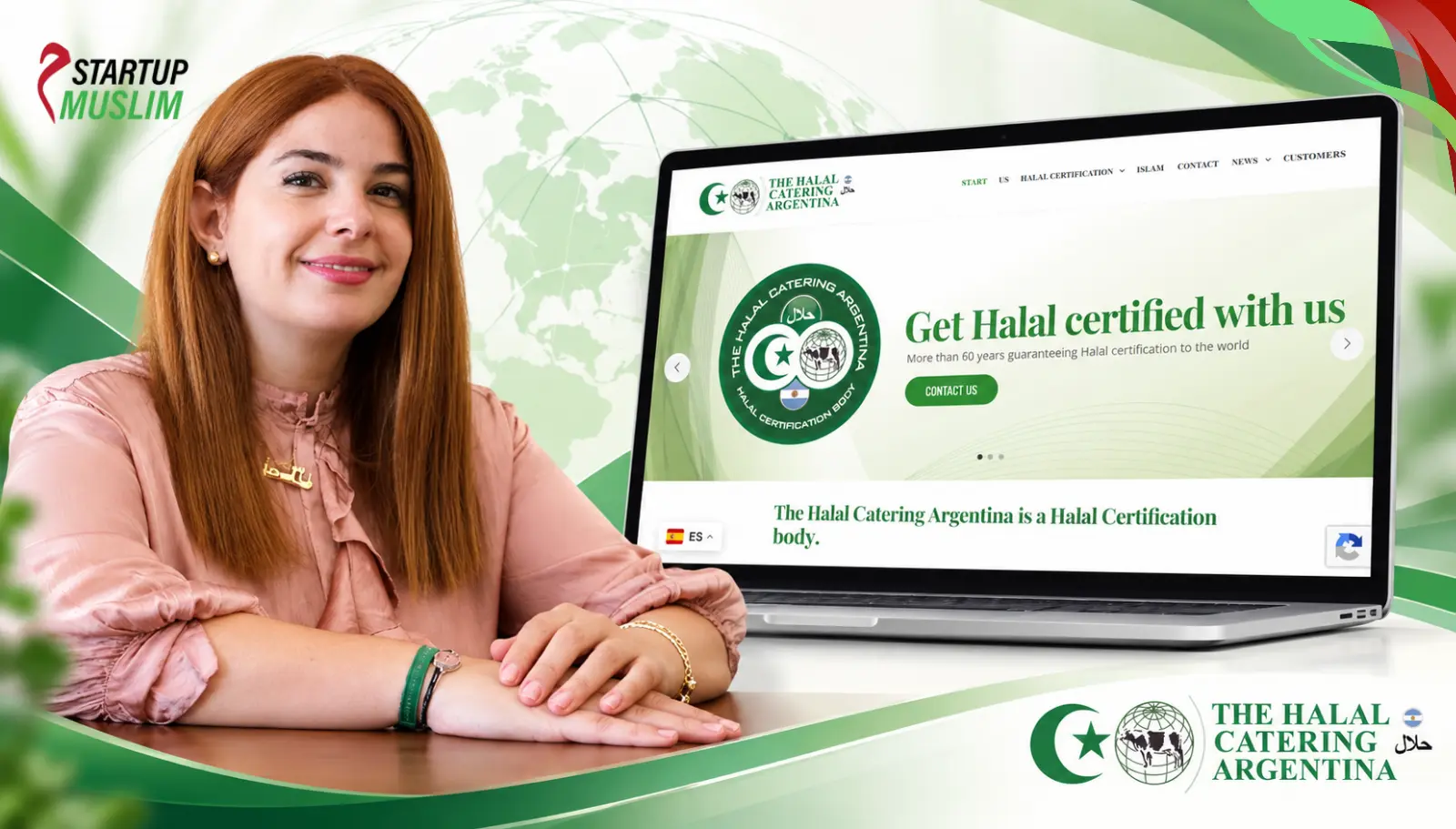
As Co-Director of The Halal Catering Argentina, Amal is helping a family institution expand its international reach while championing women’s leadership, cross-cultural dialogue and the next generation of Halal professionals.
When Amal Khalil Kabalan speaks about Argentina’s agricultural wealth, she recalls a phrase her Lebanese grandfather used to describe the country he had made his home. “We Arabs have black gold, oil; Argentina has green gold: its countryside and fertile land.”
The observation became more than a family saying. Her grandfather, a Lebanese Muslim immigrant, recognized that Argentina’s productive capacity could serve Muslim consumers around the world, provided the food met their religious requirements. What began with requests from Arab embassies for Halal meat developed into a family enterprise that has now spent more than 60 years working in Halal certification.
Today, Amal is helping carry that legacy forward as Co-Director of The Halal Catering Argentina (THCA) and through her work in international relations. But her ambitions extend beyond preserving an established institution. She sees Halal as a bridge between Argentine producers and global markets, an opportunity for emerging industries, and a platform for building trust between people of different cultures and faiths.
A Family Legacy Built on Argentina’s “Green Gold”
Amal’s grandfather arrived in Argentina from Lebanon and worked as an Arabic-to-Spanish translator for Arab embassies. Through those relationships, he began receiving requests to supply Halal meat, recognizing an opportunity to connect the country’s agricultural resources with the needs of Muslim-majority markets. His son continued the work, and subsequent generations joined the business.
For Amal, inheriting this history means more than continuing commercial operations. It involves protecting the values of faith, hard work and trust that shaped the institution while strengthening its technical capabilities and international relationships. Each generation, she believes, must contribute its own knowledge and perspective rather than simply preserve what came before.
That balance between continuity and change defines her approach to leadership. THCA’s history provides a foundation, but its future depends on adapting to evolving standards, new markets and changing consumer expectations. The challenge is to make a legacy built over decades relevant to the opportunities of the next generation.
Why Halal Certification Matters to International Trade
Argentina’s agricultural resources create opportunities across meat, dairy, grains, oils, fruit and other ingredients. Yet productive capacity alone does not guarantee access to Muslim markets, where religious requirements, technical standards and recognition by relevant authorities can determine whether a product or facility is eligible to participate.
THCA works with companies on the certification of facilities, products and slaughter operations, alongside the implementation of Halal requirements and staff training. Its international relationships include recognition by authorities such as JAKIM in Malaysia, MUIS in Singapore, CICOT in Thailand and IMANOR in Morocco. The organization is also a full member of the World Halal Council.
These relationships matter because requirements differ between destinations. Certification is not simply a label that can be applied uniformly to every product and market; companies must understand the rules that apply to their intended destinations and maintain compliance as suppliers, ingredients and production processes change.
Amal’s work therefore extends beyond assessing products. Through THCA’s International Relations Department, she helps connect businesses with diplomatic representatives, Halal authorities and commercial stakeholders. Meetings with embassies and business delegations can help companies understand market requirements, identify opportunities and pursue the approvals needed to expand internationally.
The Difficult Balance Between Standards and Religious Diversity
One of the Halal economy’s persistent challenges is the diversity of standards and interpretations across markets. Amal sees international harmonization as essential to building consumer confidence and facilitating trade, while recognizing that achieving it requires more than imposing a single set of technical rules.
She points to the Standards and Metrology Institute for Islamic Countries (SMIIC) and the World Halal Council as important platforms for cooperation. Their work can help establish shared technical foundations, improve recognition between markets and encourage dialogue among institutions. For exporters, greater clarity can reduce uncertainty; for Muslim consumers, it can strengthen confidence in the integrity of certification.
At the same time, Amal argues that differences in Islamic jurisprudence deserve informed and respectful consideration. Shariah and fiqh are not interchangeable terms: fiqh refers to human understanding and elaboration of Islamic jurisprudence, where qualified scholars may reach different conclusions on particular questions. National regulations, production environments and institutional priorities also influence how Halal requirements are implemented.
For Amal, progress depends on bringing these perspectives together without losing sight of the religious principles underlying Halal. Technical expertise is necessary, but so are diplomacy, listening and the ability to build consensus across institutions and cultures.
Beyond Food: New Opportunities for the Halal Economy
Amal believes the next phase of the Halal economy will involve sectors that receive less attention than food production. Cosmetics, industrial inputs and pet food offer potential opportunities, although each requires its own technical assessment and understanding of market demand.
In cosmetics, ingredient origins, processing methods and traceability are important considerations. In industrial supply chains, chemicals, fats and lubricants may require scrutiny where their composition or contact with Halal products affects production integrity. Pet food is another area she believes deserves exploration, provided businesses first establish the relevant product criteria and commercial opportunities in individual markets.
She also sees potential in Halal tourism and hospitality. Argentina’s landscapes, food culture and cultural attractions could appeal to Muslim travelers, but a welcoming experience requires more than promoting destinations. Access to suitable food, clear information and services that respect visitors’ religious needs can help hotels, restaurants and tour operators serve this audience more effectively.
Amal recalls the 2022 FIFA World Cup, when Argentina’s Lionel Messi received a traditional bisht from Qatar’s Emir before lifting the trophy. For her, the moment represented an encounter between cultures and an invitation to deepen connections. She hopes more Muslim visitors will discover Argentina and that local businesses, including young entrepreneurs, will recognize the opportunity to serve them.
A Woman’s Voice in a Traditionally Male Industry
Amal’s leadership also carries a personal dimension. Working in an industry with a strong male presence, she has built her role through education, professional responsibility and participation in international decision-making. Her work in certification, institutional cooperation and diplomatic relationships has given her a practical perspective on what leadership requires.
Her experience in interreligious dialogue has further shaped that perspective. As Vice-President of the Islam for Peace Institute and a KAICIID Fellow selected in 2022, she has worked on initiatives that emphasize listening, managing tensions and building relationships across differences. Projects such as “Women Make Peace” and the podcast “En tus Zapatos,” co-hosted with Jewish collaborator Bárbara Zeifer, reflect her belief that people can preserve their identities while working toward more humane coexistence.
Amal also draws inspiration from women in Islamic history. She cites Umm Salama, the wife of Prophet Muhammad, whose advice following the Treaty of Hudaybiyyah helped resolve a difficult moment. For Amal, the episode illustrates how sound judgment, an understanding of circumstances and a woman’s voice can influence consequential decisions.
That conviction led her to propose a book dedicated to women in the Halal industry, an initiative intended to make their professional contributions more visible and provide role models for those entering the field. She wants younger Muslim women to see opportunities in certification, science, international trade, institutional leadership and entrepreneurship, and to have meaningful pathways into decision-making positions.
Halal as a Language of Trust and Peace
For Amal, Halal is not limited to compliance or commerce. It is part of a way of life that connects consumption and production with responsibility, honesty and respect. She draws on Quranic teachings about consuming what is lawful and good, and about people and communities coming to know one another, to explain why Halal and dialogue belong in the same conversation.
That perspective informs her work with producers, consumers, authorities and diplomatic representatives. When a business takes the religious needs of Muslim consumers seriously, respect becomes tangible through procedures, accountability and reliable certification. The resulting trust can support trade while creating opportunities for people from different backgrounds to cooperate.
Her own Lebanese, Portuguese and Argentine heritage reinforces this commitment to building bridges. She sees her identity not as a choice between different cultural worlds, but as a source of perspective that helps her listen, understand context and recognize the value of difference.
Looking ahead, Amal wants THCA to strengthen its international presence, help more Argentine companies enter Halal markets and open pathways into emerging sectors. She also wants younger people and women to participate more actively in shaping the industry, bringing new knowledge and ideas to an institution whose history began with her grandfather’s recognition of Argentina’s potential.
The legacy she hopes to leave is not simply an organization that has endured. It is one that creates opportunities for others to contribute, lead and build. As she puts it, she wants a young woman to encounter the story and think, “I can be part of this world too. I can lead, create and contribute.”


