
Building the Operating System for Healthcare Procurement
Saudi Arabia-based healthtech startup Aumet has raised $12 million in Series A funding as it looks to expand its AI-powered procurement infrastructure across the GCC and international markets.
The round was led by Emkan Capital, with participation from Qatar Development Bank (QDB), SABAH Fund, and AAIC, alongside existing investors Shorooq Partners and Right Side Capital Management.
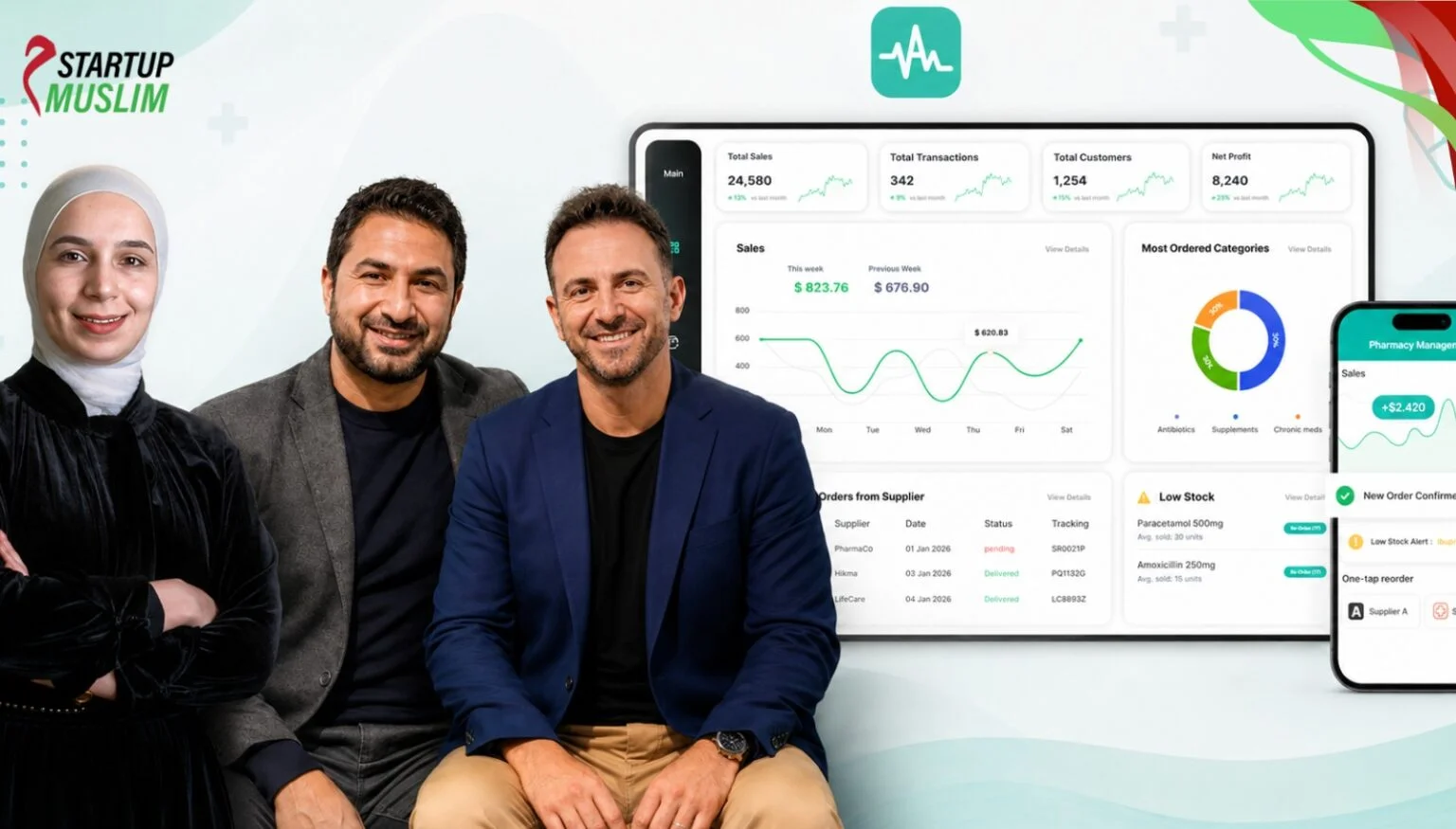
Founded in 2016 by Yahya Aqel, Adel Haddad, and Shahed Jaber, Aumet has evolved from a healthcare marketplace into what it describes as an AI-first procurement operating system designed to modernize healthcare supply chains across emerging markets.
The company is building technology infrastructure that connects pharmacies, suppliers, hospitals, warehouses, and national healthcare systems through intelligent procurement and inventory management systems.
Solving the Intelligence Gap in Healthcare Supply Chains
Healthcare supply chains remain among the most fragmented operational systems globally, particularly across emerging markets where procurement workflows are often disconnected, manual, and highly inefficient.
According to Aumet CEO and Co-Founder Yahya Aqel, the problem is not necessarily lack of supply. “Healthcare supply chains don’t suffer from lack of supply. They suffer from lack of intelligence,” he said.
Aumet’s platform is designed to address exactly that challenge by integrating procurement, inventory, marketplace operations, and AI-driven decision-making into a unified system.
The company believes healthcare systems increasingly require intelligent infrastructure capable of improving visibility, optimizing purchasing decisions, reducing inefficiencies, and enabling more accurate forecasting across the supply chain.
Scaling Across Pharmacies, Hospitals, and National Systems
Over the past several years, Aumet has quietly built one of the region’s largest healthcare commerce and data platforms. The company says it now processes more than 5 million transactions annually, supports over 12,000 pharmacies across Jordan, Egypt, and Saudi Arabia, and connects more than 1,000 pharmaceutical suppliers through its platform. To date, the company has generated more than $1 billion in Gross Merchandise Value across its ecosystem.
Aumet’s evolution has occurred across three major product layers. Its Pulse platform focuses on individual pharmacies by combining inventory management, procurement automation, and marketplace capabilities into a cloud-based operating system.
Chain is designed for multi-branch pharmacy groups, enabling centralized procurement and AI-driven operational oversight across entire retail pharmacy networks.
The company’s most ambitious product, however, is Enterprise, an AI-powered cognitive procurement operating system built for hospitals, ministries of health, and national healthcare systems.
From Marketplace to AI Procurement Infrastructure
Aumet’s transformation reflects a broader shift happening across enterprise software. Many technology companies initially built marketplaces connecting fragmented participants. Over time, however, the greatest value increasingly moved toward operational infrastructure and decision-making systems powered by data and AI.
Aumet appears to be following that trajectory. Rather than functioning solely as a procurement marketplace, the company is positioning itself as a foundational infrastructure layer for healthcare operations itself.
This shift becomes particularly important in healthcare, where procurement inefficiencies directly affect costs, operational continuity, and patient care.
Government Adoption and Public Healthcare Deployment
One of the company’s strongest validation points has been adoption at the institutional and government level. Aumet first deployed its Enterprise system at Al-Basheer Hospital, the largest hospital in Jordan. Since then, the platform has expanded across 32 hospitals, more than 500 medical centers, and 18 medical warehouses.
The rollout was implemented in collaboration with Jordan’s Ministry of Health and Ministry of Digital Economy and Entrepreneurship alongside Presight, the Abu Dhabi-based AI company.
Presight later signed an agreement with Aumet to scale the procurement operating system across Jordan’s public healthcare infrastructure. This level of government integration positions Aumet differently from many healthcare startups focused solely on private-sector adoption.
Why Emerging Markets Matter
Globally, companies such as Clarium are tackling similar healthcare supply chain challenges in developed markets. Aumet, however, is specifically focused on the operational realities of emerging economies where healthcare systems are often more fragmented and procurement inefficiencies more severe.
This creates a substantial opportunity. Many healthcare systems across the Middle East, Africa, and parts of Asia still rely heavily on disconnected procurement systems, manual workflows, and limited supply chain visibility. AI-powered infrastructure platforms capable of improving operational intelligence may therefore have outsized impact in these markets.
Aumet’s regional positioning also gives it deep contextual understanding of local procurement structures, regulatory frameworks, and healthcare operational challenges that global incumbents may struggle to navigate.
Investor Confidence in Healthcare Infrastructure
The investor group behind the round reflects growing confidence in healthcare infrastructure technology as a major enterprise category.
In addition to financial investors, the round also includes strategic healthcare backers such as Cigalah Group and Salehiya Trading Company, signaling industry-level belief in the company’s long-term relevance.
“Aumet is building what we believe is the foundational operating system for healthcare supply chains in emerging markets,” said Ghassan from Emkan Capital.
SABAH Fund’s Abbas Kazmi added that the company demonstrates strong founder-market fit through its combination of regional expertise and scalable technology infrastructure.
Expanding AI Across the Healthcare Ecosystem
The newly raised capital will support expansion of Aumet’s AI capabilities, broader deployment of its enterprise systems, and international growth across the GCC and beyond.
The company also plans to scale its Pulse platform globally while continuing to deepen integrations across hospitals, healthcare systems, and pharmacy networks.
As healthcare systems increasingly prioritize operational efficiency, predictive analytics, and procurement intelligence, AI-powered infrastructure platforms are becoming strategically important across the industry.
For Aumet, the ambition extends far beyond digitizing procurement workflows. The company is attempting to build the intelligence layer powering how healthcare systems buy, manage, and distribute critical medical resources at scale.
